
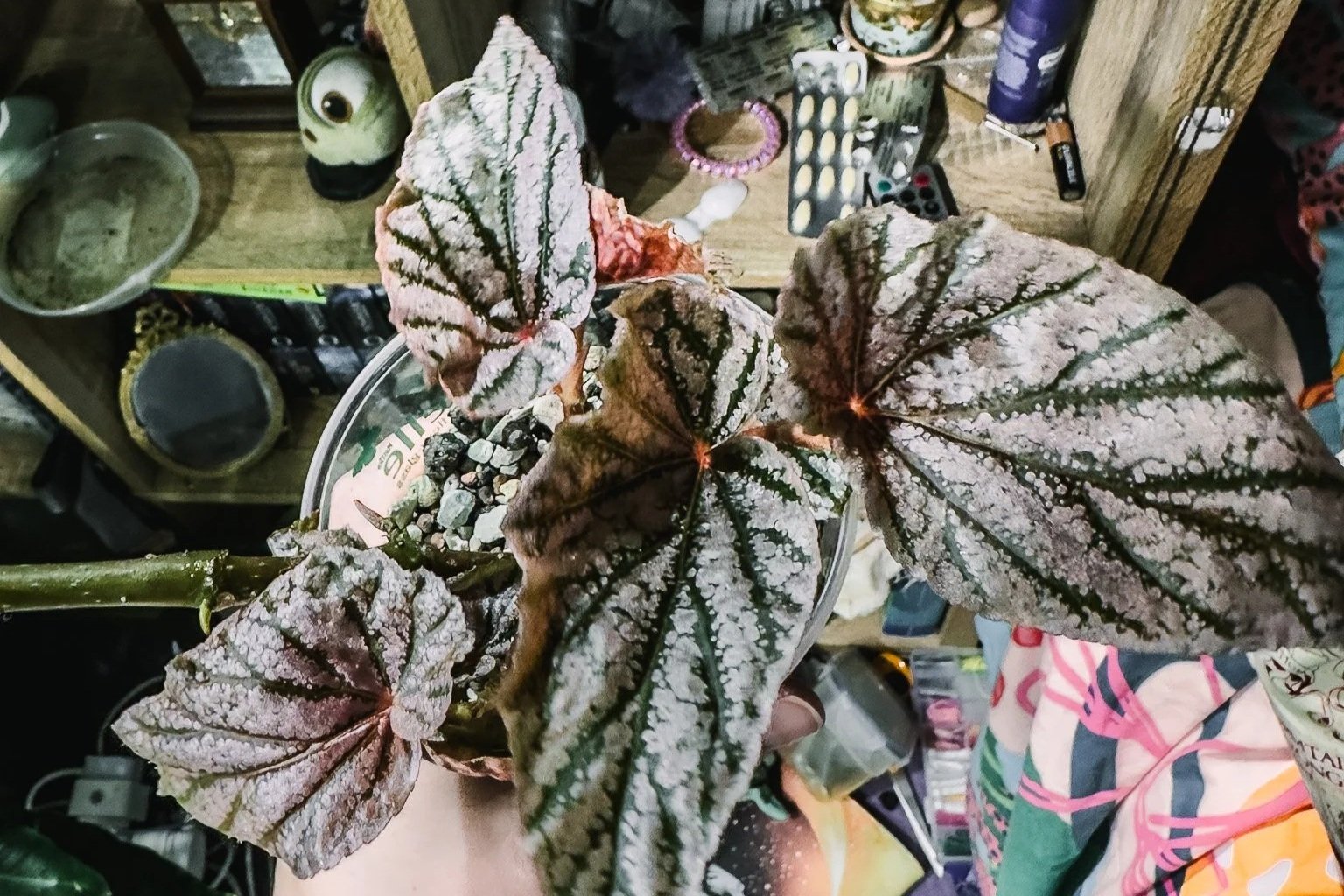
Understanding Begonias: From Forest Floor to Stone (And How to Care for Them Indoors)
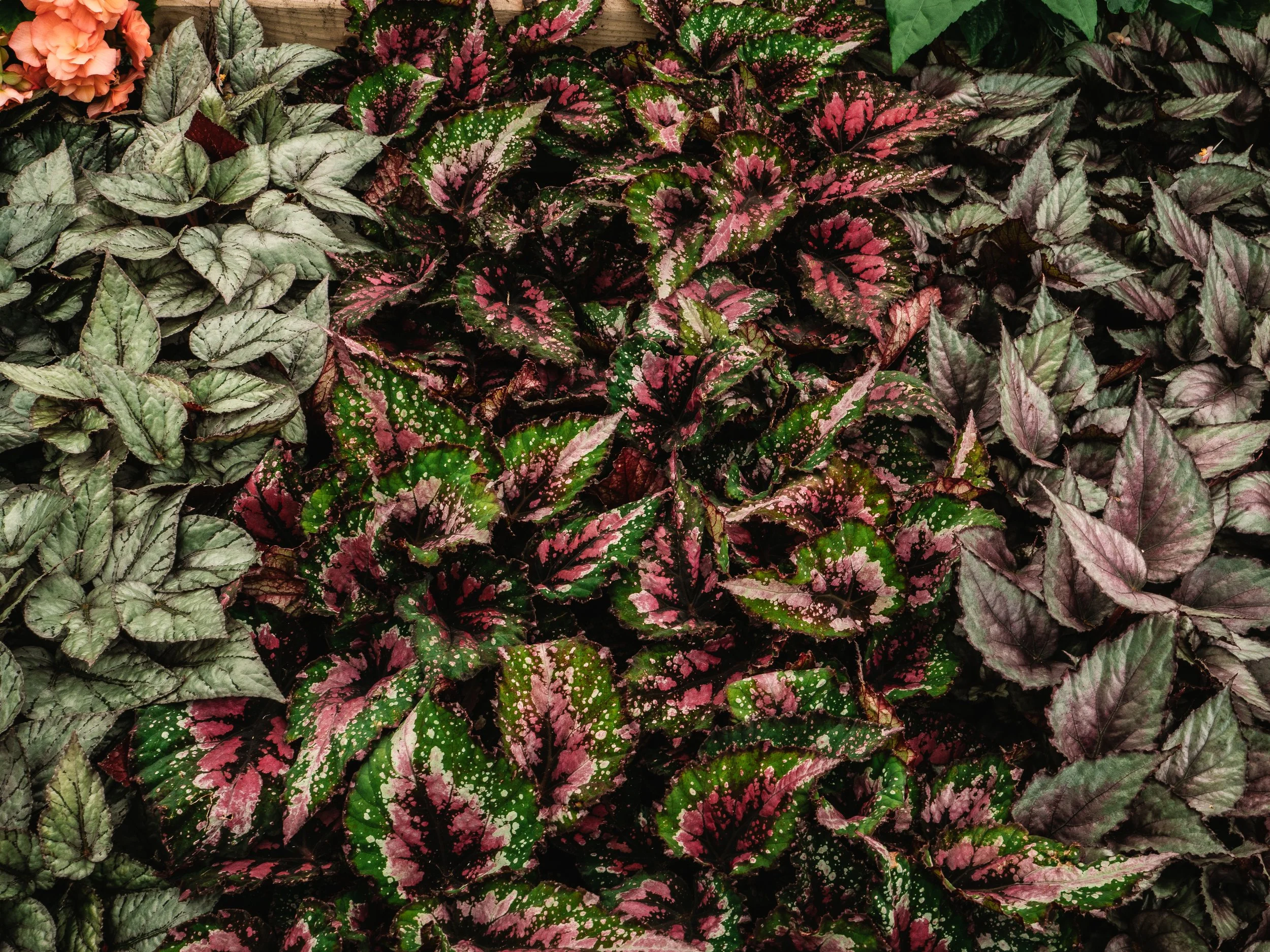
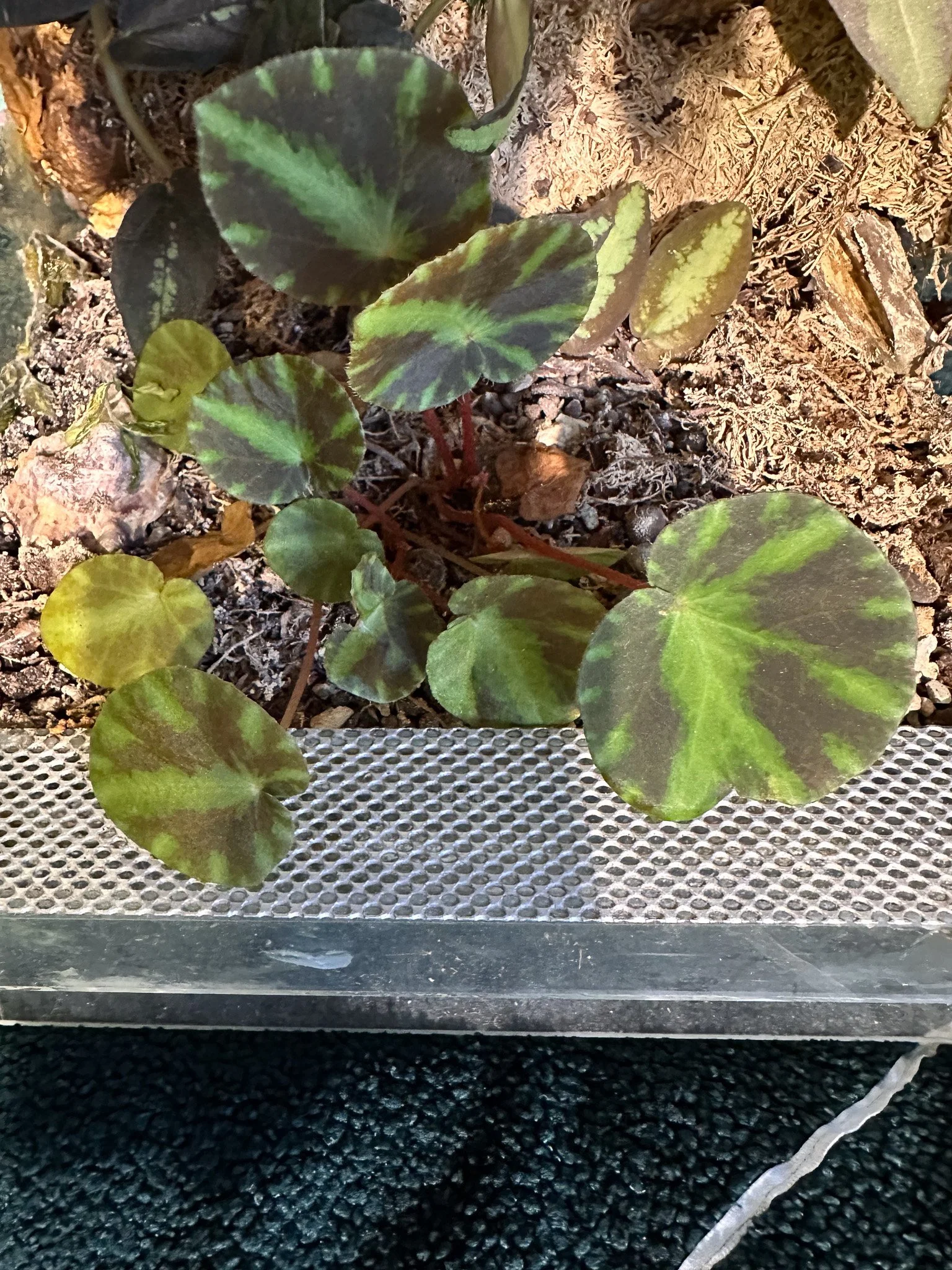
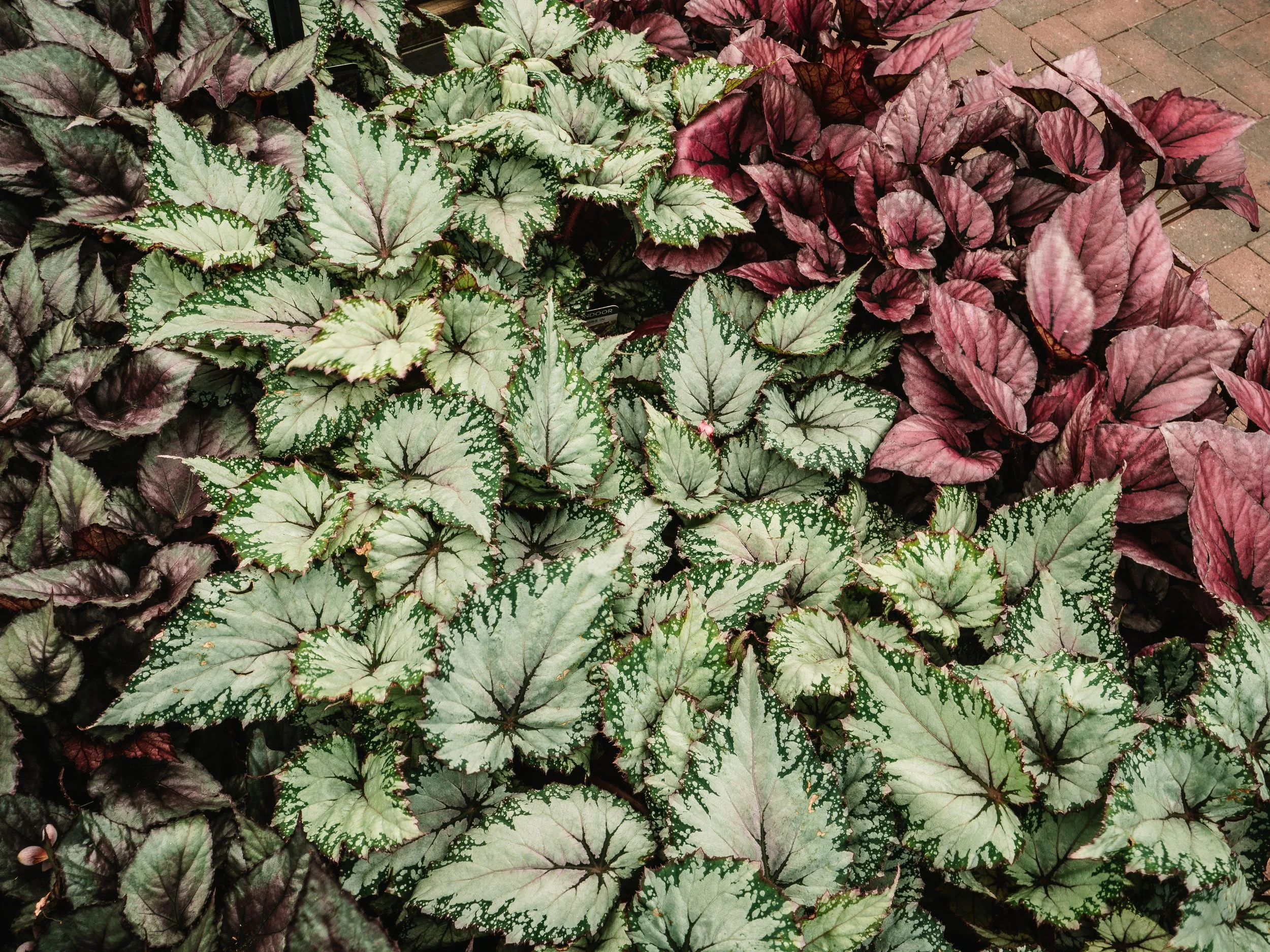
It’s easy to read the care tags that come with plants, but they rarely tell the full story, and can often leave you more puzzled than before.
🌿 Understanding your begonia’s world
It’s easy to read the little care tag that comes with a plant… but if you’ve ever stood there thinking “okay, but why?” — you’re not alone.
Begonias don’t all come from the same place, and that’s where things get interesting.
Some grow low along soft forest floors, others stretch upwards through the understory, and some cling to rock where soil barely exists at all. So when we try to care for them all in the same way, it’s no surprise things don’t always go to plan.
According to the Royal Botanic Garden Edinburgh, there are over 2,200 species of Begonia, found across tropical and subtropical regions of Central and South America, Africa, and Asia. But what really matters isn’t just where they grow, it’s how they grow once they’re there.
Each begonia carries a little piece of its environment with it. And once you start to notice that, care becomes a lot less confusing.
In this blog, I want to simplify things by looking at three main environments:
🌱 Forest floor
🌿 Vertical understory
🪨 Limestone and rocky habitats
From these, we can understand the three most common types of begonia you’ll come across indoors:
Rhizomatous / Rex
Cane begonias
Limestone and rocky types
I’ll share what I’ve learned through research, along with my own experience growing them, so you can start to read your plant a little differently.
Because once you understand where a begonia comes from, caring for it stops feeling like following rules… and starts feeling more like a conversation.
🌱 Forest floor (Rhizomatous / Rex begonias)
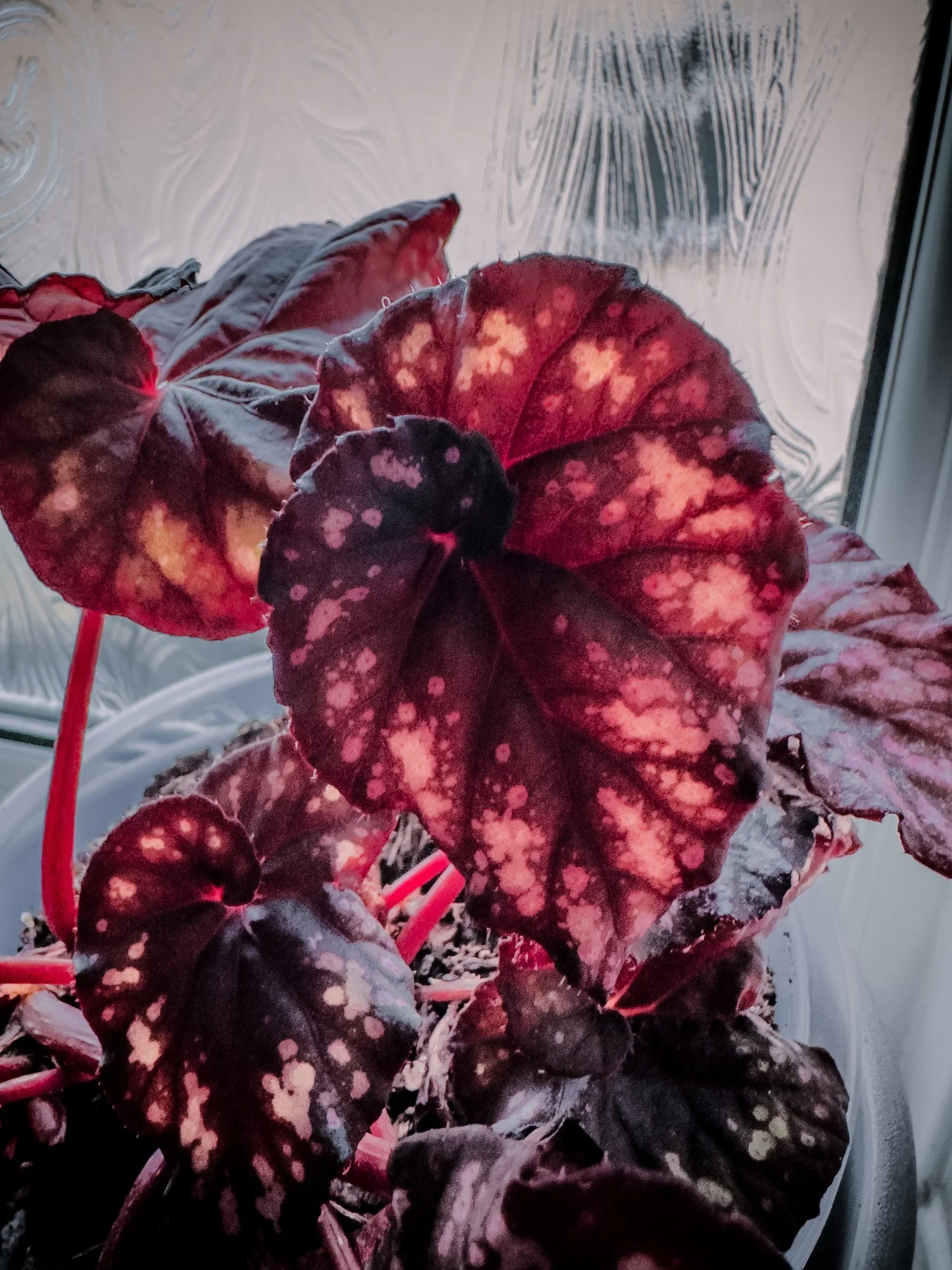
Rhizomatous and Rex-type begonias are some of the most striking indoor foliage plants, grown for their beautifully patterned, often shimmering leaves in a wide range of colours.
These begonias grow from a creeping rhizome, which sits along or just above the surface of the soil, creating a compact, spreading form.
In the wild, many originate from regions such as the eastern Himalayas, where they grow along shaded forest floors and sloped terrain, often in loose organic matter over rock. These environments provide excellent drainage while still holding gentle, consistent moisture.
This gives us an important clue to their care: they prefer a well-draining, airy soil mix and dislike sitting wet, especially around the crown, which can lead to rot.
During winter, when light levels and temperatures drop, their growth naturally slows. If you’re unable to provide consistent warmth and bright light, it’s best to reduce watering slightly. Keep the soil lightly moist, but avoid letting it become waterlogged or completely dry.
🌿 Why they work so well as houseplants
Rhizomatous begonias are loved for their texture, detail, and variety. They tend to stay more compact than cane types, making them ideal for:
shelves
terrariums
bright bathrooms
smaller indoor plant spaces
They bring that forest floor softness into your home, grounding a space rather than reaching through it.
Some well-known and much-loved varieties include:
‘Escargot’
‘Fireworks’
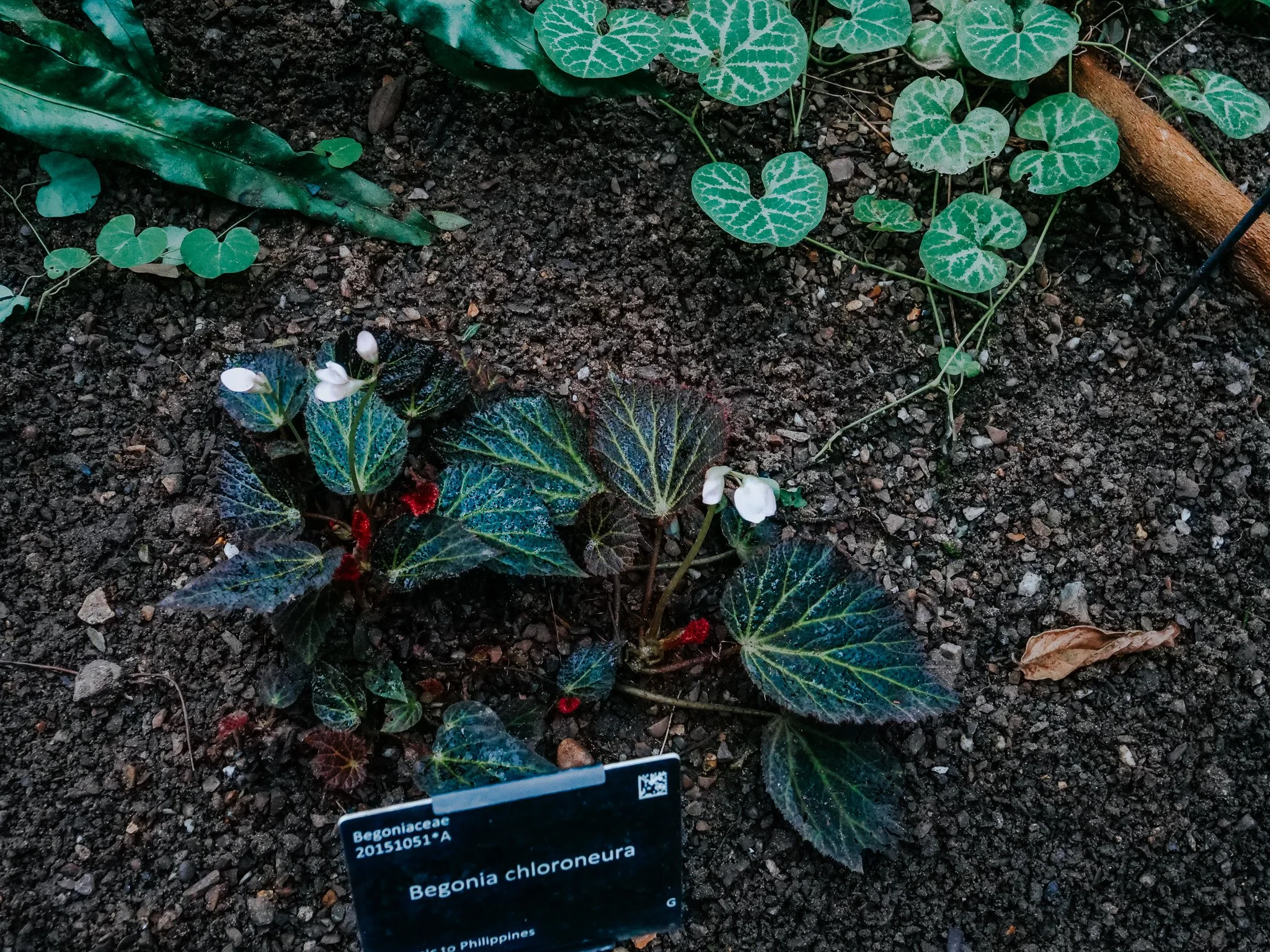
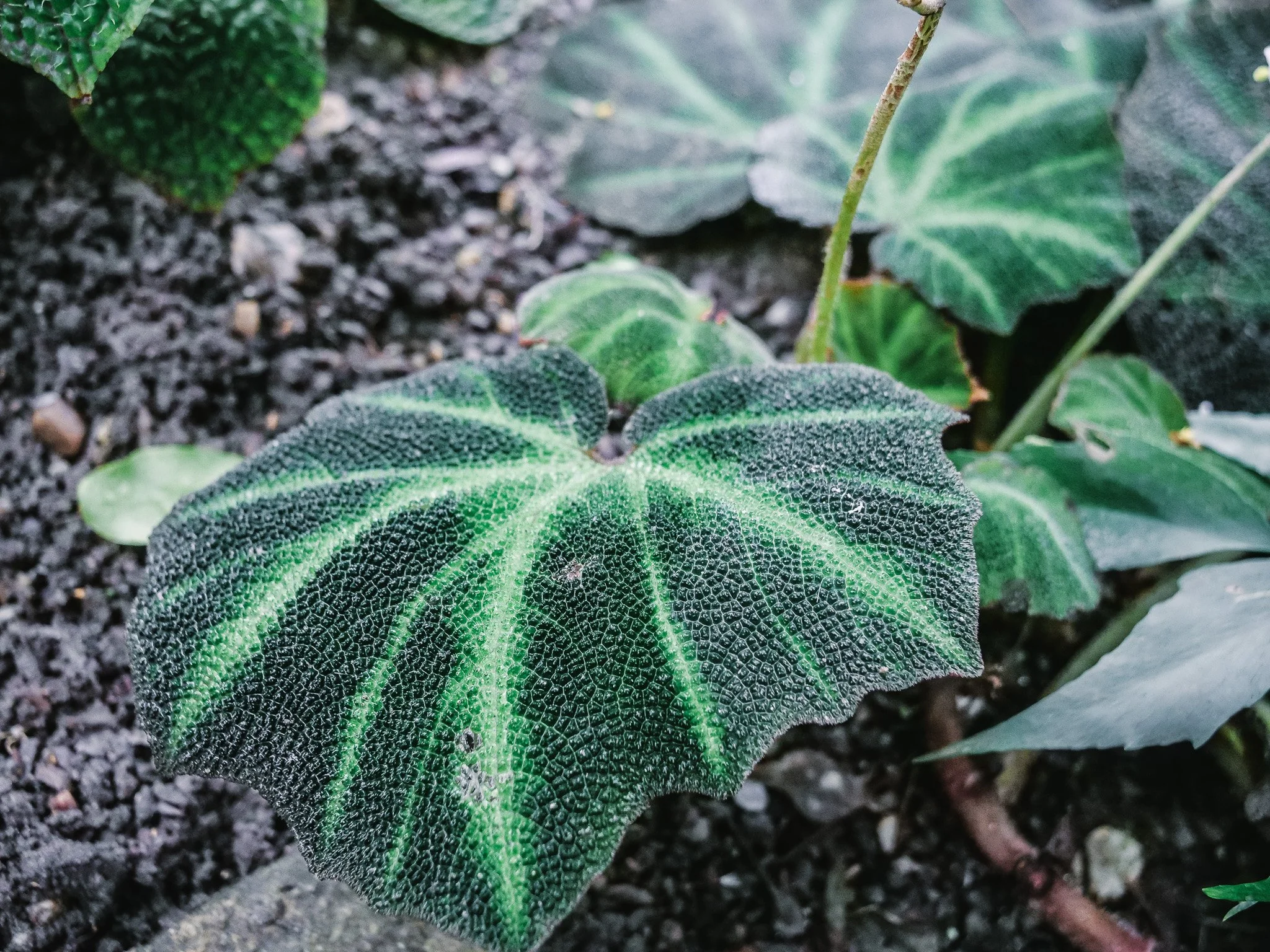
Begonia chloroneura
Begonia masoniana
Begonia cleopatrae
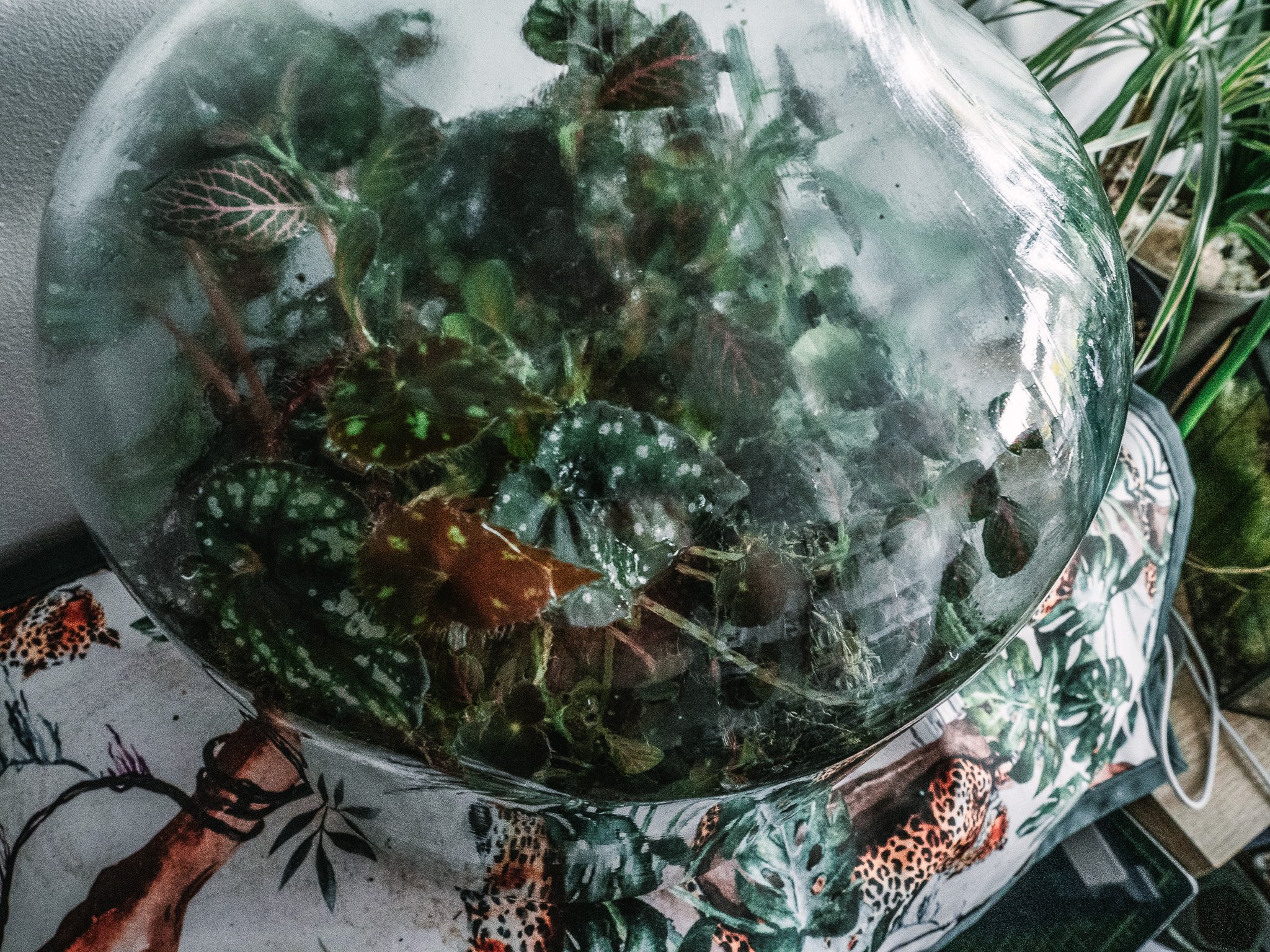
Begonia bowerae (Tiger Paws)
Begonia microsperma
🌿 Soil profile – surface growers
Rhizomatous begonias grow differently to other types, and their soil needs reflect that.
Roots are shallow and spreading, not deep
The rhizome sits at the surface, requiring airflow
The structure should be open and airy, never compact
Moisture should be light and even, not heavy or waterlogged
In nature, they grow in:
leaf litter
decomposing organic matter
shallow layers over rock or compacted ground
This means the surface may dry slightly quicker, while still holding gentle moisture beneath.
These begonias don’t root down into the earth, they move across it.
🌿 Jungle Floor Creative – working with the forest floor
When repotting or refreshing these begonias, I like to keep everything contained and intentional.
Using a Jungle Floor Creative water-resistant repotting mat allows you to build that airy, forest-style mix without mess, keeping all those chunky materials like bark and perlite where you need them.
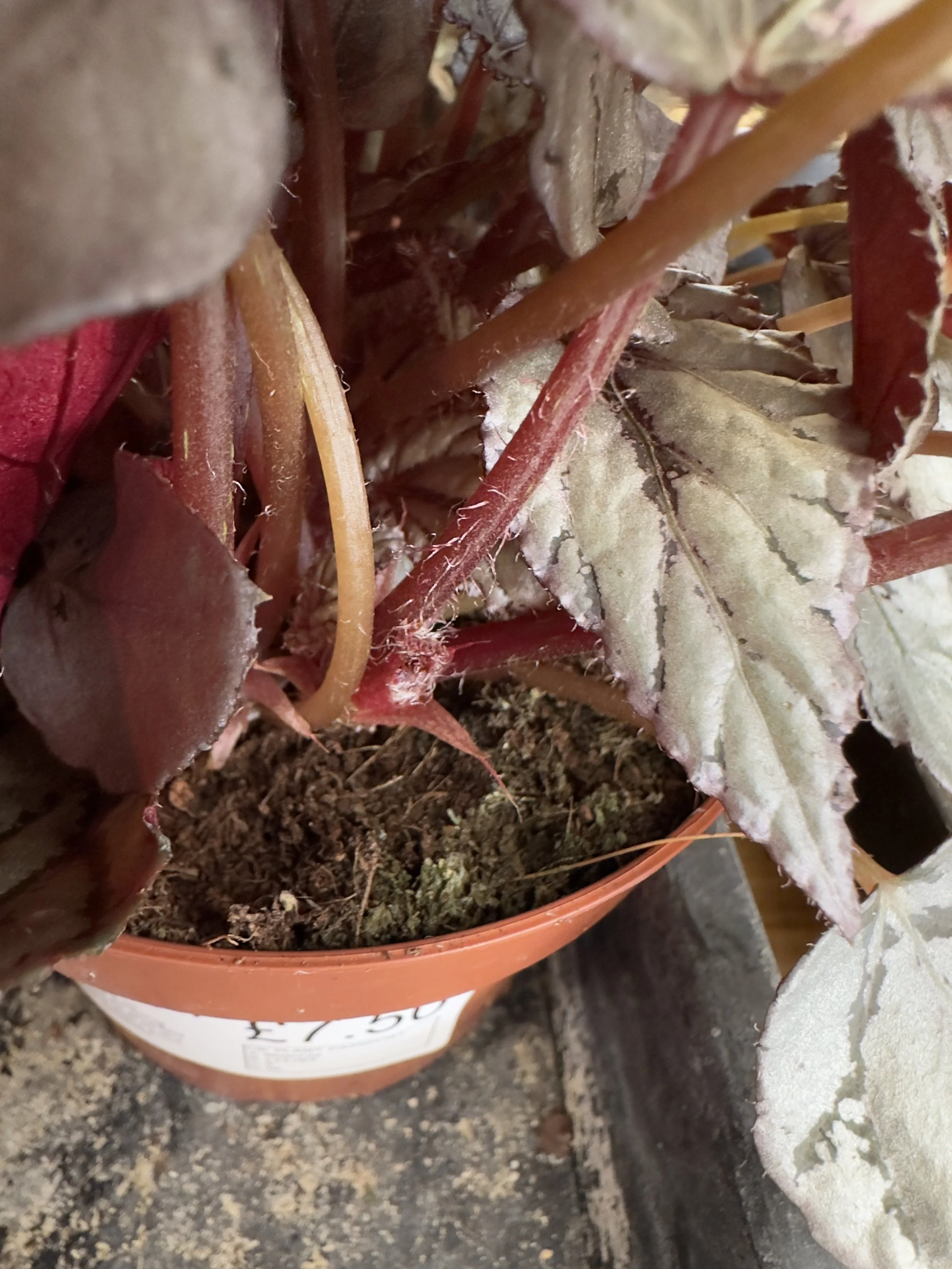
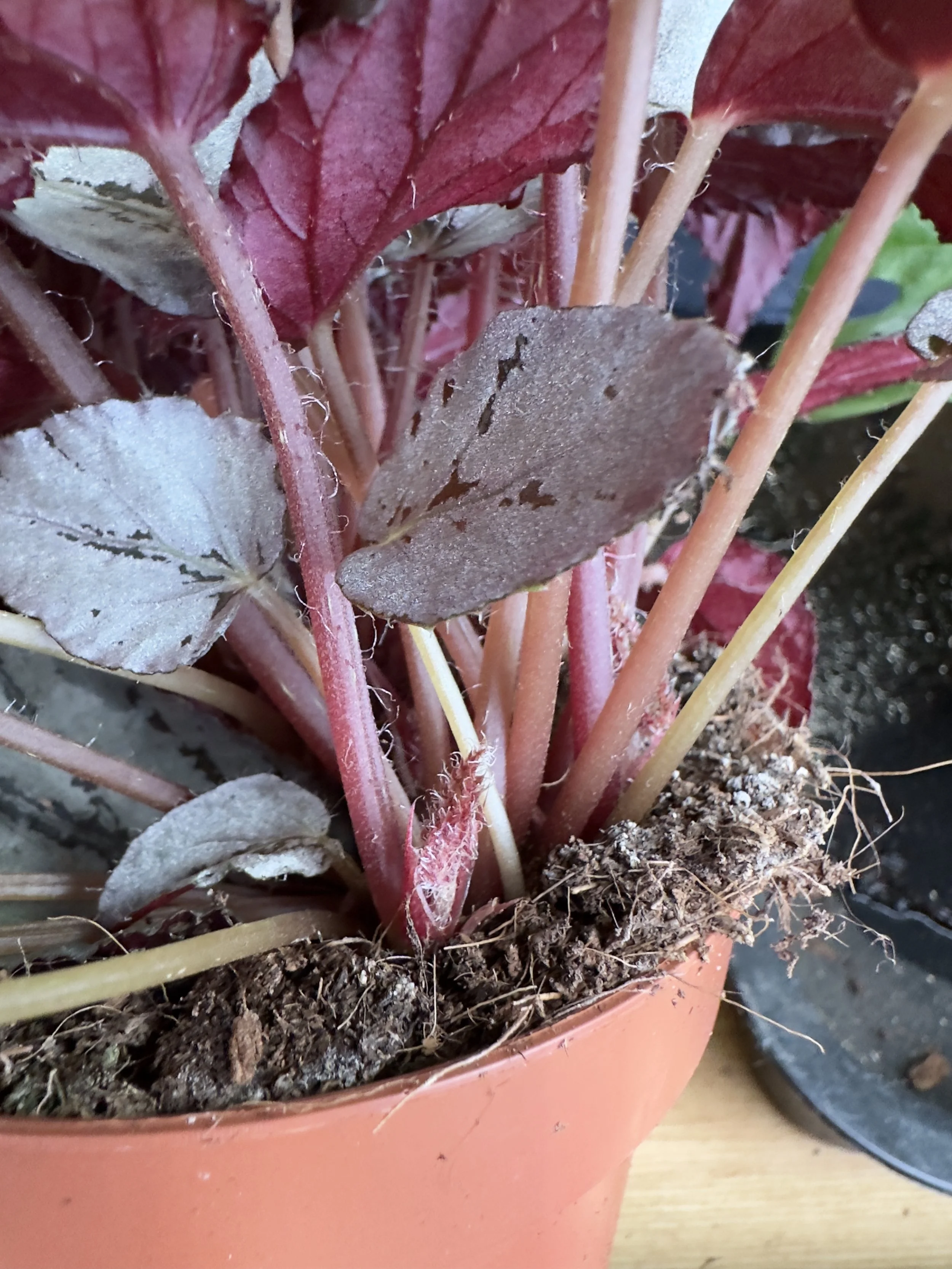
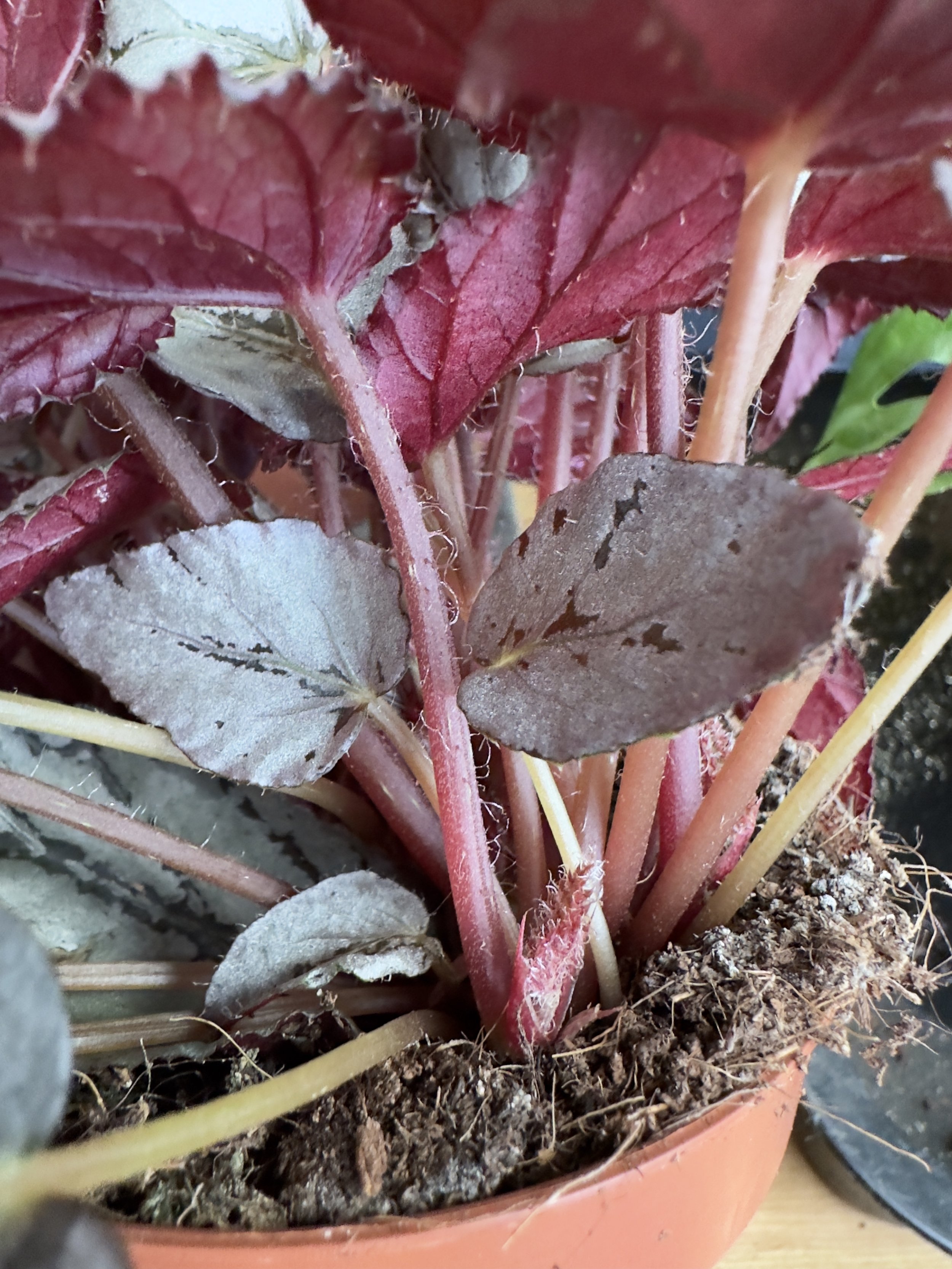
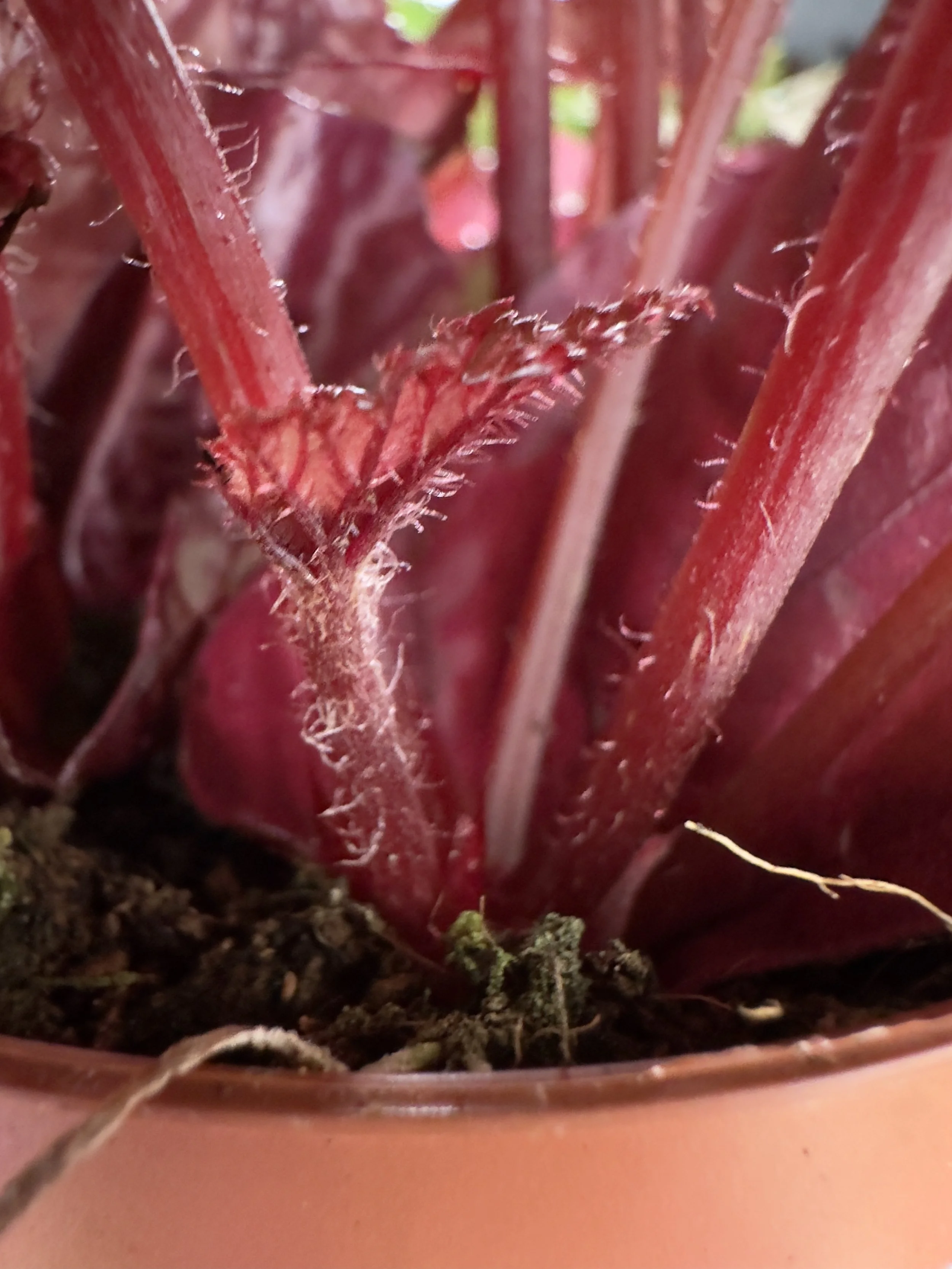
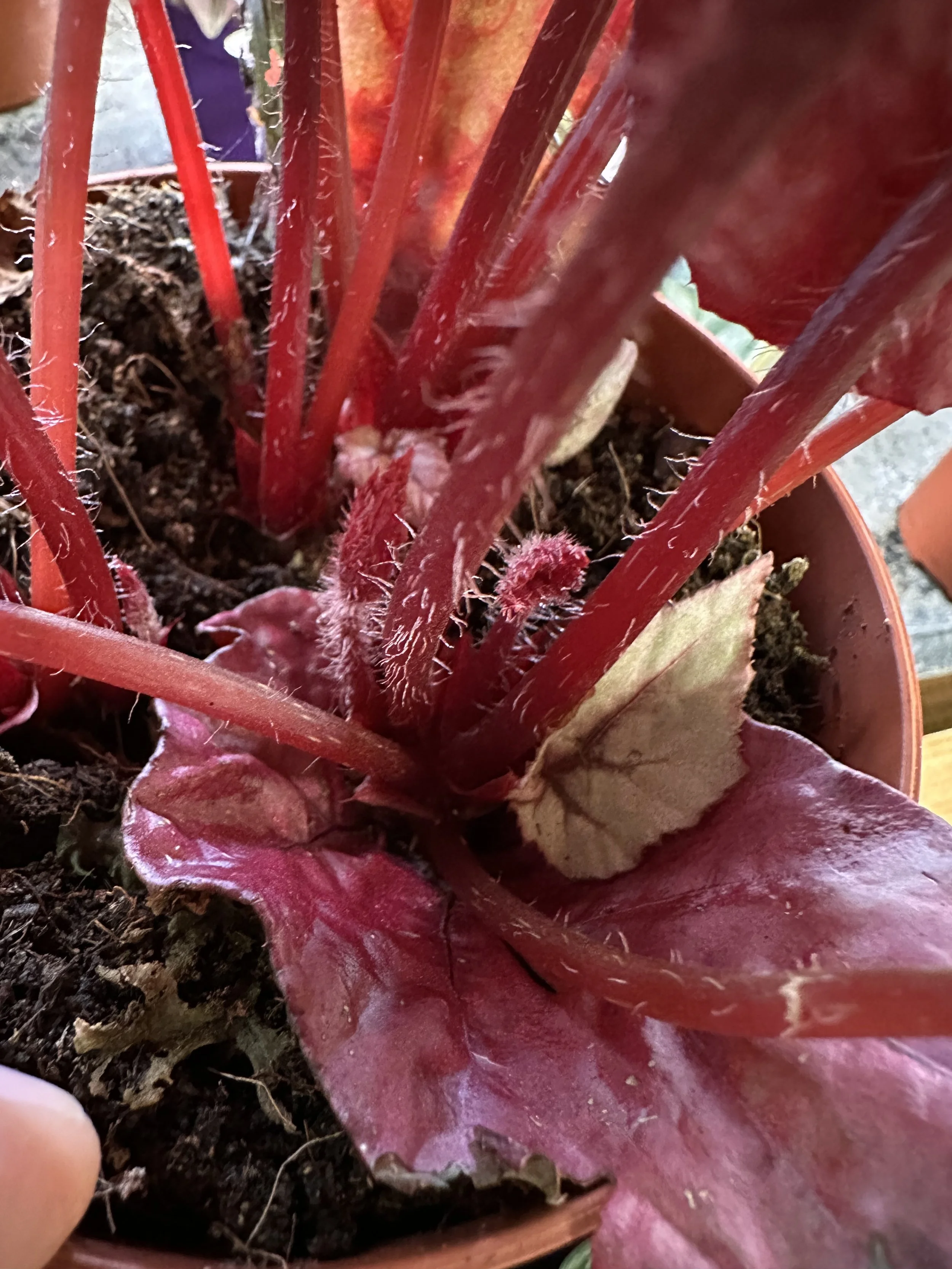
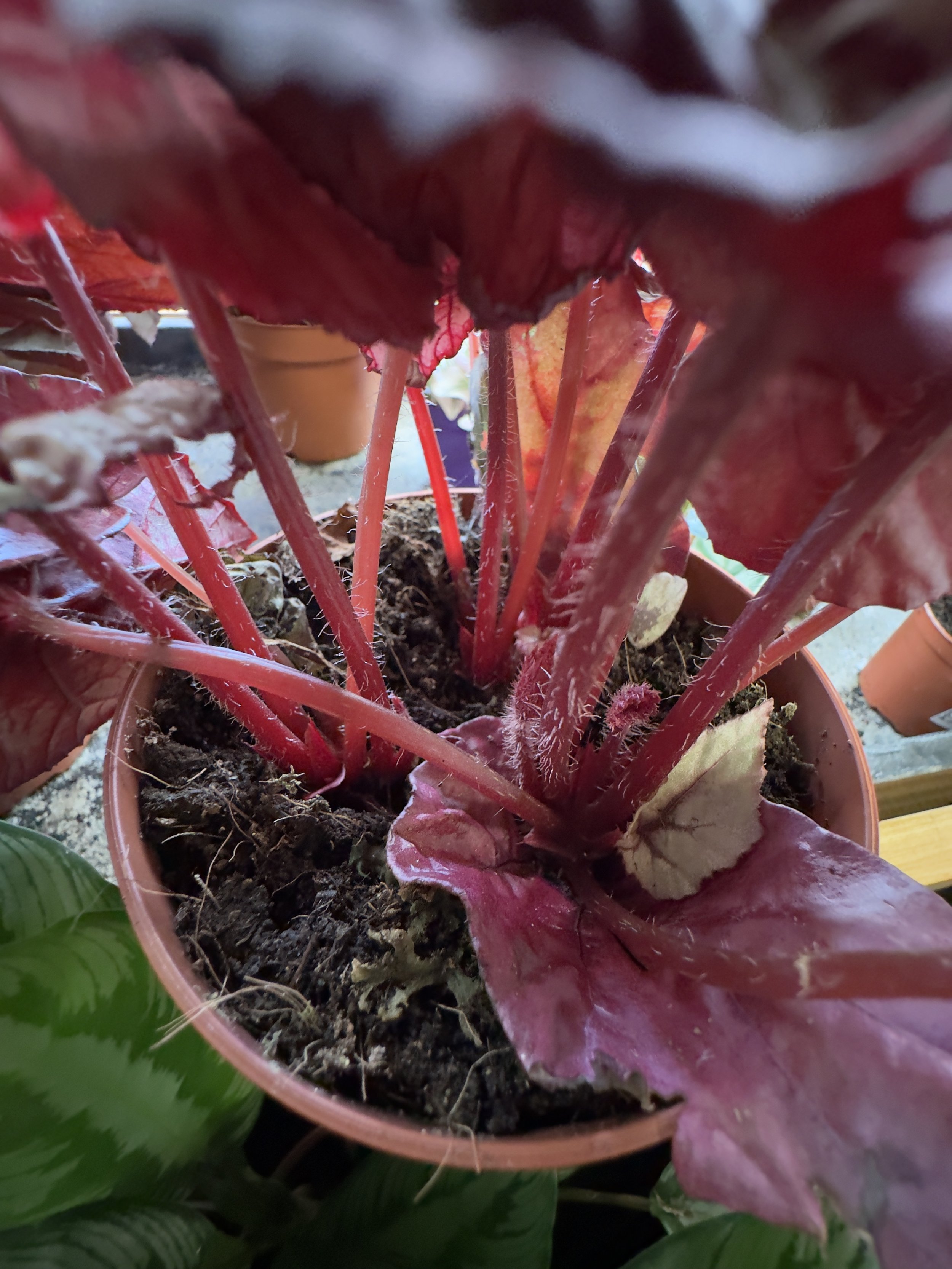
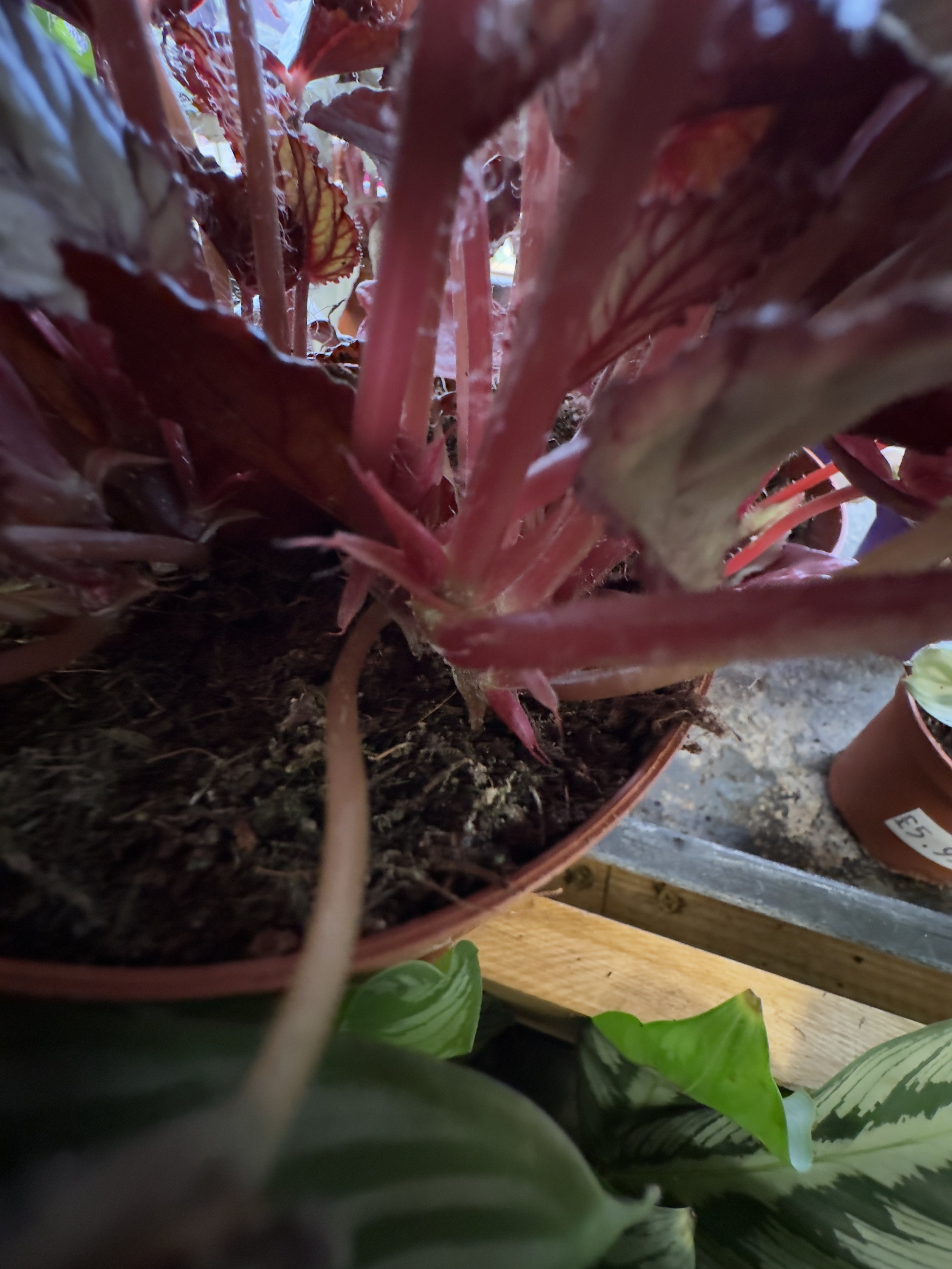
Paired with a soft plant cloth, it becomes much easier to handle delicate, textured leaves without damaging them, especially with varieties like Begonia masoniana or chloroneura, where the foliage is part of the magic.
🌿 Personal observation
I tend to use a chunky, airy mix for my Rex begonias, something that mimics that natural forest floor structure.
In the image I took at the Cambridge University Botanic Garden, you can see Begonia chloroneura growing in a substrate that includes gritty, stony material. Even in cultivation, it reflects that natural preference for airflow and drainage.
Rhizomatous begonias are not plants of depth, but of surface and balance.
Light is softened
Water is gentle and frequent
Soil is airy and alive
“They don’t grow into the forest floor, they grow across it, where moisture and air meet.”
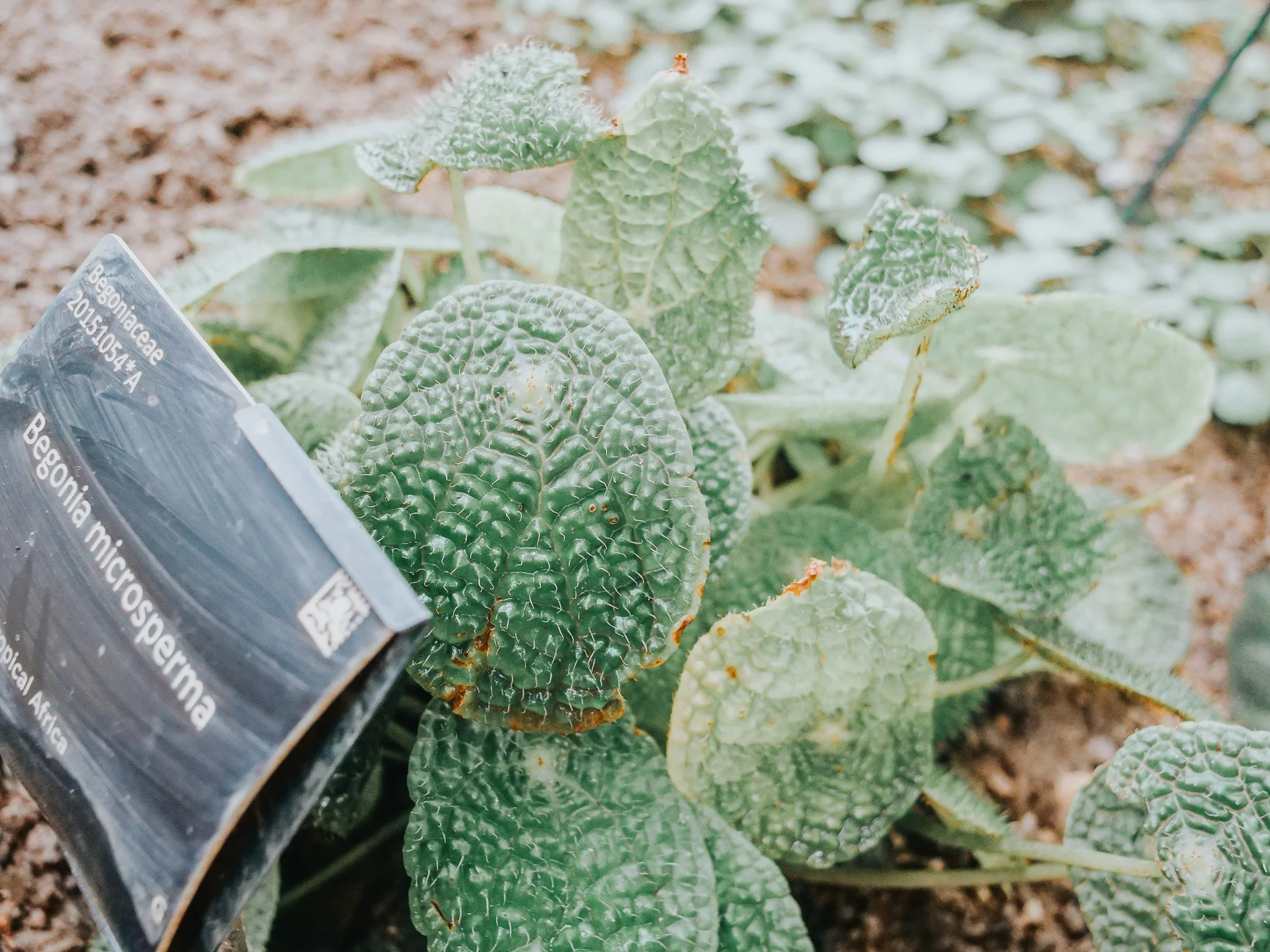
🌿 Care Needs
🌱 Light
Bright, indirect light is ideal (no harsh sun). Direct sunlight can scorch the leaves, while too little light will result in slower growth and less vibrant patterns. It’s worth taking time to observe your space and adjust positioning to improve light levels where needed.
In their natural habitat, light is filtered through layers of canopy. It shifts throughout the day, never harsh or direct, instead soft and dappled, constantly moving as leaves above catch and release it.
These begonias don’t receive light all at once, they receive it in fragments.
💧 Water
Keep the soil evenly moist, but not soggy. Allow the top layer of soil to dry slightly between watering, and avoid watering directly onto the crown or rhizome, as this can lead to rot.
In nature, rainfall is regular but softened by the forest. Water filters through layers of foliage above, arriving lightly and frequently rather than all at once. Moisture settles briefly into the surface layers, then moves on.
Because of this:
roots experience consistent but gentle moisture
they are never sitting in heavy, saturated soil
It’s also worth noting that water sitting on leaves for long periods can cause damage. During photosynthesis, leaf pores are open, and prolonged moisture can increase the risk of fungal issues or marking on delicate foliage.
🌫️ Humidity
The air in their natural environment is humid and relatively still, protected by the surrounding canopy. It remains warm and stable, with moisture held in the air rather than the soil.
These begonias prefer higher humidity, but many can adapt to typical home conditions. Rather than misting (which offers only temporary humidity and can lead to issues), it’s more effective to:
improve overall room humidity
group plants together
or place them in naturally humid spaces like bathrooms
🌡️ Temperature
Ideally kept between 18–24°C.
Rhizomatous begonias are sensitive to cold and sudden drops in temperature. In winter, as light levels decrease, their growth slows naturally. During this time, it’s important to reduce watering, not because they prefer dryness, but because they are using less.
🪴 Soil
Think forest floor, not compost bag.
A light, airy, well-draining mix is essential. In the wild, these begonias grow in:
leaf litter
decomposing organic matter
shallow layers over rock or compacted ground
At home, you can recreate this with:
a base houseplant mix
bark for structure
perlite or vermiculite for airflow
a small amount of horticultural sand for drainage
The goal is simple:
👉 moisture and airflow at the same time
🌿 Bringing it together
Rhizomatous begonias don’t want extremes.
Not too wet.
Not too dry.
Not too dense.
“They don’t want to sit in water, they want to sit between moisture and air.”
🌿 Jungle Floor favourites
Over the years, I’ve grown a wide range of begonias, and getting the care right for these varieties has definitely been a learning curve.
What I’ve found, and what research supports, is that many rhizomatous begonias are more adaptable than they first appear. While they thrive in higher humidity, they can do well in normal household conditions when their soil, light, and watering balance are right.
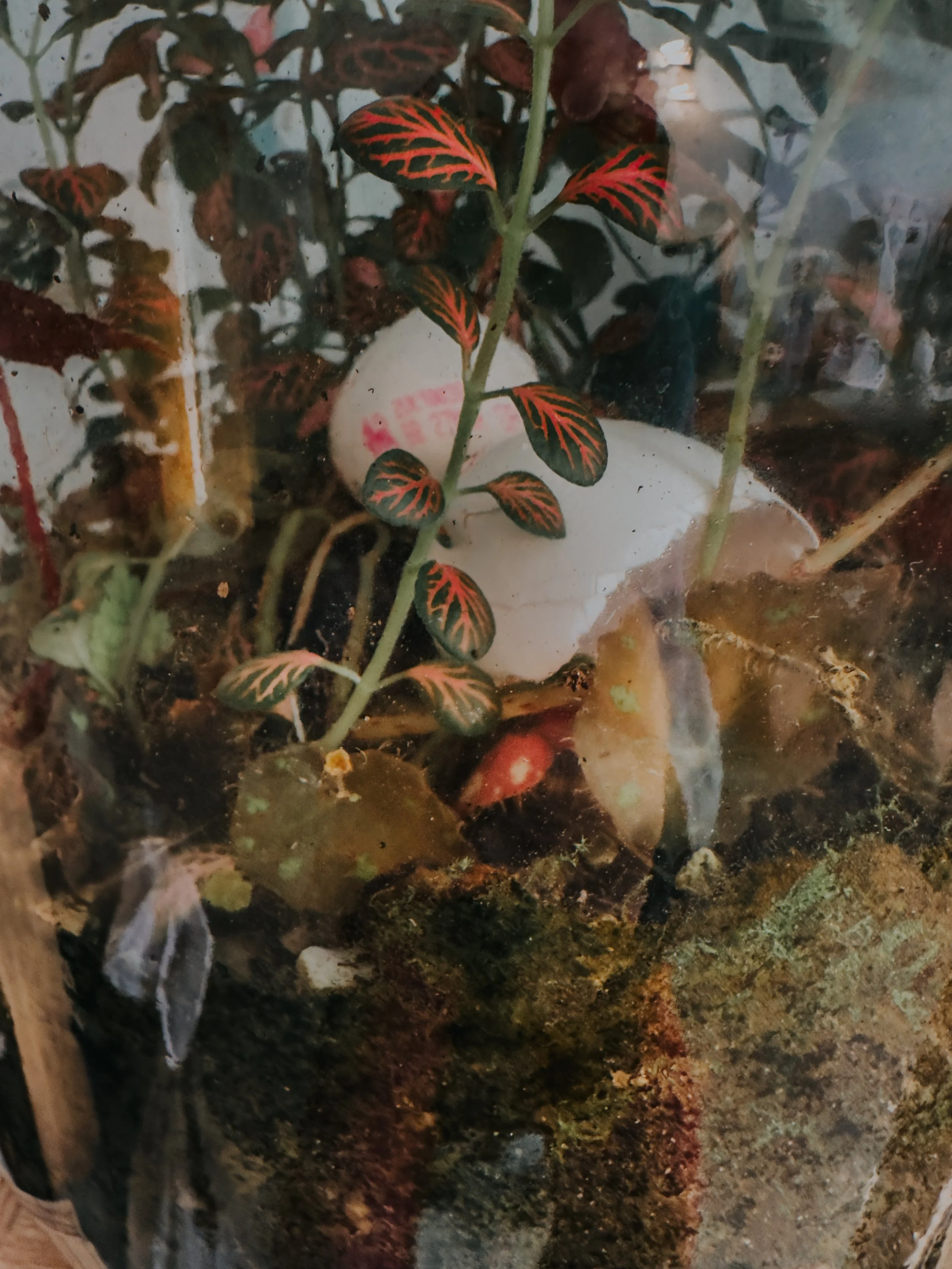
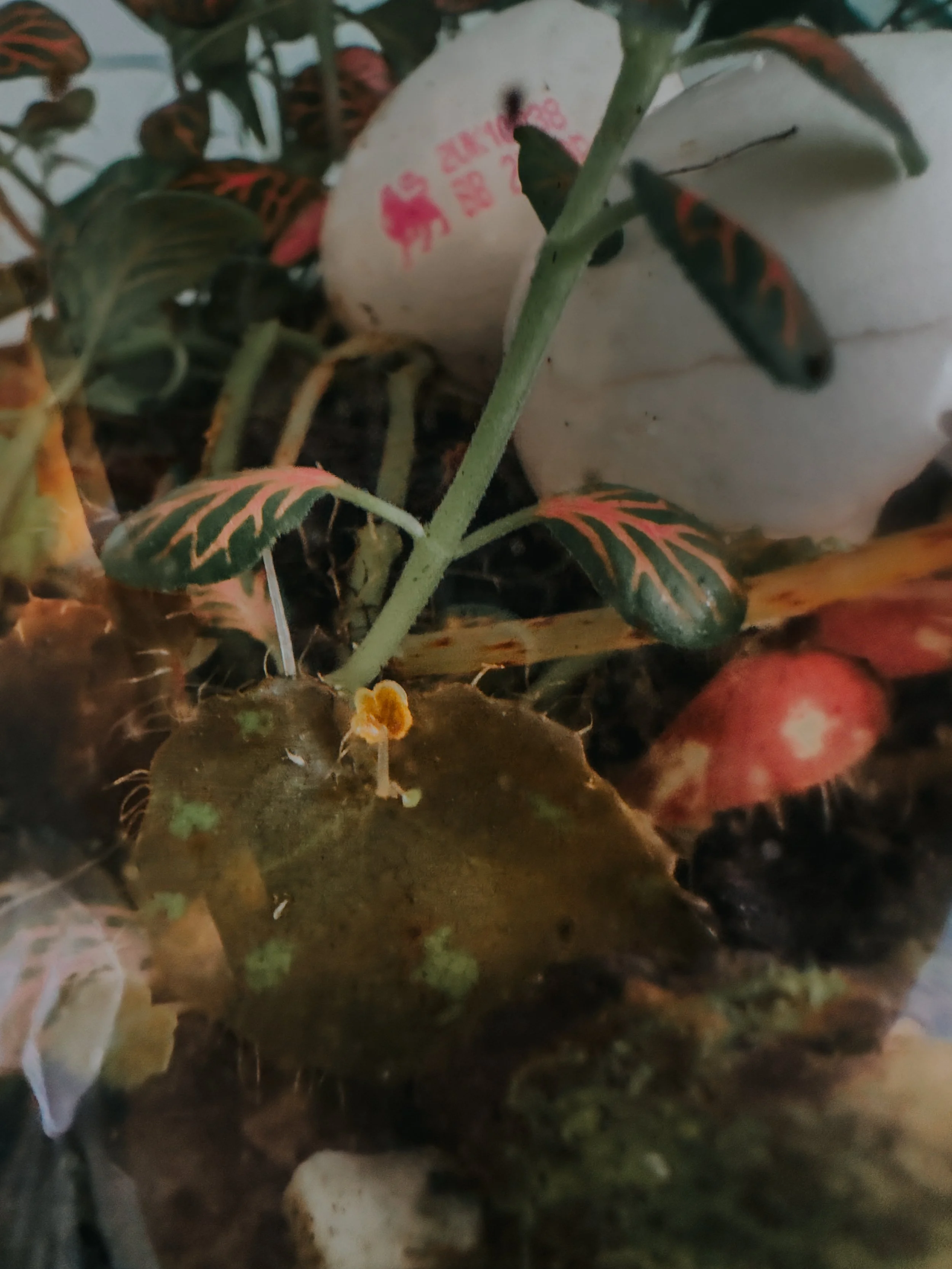
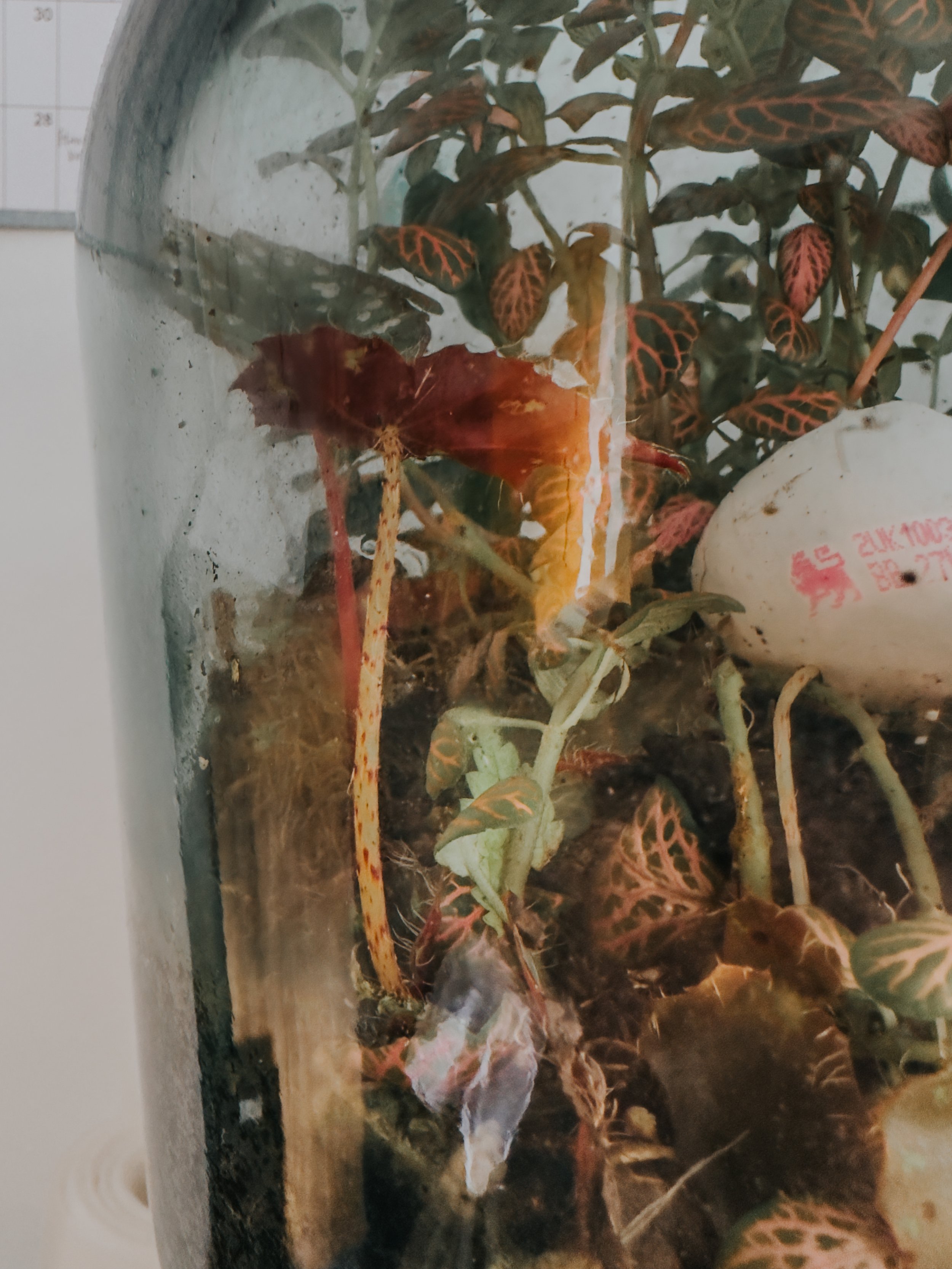
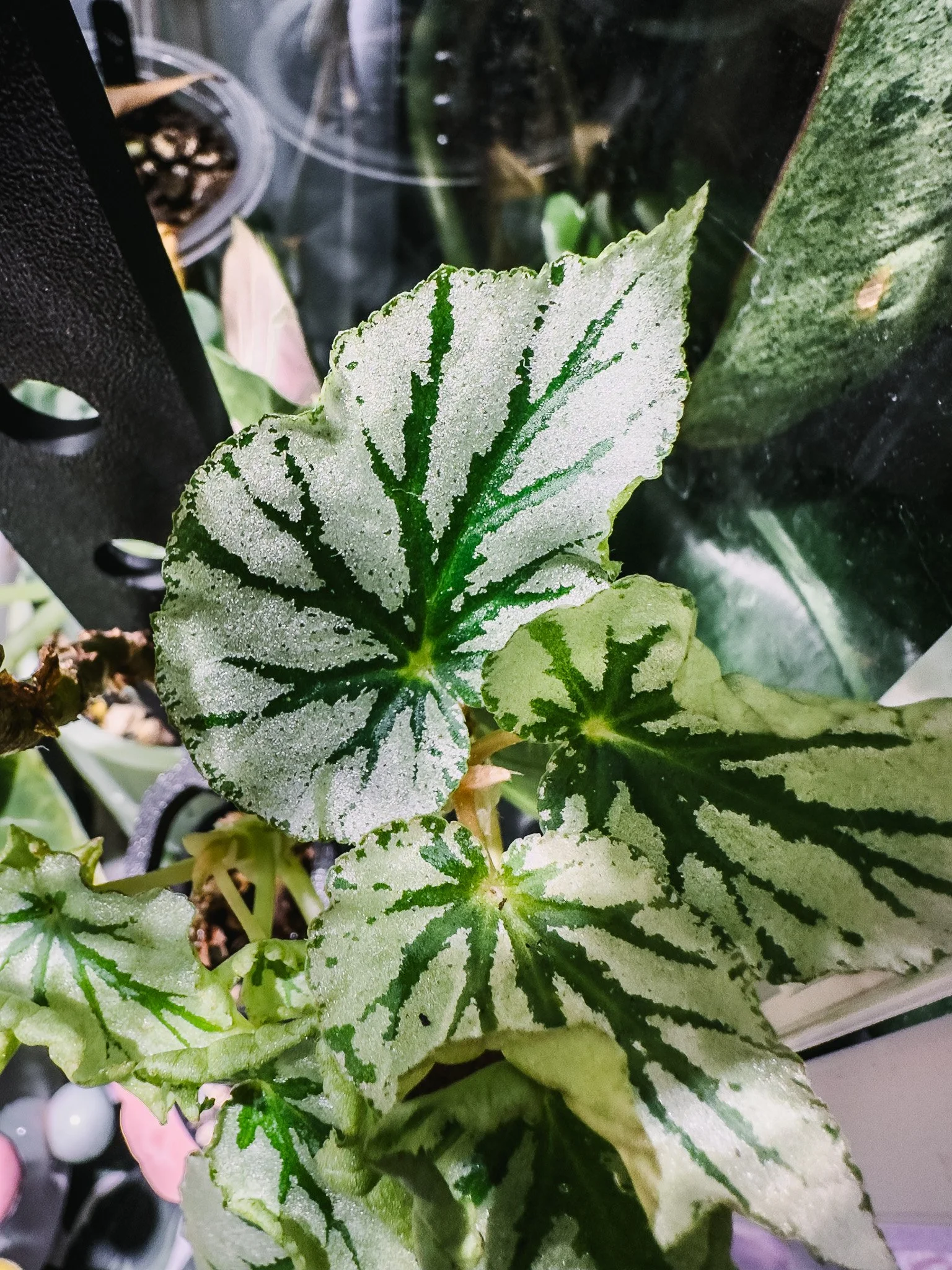
One of my favourites has to be Begonia bowerae, often nicknamed the Tiger Paws Begonia.
I’ve had great success growing this particular begonia in a large bottle terrarium. Because the opening is very small, it holds onto humidity and moisture, creating a stable environment that I rarely need to interfere with.
I’ve also grown it successfully in my plant room, where humidity tends to sit between 59–75%, sometimes even higher. This really reflects what the research suggests, while these begonias appreciate higher humidity, they can still adapt well when the overall environment is balanced.
🌿 Vertical understory (cane)
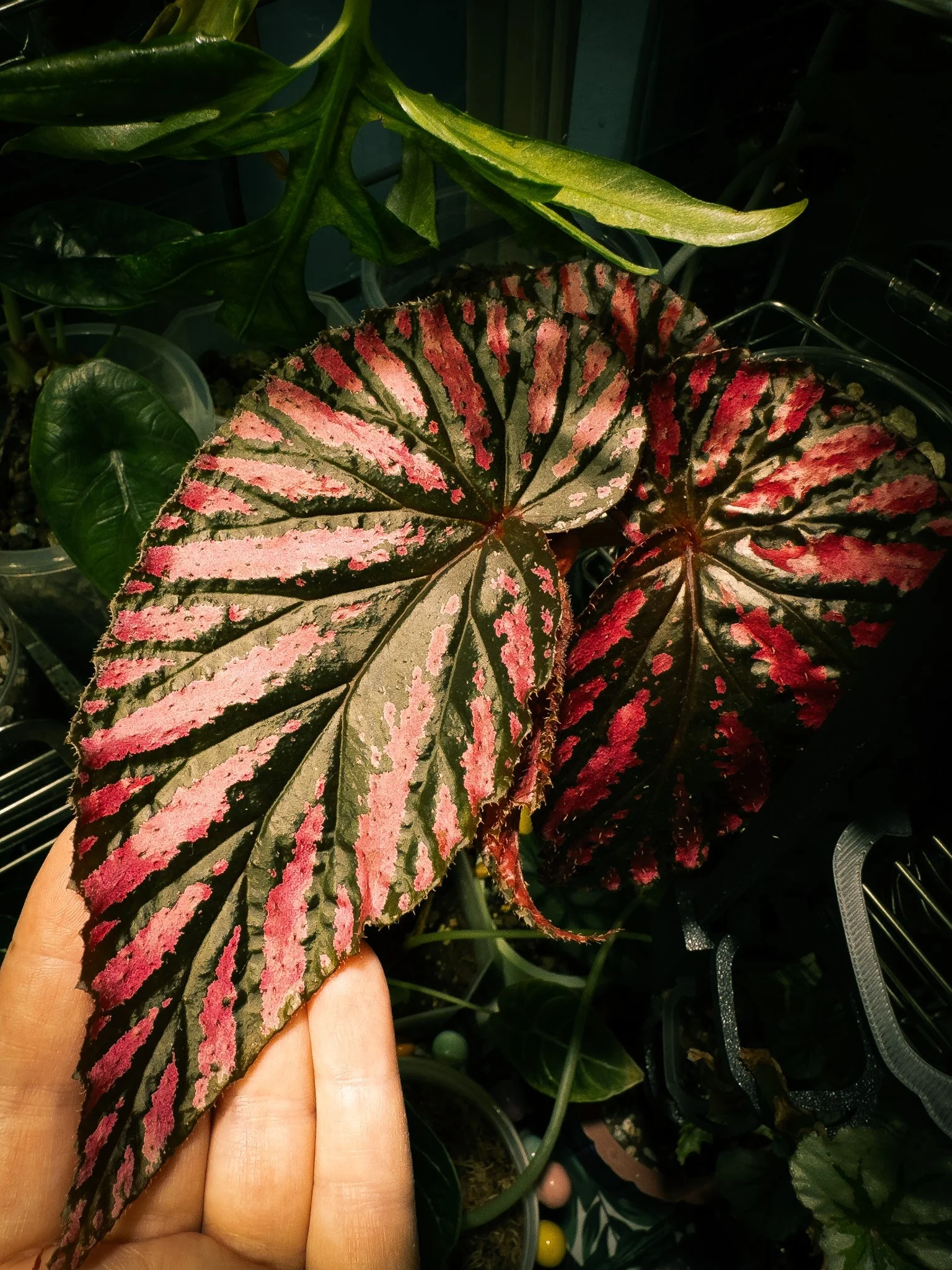
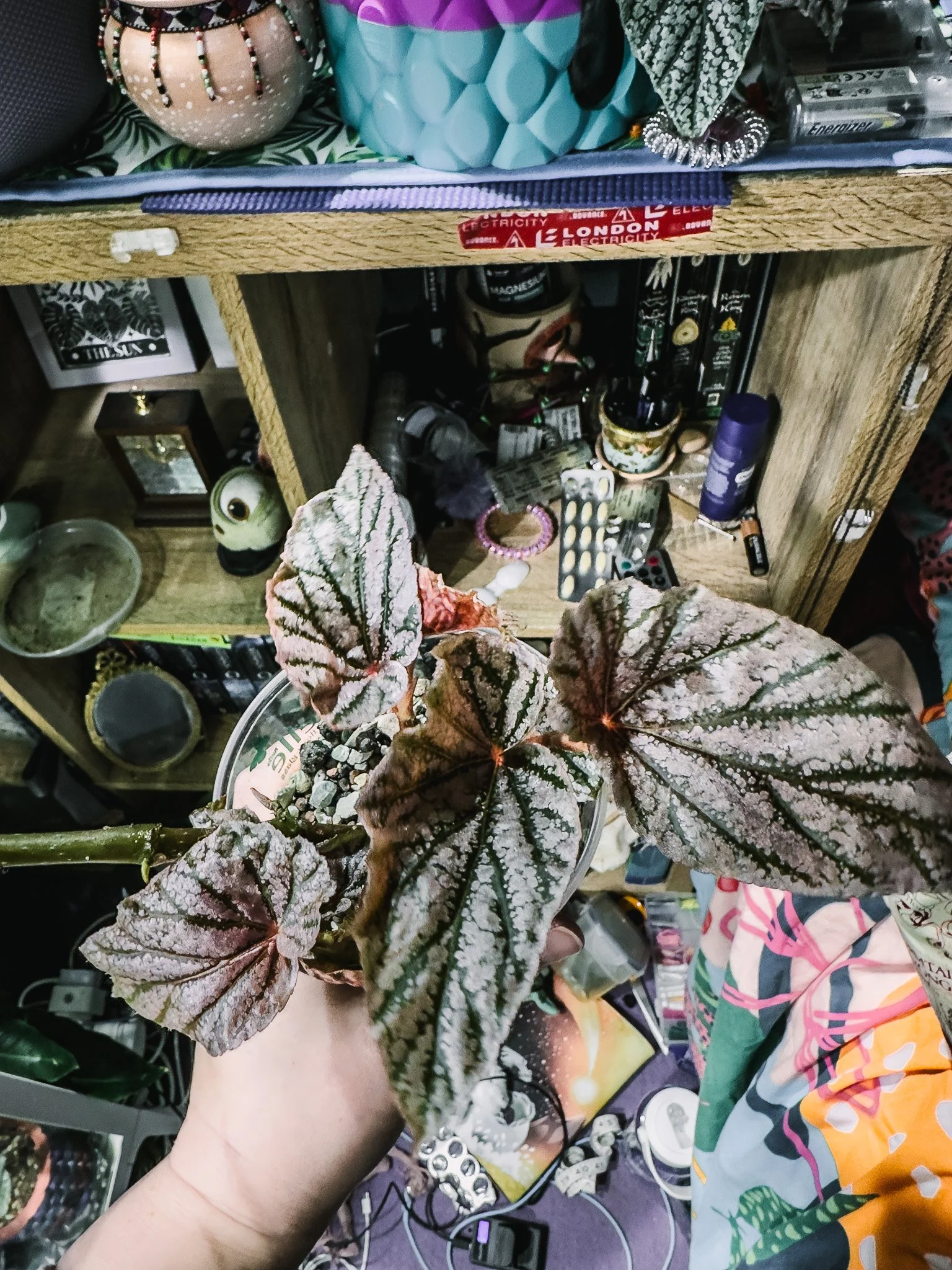
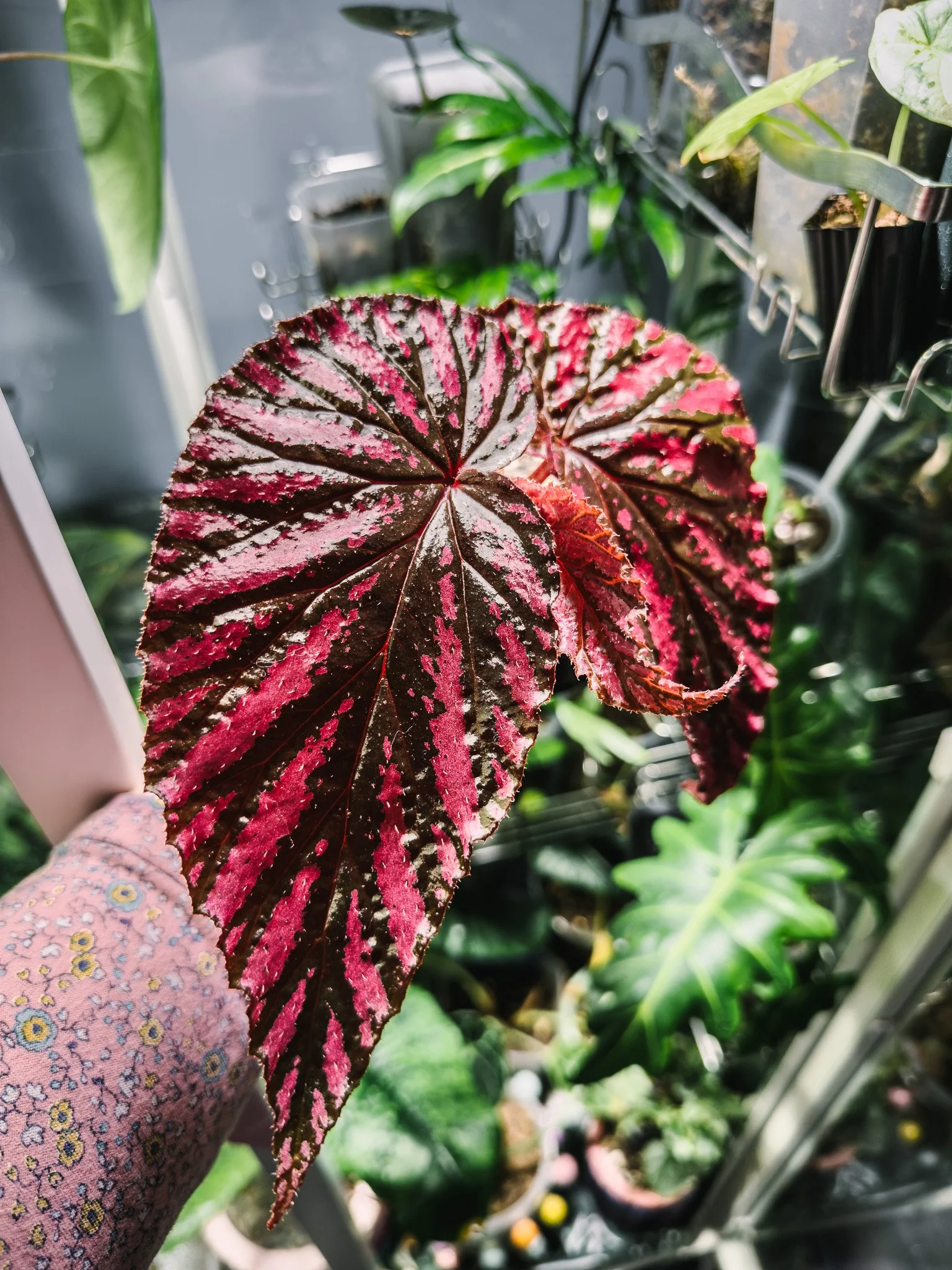
Cane begonias, often known as angel wing begonias, are among the most recognisable types grown as houseplants. They are named for their upright, bamboo-like stems, which allow them to grow taller than many other begonias, creating a more architectural shape.
Cane begonias grow in the middle layers of the forest, rising above the ground but still sheltered beneath the canopy. They are shaped by a world that is layered, competitive, and constantly shifting, where light moves, moisture lingers, and space is shared.
They don’t cling to the ground like rhizomatous types, and they don’t fight for survival in rock. Instead, they position themselves, growing upward into pockets of opportunity.
🌿 Natural environment
These begonias originate from humid tropical forest understories, particularly across Central and South America, as well as parts of Asia and Africa. Although they come from different regions, the environments they grow in are remarkably similar.
In the wild, they grow beneath tree canopies where light is filtered and soft, surrounded by warm air and consistent humidity.
The soil they grow in is very different from what we think of as typical compost. It is:
springy and organic-rich
full of air pockets
constantly being broken down by insects and microorganisms
It’s not just soil, it’s a living system.
Plants grow close together, gently competing for light, while the air remains warm and humid. Rainfall is frequent, but because of the loose, organic structure of the soil, water drains through rather than sitting around the roots.
🌿 Forest understory soil profile
In their natural environment, cane begonias grow in a soil system that is alive, layered, and constantly changing.
Leaf litter (decomposing leaves, twigs, and organic debris)
Loose, crumbly topsoil
High organic matter
Naturally aerated with tiny air pockets throughout
It is soft, but never suffocating.
Rather than growing in deep, compacted soil, their roots move through shallow layers of leaf litter and decaying organic matter, sometimes over underlying rock or compacted ground. This creates a growing medium that is airy, rich, and moisture-retentive without becoming waterlogged.
🌿 What that feels like in nature
Warm, still air.
Gentle, dappled light.
A forest that is always moving, but never harsh.
Light filters through layers of leaves above, shifting throughout the day. It’s not constant or direct, but broken into soft, changing pockets. Bright spots appear and disappear as the canopy moves, and plants grow upward and outward to find them.
Rainfall is frequent in these tropical environments, but it doesn’t arrive all at once. Water passes through layers of foliage before reaching the plant, becoming diffused and softened along the way.
Leaves and stems catch droplets
Water reaches the soil gradually
Excess drains downward through the organic layers
The soil remains consistently moist, but never stagnant. Roots are surrounded by moisture, but always with access to air.
🌫️ Atmosphere
The understory holds humidity like a quiet blanket.
Air is warm and consistently moist
Protected from strong winds
Surrounded by other plants releasing moisture
This creates a buffered environment, where conditions don’t change dramatically.
Even when the air feels still, there is always gentle movement between layers of the forest, allowing for subtle airflow and exchange.
This is not just soil, it’s a system.
A place where:
moisture is steady but never trapped
light is soft but always shifting
air is still, but never stagnant
“Soft underfoot, rich with life, and always breathing.”
🌱 What this means for care
🔆 Light
Bright, indirect light is ideal. Cane begonias can tolerate filtered light and even a little gentle sun, but harsh direct sunlight should be avoided as it can scorch the leaves.
These begonias come from environments where light is consistent but softened, so they respond well to stable lighting conditions. Grow lights can be a great way to supplement natural light, especially in darker months. Tools like the Photone app can help you measure and understand your light levels more accurately.
They generally prefer similar light levels to plants like Alocasia. While some may survive in lower light, they won’t truly thrive, often showing slower growth and reduced patterning.
💦 Water
Keep the soil evenly moist, allowing the top layer to dry slightly between watering.
Cane begonias are used to regular moisture, but they do not tolerate being saturated. Their roots grow deeper than rhizomatous types, so they can handle slightly more water, but they still need air within the soil.
Using a transparent pot can be helpful, as you can visually gauge when the substrate is drying out. As it dries, the soil will appear lighter, giving you a clearer signal of when to water.
During cooler months or periods of lower light, growth slows down. At this time, reduce watering accordingly, as the plant will use less moisture.
🌫️ Humidity
Cane begonias enjoy higher humidity, but they are generally more forgiving than delicate rhizomatous or terrarium species.
They can adapt to typical home environments, but will thrive when humidity is higher and the air is not too dry. Consistency is more important than extremes.
🪴 Soil
Think forest floor, not compost bag.
In their natural habitat, roots grow into loose, organic-rich soil, mixed with leaf litter and decomposing debris. This creates a medium that is both moisture-retentive and breathable.
At home, aim for a mix that is:
Light and airy
Well-draining
Still capable of holding gentle moisture
A good mix might include:
Bark
Coir or compost
Perlite (or similar for airflow)
If the soil is too dense, it will restrict airflow. If it’s too dry and open, it won’t support consistent growth. The balance is key.
🌬️ Airflow
In the forest understory, air is never completely still.
Cane begonias benefit from gentle airflow, which helps prevent issues such as mildew and supports overall plant health. This becomes especially important in more humid indoor environments, where stagnant air can quickly lead to problems.
🌿 Cane begonia varieties
Some beautiful examples of cane begonias include:
‘Maurice Amey’
‘Black Forest’
Begonia brevirimosa
Begonia hatacoa ‘Silver’
“Cane begonias don’t need perfect conditions, just the right balance, light to grow toward, moisture to move through, and air to breathe.”
🌱 What this means for care
🔆 Light
Bright, indirect light is ideal. Cane begonias can tolerate filtered light and even a little gentle sun, but harsh direct sunlight should be avoided as it can scorch the leaves.
These begonias come from environments where light is consistent but softened, so they respond well to stable lighting conditions. Grow lights can be a great way to supplement natural light, especially in darker months. Tools like the Photone app can help you measure and understand your light levels more accurately.
They generally prefer similar light levels to plants like Alocasia. While some may survive in lower light, they won’t truly thrive.
💦 Water
Keep the soil evenly moist, allowing the top layer to dry slightly between watering.
Cane begonias are used to regular moisture, but they do not tolerate being saturated. Their roots grow deeper than rhizomatous types, so they can handle slightly more water, but they still need air within the soil.
Using a transparent pot can help you understand your watering rhythm, as the substrate becomes visibly lighter as it dries.
During cooler months or lower light periods, growth slows, and watering should be reduced accordingly.
🌫️ Humidity
Cane begonias enjoy higher humidity, but they are generally more forgiving than more delicate types.
They can adapt to typical home conditions, but will thrive in environments where the air isn’t too dry. Consistency matters more than chasing high numbers.
🪴 Soil
Think forest floor, not compost bag.
In their natural habitat, roots grow into loose, organic-rich soil, layered with leaf litter and decomposing material. To recreate this at home, use a mix that is:
Light and airy
Well-draining
Still able to hold gentle moisture
A combination of bark, coir or compost, and perlite works well. The aim is to create a structure where water can move through, but never sit still.
When repotting, I like to keep this process contained and intentional. Using a water-resistant repotting mat helps recreate that “contained forest floor” feeling, keeping everything together while you build your mix. Pairing this with a soft plant cloth makes it easier to handle leaves gently, especially when working with larger or more delicate foliage.
🌬️ Airflow
In the forest understory, air is never completely still.
Cane begonias benefit from gentle airflow, which helps prevent issues like mildew and supports overall plant health. This becomes especially important in more humid indoor environments.
🌿 Cane begonia varieties
Some beautiful examples of cane begonias include:
‘Maurice Amey’
‘Black Forest’
Begonia brevirimosa
Begonia hatacoa ‘Silver’
“Cane begonias don’t need perfect conditions, just the right balance, light to grow toward, moisture to move through, and air to breathe.”
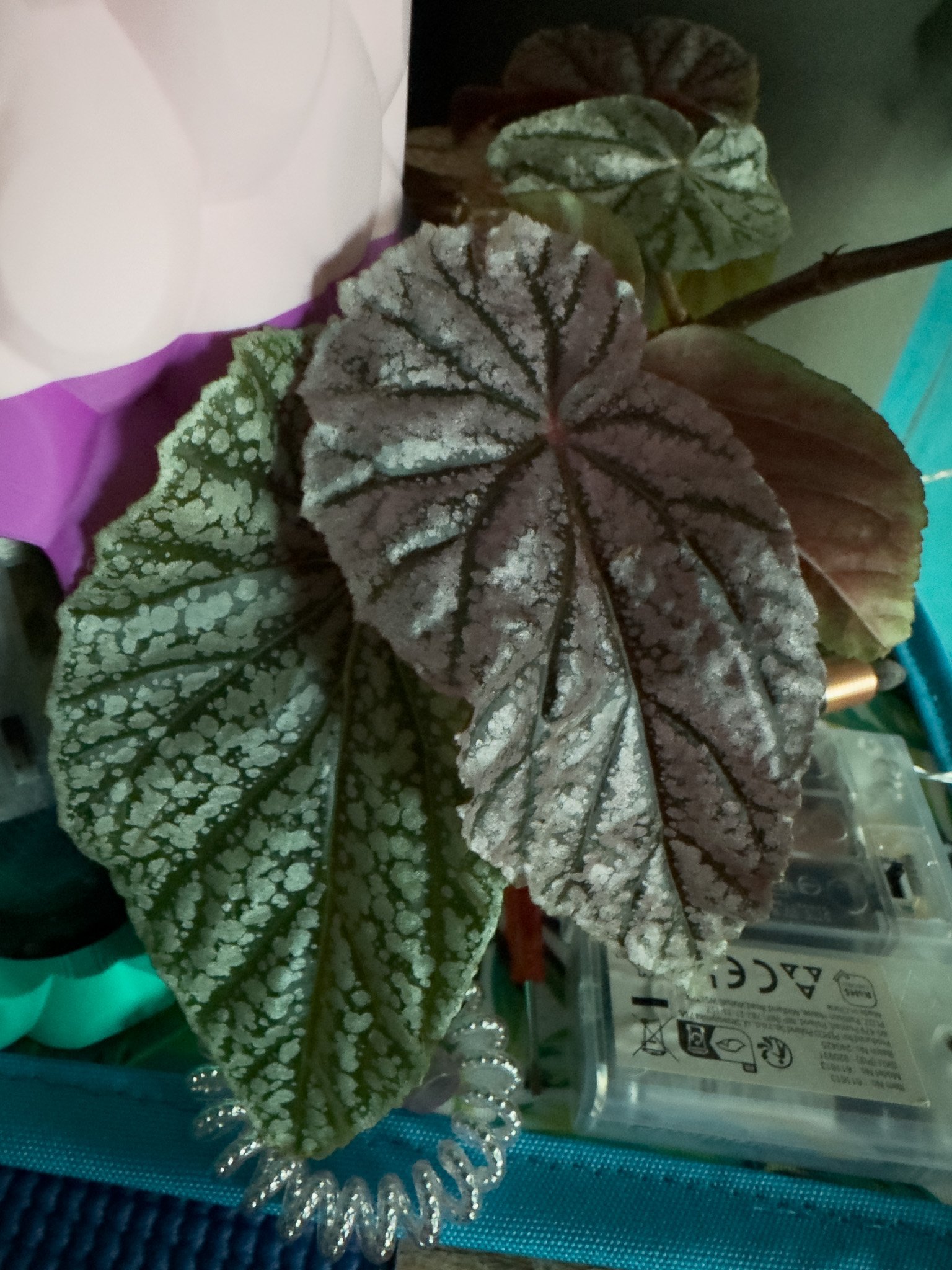
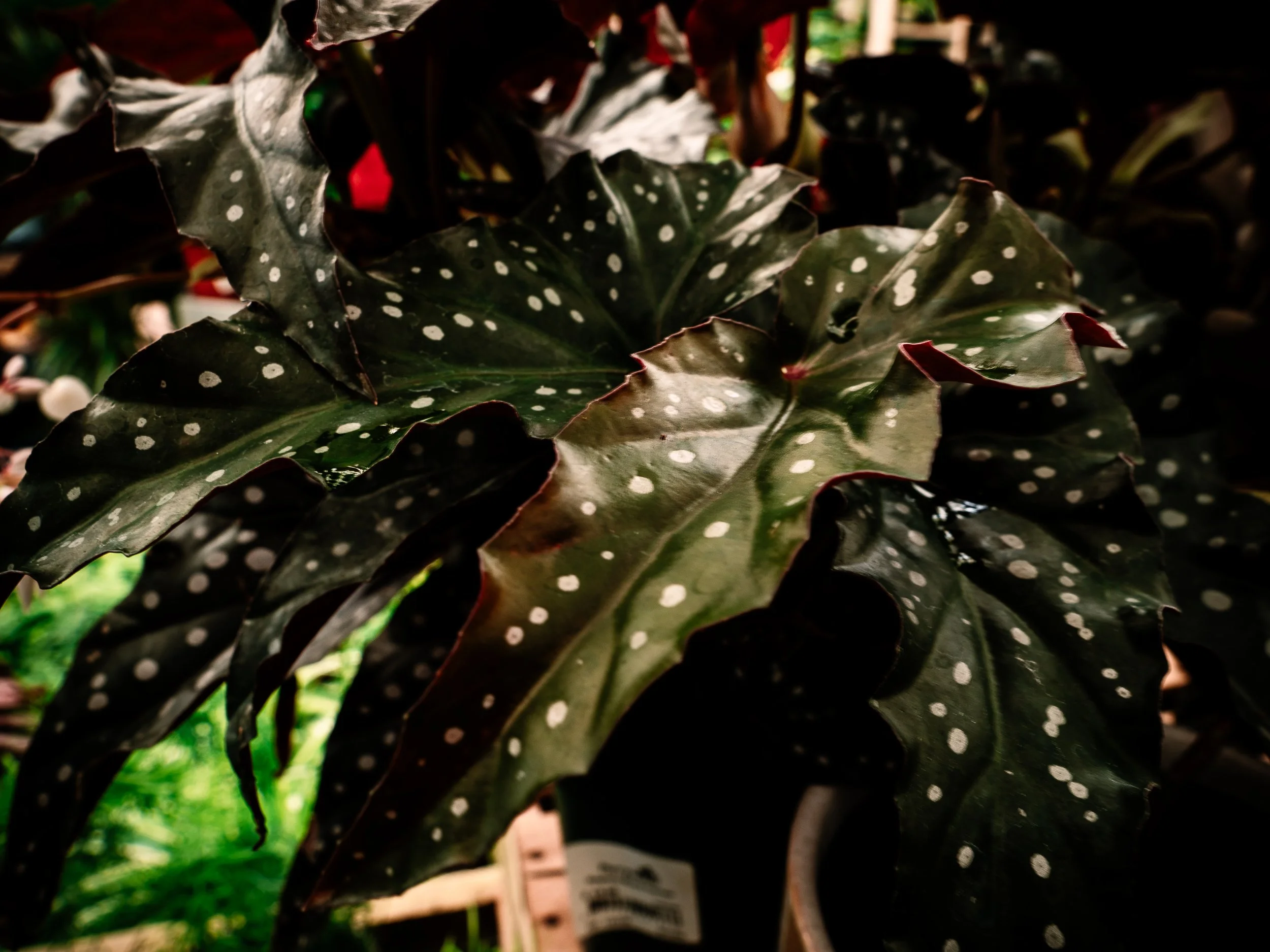
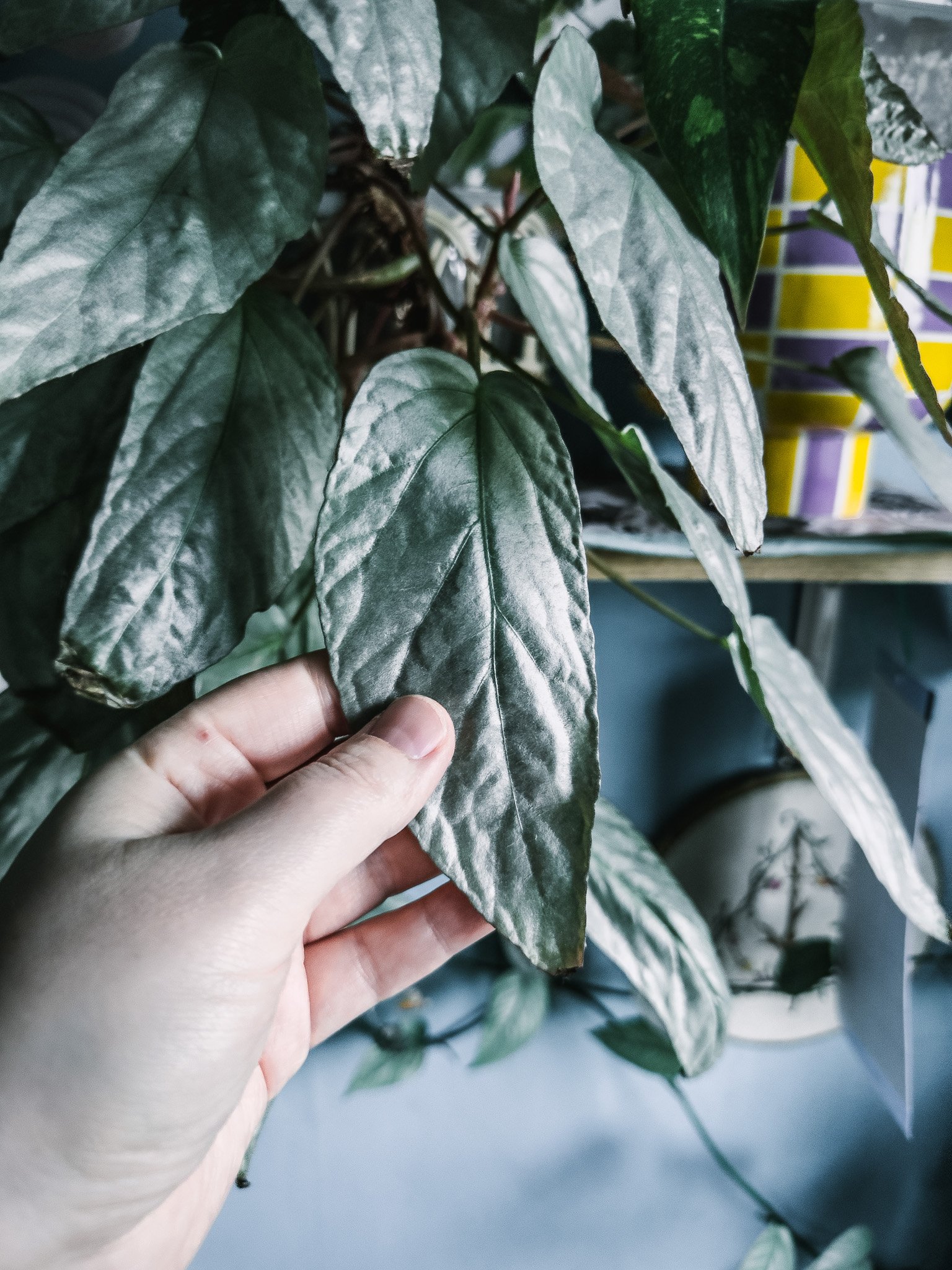
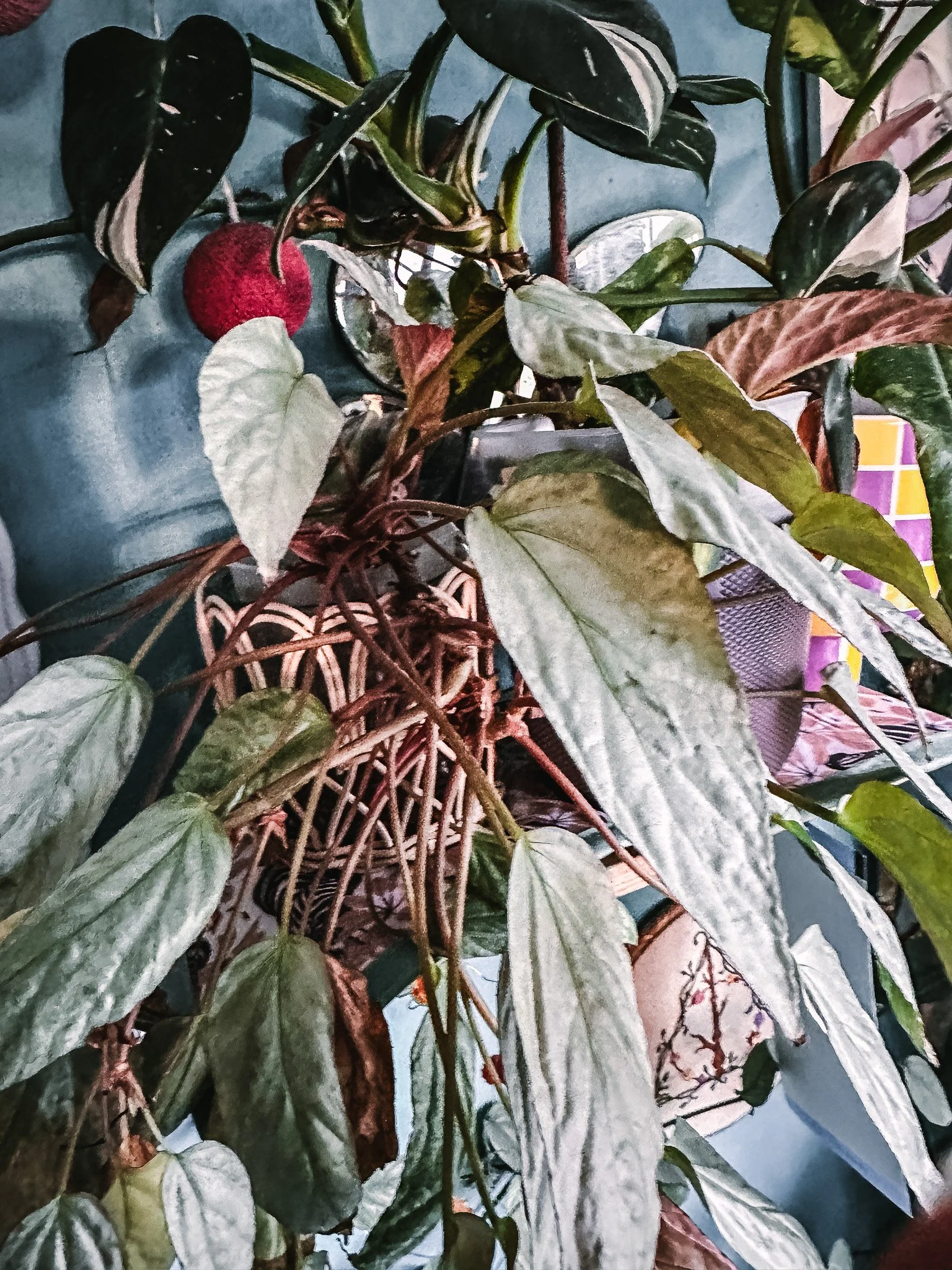
🌿 Why cane begonias work so well as houseplants
Cane begonias strike a beautiful balance. They carry that tropical softness, but with a little more resilience than many other begonia types.
Their upright, architectural growth makes them perfect for adding height and structure to indoor plant spaces, almost like bringing a small piece of the forest’s vertical layers into your home.
They are generally considered some of the easier begonias to care for indoors, though certain varieties, such as Begonia brevirimosa, can be more challenging and benefit from more stable conditions.
🌿 Jungle Floor Creative – vertical understory favourites
Some of my favourite cane begonias reflect both structure and story:
Begonia maculata — the iconic polka-dot begonia, with a kind of vintage charm that feels like it belongs somewhere between the 1920s and 1950s
Begonia hatacoa ‘Silver’ — less common, with a softer, more refined presence
Begonia brevirimosa — more rare, with incredible colour but a little more demanding
‘Maurice Amey’ and ‘Sinbad’ — beautiful examples of cane structure and pattern
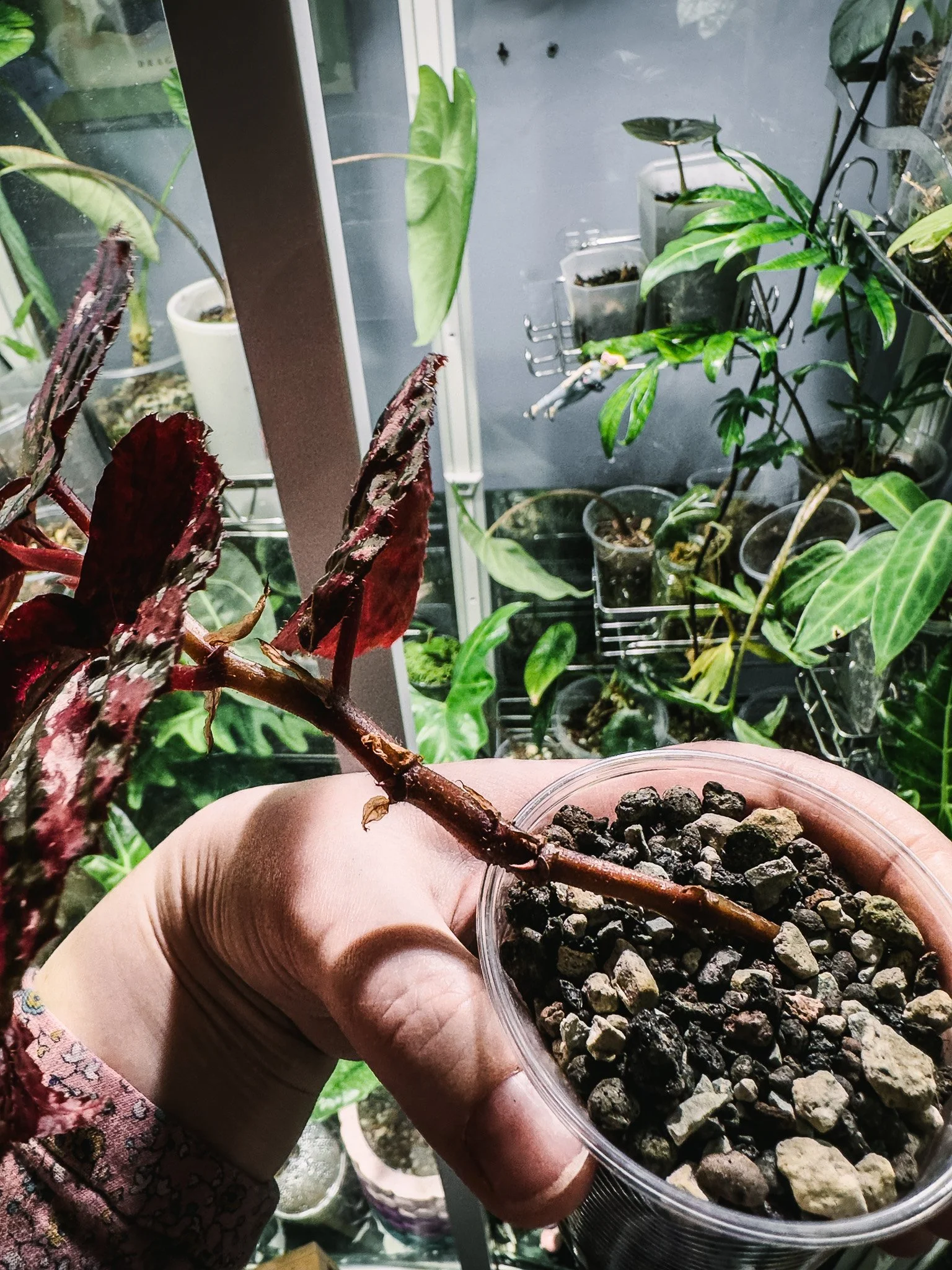
For me, care has been relatively consistent across these varieties. I grow many of mine using a semi-hydro setup, in self-watering pots or clear cups, which helps maintain that balance of moisture and airflow that cane begonias naturally prefer.
When working with these plants, especially during repotting or transitioning into semi-hydro, I always reach for my Jungle Floor Creative water-resistant repotting mat. It keeps everything contained while building your substrate and reflects that same idea of creating a controlled, intentional growing environment.
Paired with a soft plant cloth, it becomes easier to handle larger leaves gently, keeping foliage clean and undamaged while you work.
🪨 Extreme habitats – limestone and rocky begonias
Some begonias come from environments that feel almost otherworldly, limestone cliffs, cave entrances, and jagged rocky slopes, where soil is scarce and conditions shift quickly.
These species are often found across southern China, Vietnam, and Southeast Asia, growing in karst landscapes. Here, rain arrives in bursts, flowing over rock surfaces and draining away just as quickly, leaving behind only thin pockets of moisture and organic debris.
Instead of spreading through soil, these begonias anchor themselves into crevices and cracks, where their roots experience a cycle of quick saturation followed by airflow and drying.
🌿 What that feels like in nature
Cool stone under constant humidity.
Water trickling, then disappearing.
Roots wedged into narrow spaces, never sitting still in heavy soil.
🌿 Environment of these species
🌱 Light
Light is limited and uneven:
Filtered by rock or surrounding vegetation
Often dim, especially deeper in cave-like environments
Occasionally interrupted by brief shafts of brighter light
These begonias are adapted to low, inconsistent light, not exposure.
🪴 Soil profile
Soil is minimal and fragmented:
Thin layers of organic debris caught in crevices
Mixed with mineral particles from rock
Extremely free-draining and shallow
Roots don’t grow downward, they:
Spread into cracks and gaps
Anchor into structure rather than soil
👉 These plants aren’t rooted in soil, but in opportunity
🌫️ Atmosphere
This is where the balance shifts:
Air is cooler, shaded, and very humid
Moisture exists more in the air than in the soil
This creates a contrast:
Roots dry quickly
Surroundings remain consistently humid
🌬️ Airflow
Even in enclosed environments, air is always moving:
Through cave openings
Across rock surfaces
Between crevices
This gentle airflow prevents stagnation and supports survival.
🌱 What this means for care
With these begonias, you’re not recreating soil, you’re recreating conditions.
🪴 Soil
Use a very open, structured mix:
Bark
Perlite
A small amount of organic material
It should feel:
Loose
Chunky
Fast-draining
👉 Water should pass through, never linger
💧 Water
Water lightly, but consistently:
Allow water to move through the substrate
Never let the plant sit wet
Avoid heavy soaking
Think:
👉 frequent refresh, not saturation
🌫️ Humidity
Humidity is essential.
These begonias rely more on moist air than wet soil, especially delicate species.
🌬️ Airflow
Balance humidity with airflow:
Prevents rot
Keeps conditions fresh
Mimics natural environments
🌿 Begonias from these environments
Begonia ferox — dramatic, spiked foliage like living armour
Begonia pavonina — iridescent blue leaves in low light
Begonia amphioxus — narrow leaves with striking red markings
🌿my Final Rambles
I’ll be honest, I don’t have as much hands-on experience with these types yet. Their extreme habitats make them more challenging to replicate indoors.
But after researching them more deeply, I feel like I understand their needs in a completely different way, and I’m definitely tempted to explore them again.
If you’ve grown any of these begonias, I’d love to hear your experience.
Feel free to share in the comments or get in touch, it’s always fascinating to see how these plants behave in different homes and environments.

5 Lovely Gift Ideas for Plant Lovers This Valentine’s & Galentine’s Day
Five lovely Valentine’s and Galentine’s Day gift ideas for plant lovers, featuring practical plant care accessories and botanical inspiration.
Whether you’re celebrating romantic love or your favourite plant-loving friends, these thoughtful gift ideas are perfect for Valentine’s and Galentine’s Day.
Propagation Stations for Plant Cuttings
Propagation stations are a lovely gift for plant lovers who enjoy growing and sharing cuttings. They look beautiful on a windowsill and pair perfectly with a calm, considered plant care setup.
Reusable Potting Mats for Repotting Plants
A reusable, water-resistant potting mat makes repotting houseplants cleaner and more enjoyable. Jungle Floor potting mats are designed to be both practical and beautiful, ideal for plant lovers who appreciate thoughtful tools.
Botanical Home Decor & Plant-Inspired Gifts
Plant-inspired decor, photography, and jungle-themed accessories bring leafy charm to a home without adding another plant to care for. Perfect for Galentine’s gifting when you want something a little different.
Plant Pots, Tools & Care Accessories
Small plant accessories like pots, tools, Soft plant cloths, Soil Scoops and everyday care essentials make easy and thoughtful gifts. They’re the kind of items plant lovers always need and rarely treat themselves to.
A Jungle Floor Gift Voucher
A Jungle Floor gift voucher is a lovely option if you’re unsure what to choose. It lets them pick exactly what they need for their indoor jungle, from plant care tools to botanical accessories. Gift Voucher
💡 Plant lover tip: Heart-shaped houseplants like String of Hearts or Heart-leaf Hoya make a popular Valentine’s or Galentine’s gift and pair beautifully with practical plant care accessories.
House plant Trends 2025, Seen Through a Plant Lover’s Lens
2025 felt like wandering through a living rainforest — full of light, leaves, and hidden corners of wonder. It was a year shaped by plant challenges, creative growth, and quiet lessons, both in my home jungle and beyond. From exploring Cambridge University Botanic Garden with my besties at the start of the year, to diving deeper into houseplants, botanical creativity, and sharing personal plant recommendations, this year became a journey of steady growth and discovery.
🌿 2025: A Year of Growth, Green Magic, and Creative Adventures.
2025 felt like wandering through a living rainforest — full of light, leaves, and hidden corners of wonder. It was a year shaped by plant challenges, creative growth, and quiet lessons, both in my home jungle and beyond. From exploring Cambridge University Botanic Garden with my besties at the start of the year, to diving deeper into houseplants, botanical creativity, and sharing personal plant recommendations, this year became a journey of steady growth and discovery.
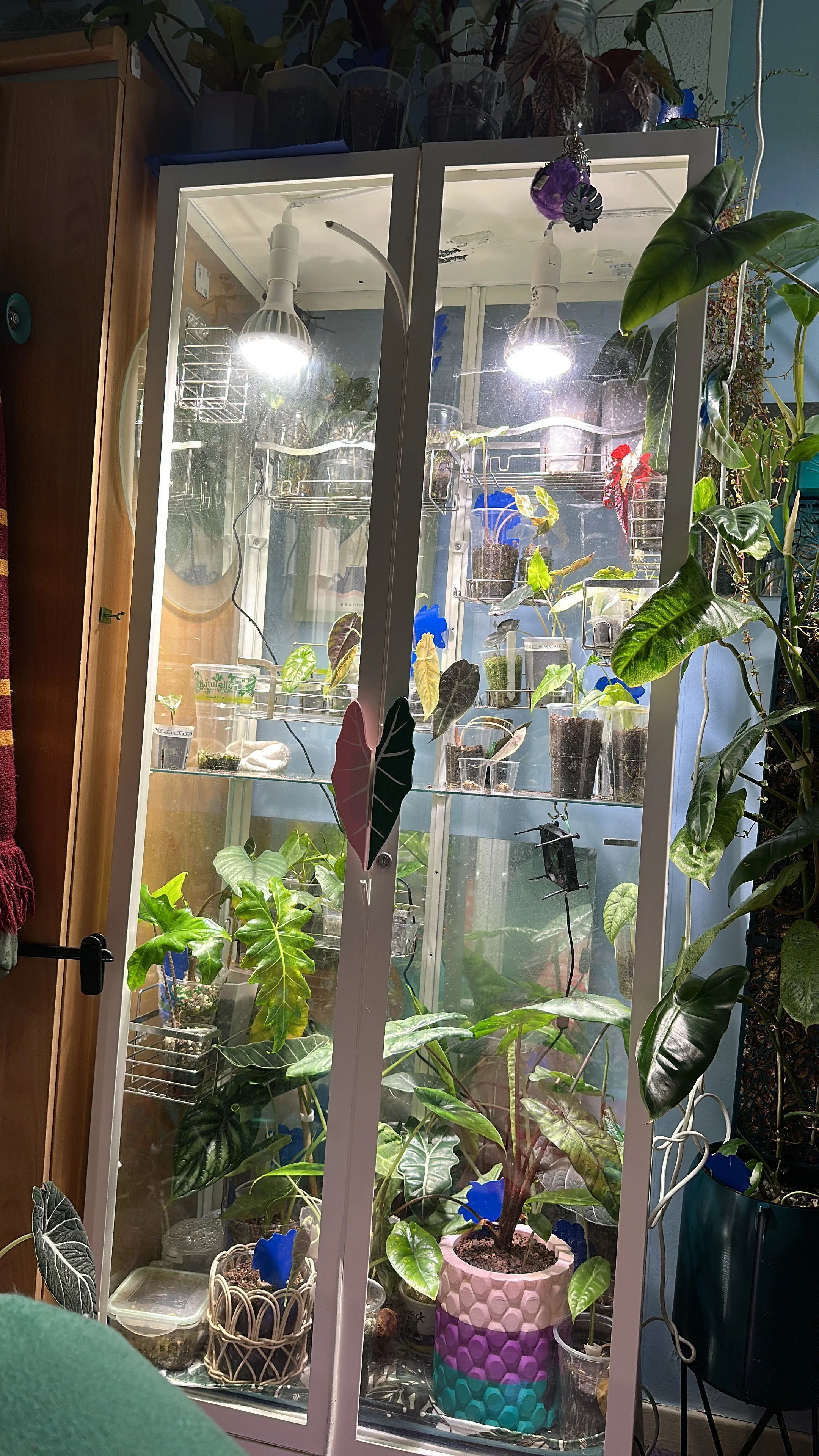
As a plant lover, 2025 brought new obsessions and milestones. I fell in love with anthuriums, welcomed a new IKEA Milsbo into my growing plant collection, and made more Jungle Floor potting mats than ever before. Seeing these botanical creations find homes with fellow plant lovers was one of the highlights of my 2025 year in review, reminding me how meaningful slow, intentional making can be.
Creatively, opening Jungle Floor Creative allowed me to develop my photography skills, experiment with light and texture, and explore how plants, shadows, and reflections tell stories. Photography became another way of observing growth — much like plant care — noticing subtle changes over time rather than chasing instant results.
Not every part of 2025 was filled with light and leaves. This year also asked me to learn how to cope with ASD, process grief and loss, and find softness during moments of frustration and overwhelm. Like many houseplant challenges, growth didn’t always look neat or predictable — but it was happening beneath the surface all the same.
Alongside the challenges came deep joy: becoming an auntie, spending time with my besties, and experiencing the quiet magic of nature through my camera lens. These moments grounded me and reminded me why I’m drawn to plants, photography, and creative work in the first place.
As I reflect on 2025, I see it as a year of rooting — a season of learning, patience, and gentle expansion. I’m carrying these lessons forward into 2026 with intention, curiosity, and trust in slow growth.
Thank you for walking the Jungle Floor with me this year — through the growth, the grief, the creative sparks, and the leafy adventures. Every leaf, every moment, every photo mattered.
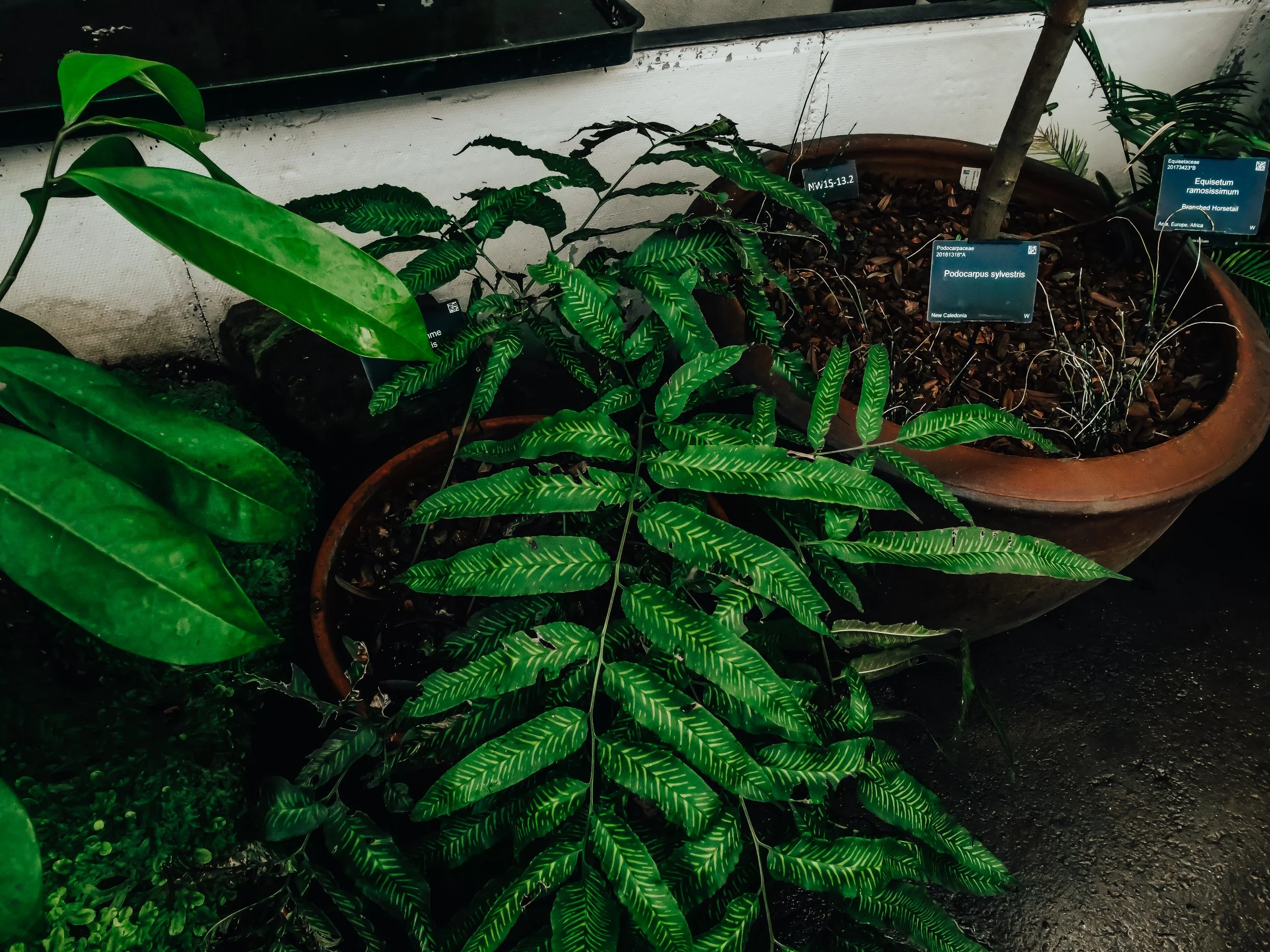
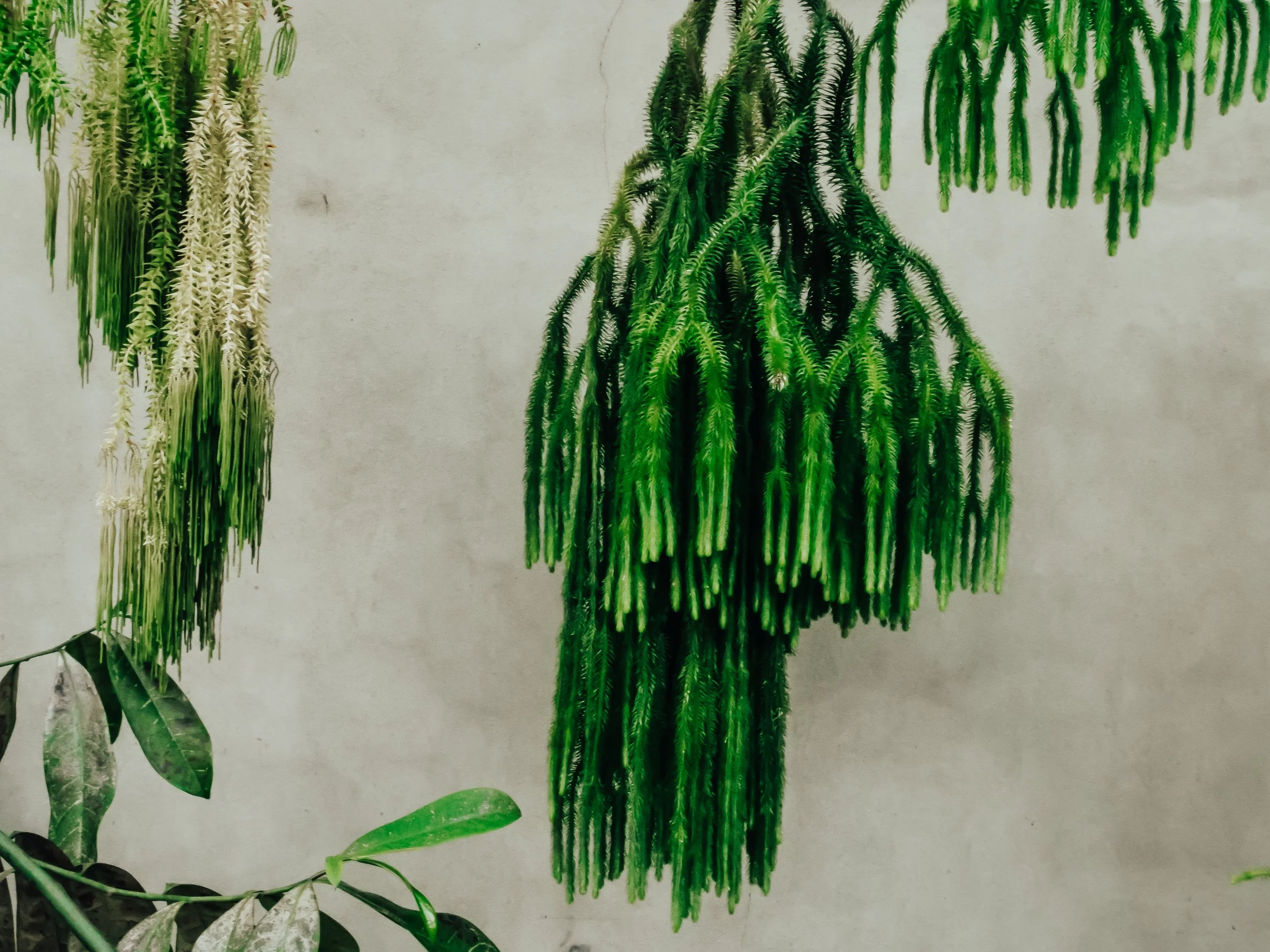

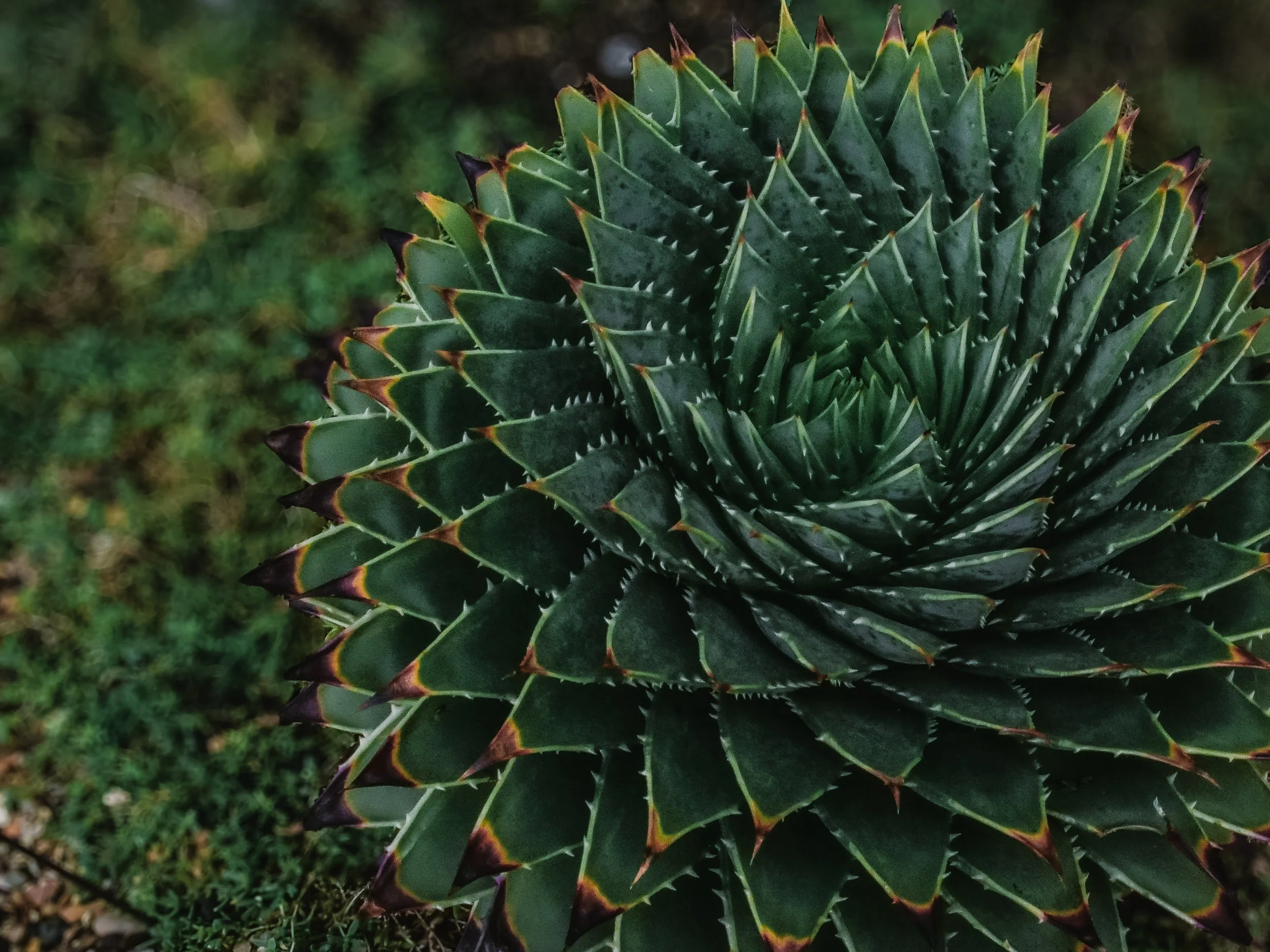
botanical photography
🌿 Plant Challenges in 2025
Like any growing season, 2025 came with its own set of houseplant challenges. Each plant tested my patience, observation skills, and ability to trust slow growth. These challenges became some of my most valuable plant care lessons of 2025.
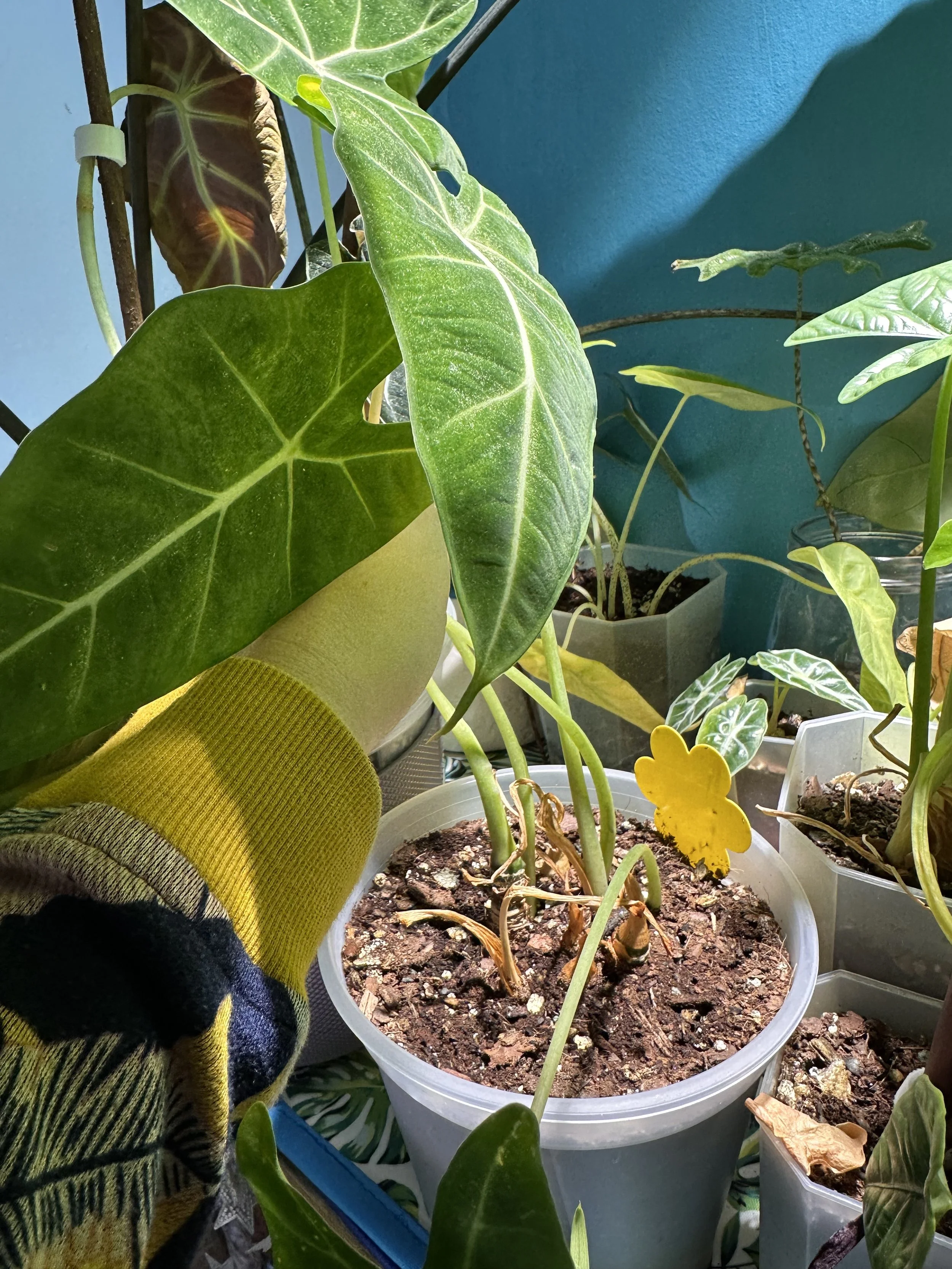
🌿 Alocasia micholitziana Care Challenges
A true test of vigilance. Spider mites lurked quietly, requiring close observation and consistent care. This plant reminded me that early signs matter — and that staying attentive can make all the difference when caring for sensitive houseplants like Alocasia.
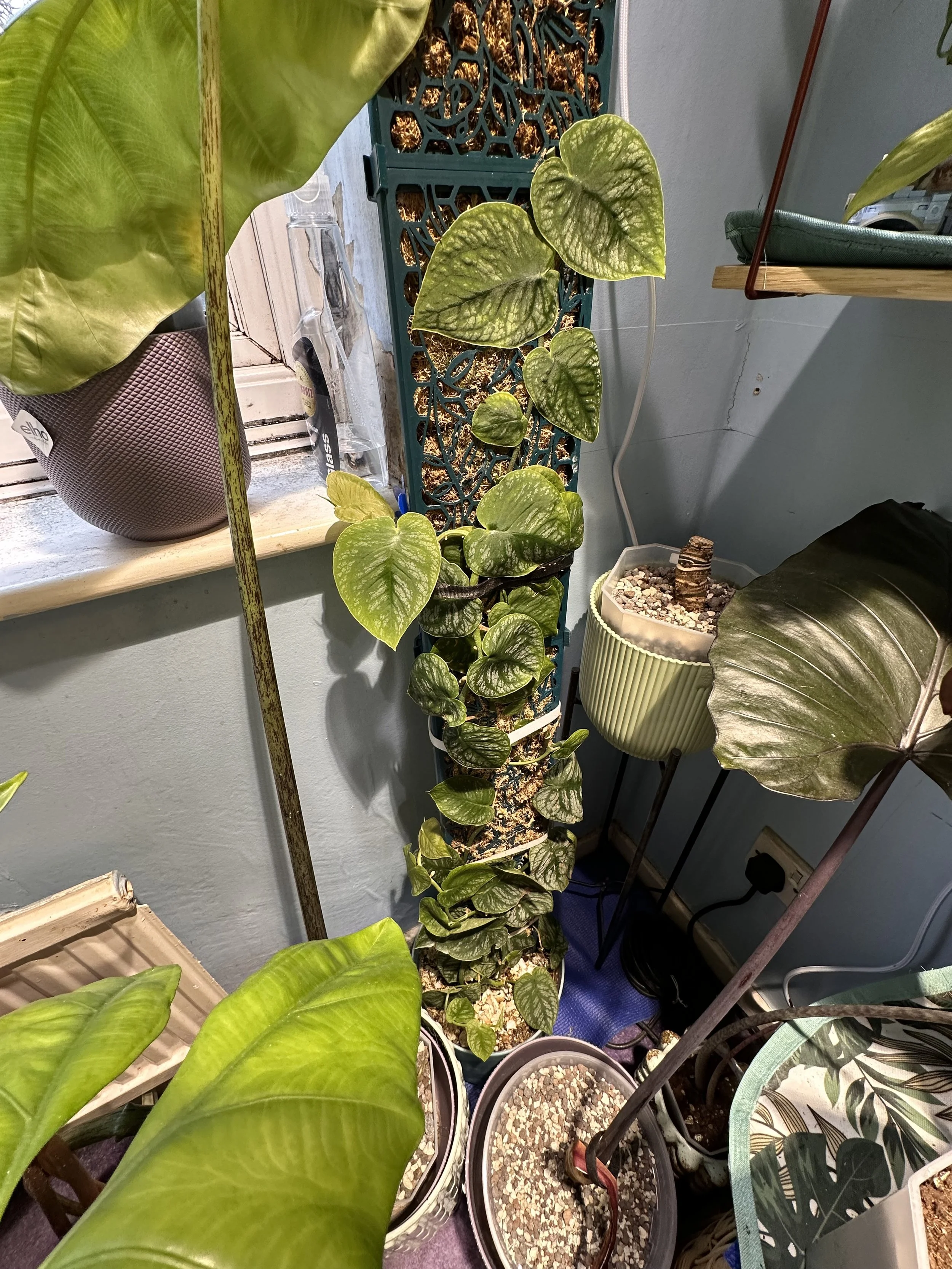
🌿Monstera dubia Growth & Support
Fast-growing climbers always reaching for more. These plants thrived when given proper support, proving that ambition — whether in plants or people — needs structure to grow well. One of my clearest reminders that support systems are essential for healthy plant growth.

🌿Begonia ‘Maurice Amey’ Recovery
Cut back to nothing at the beginning of the year, this begonia taught me a powerful lesson in rest and regrowth. Sometimes plant care means stepping back completely and trusting that new growth will return in its own time.
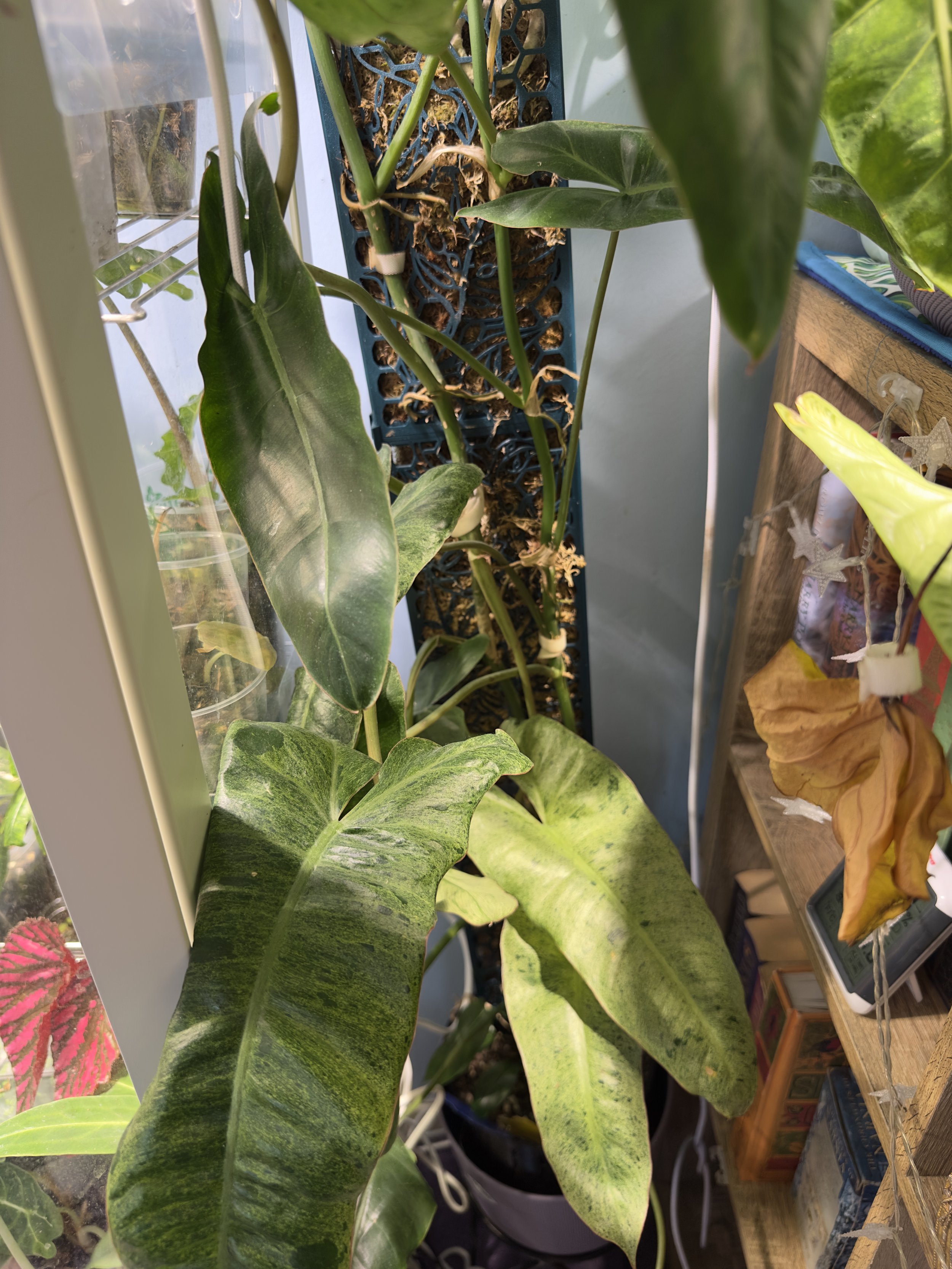
🌿 Philodendron ‘Paraiso Verde’ Variegation
Once beautifully variegated, now quietly green. This plant became a lesson in patience — waiting for warmth, light, and the right conditions for its hidden magic to re-emerge. A reminder that variegation, like creativity, isn’t always constant.
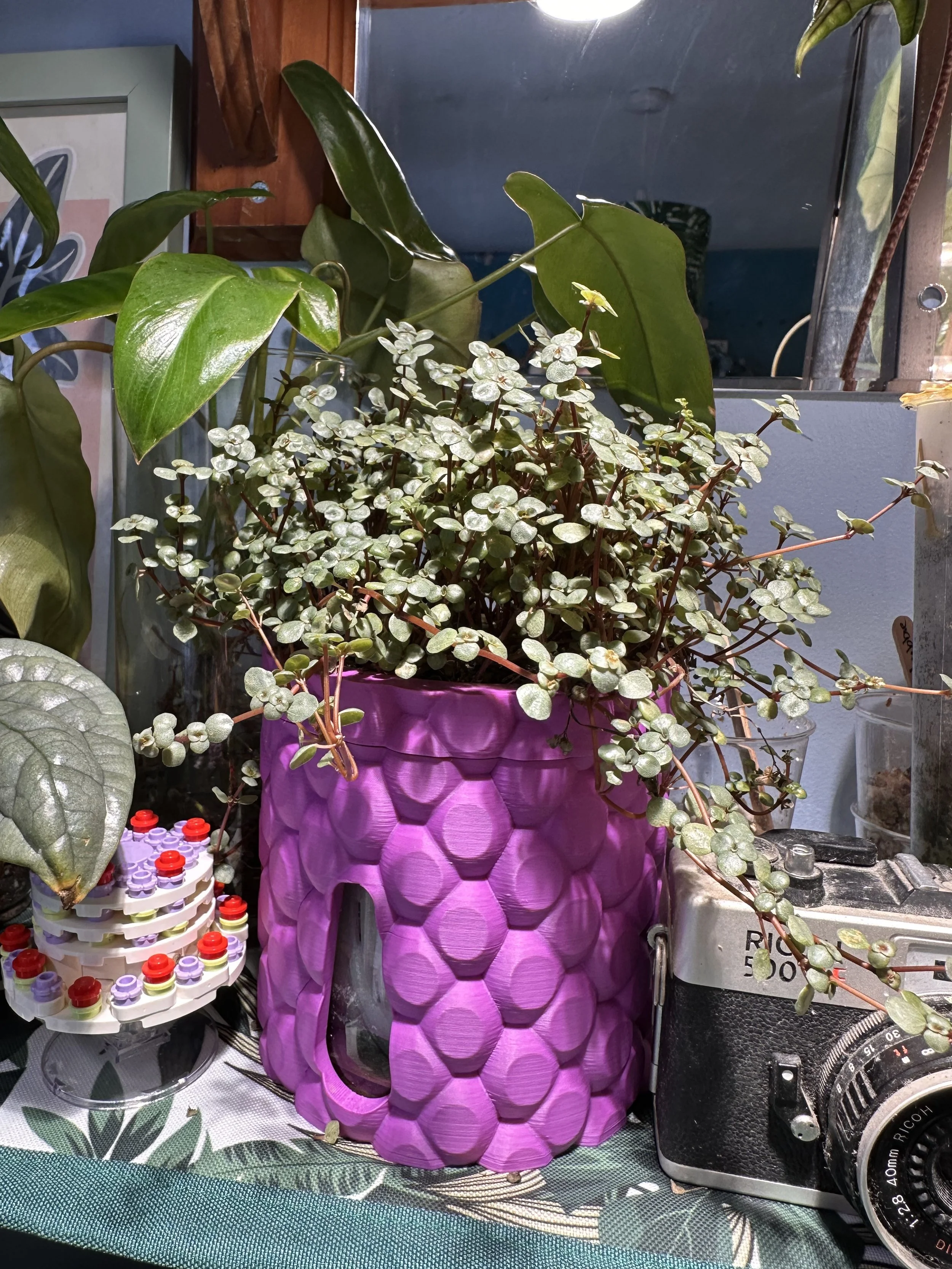
🌿 Pilea ‘Greyzy’ Semi-Hydro Transition
Post chop-and-prop and currently bald, this Pilea entered a period of transition in 2025. Moving into semi-hydro required trust in the process — especially after watching its sibling thrive. A gentle lesson in comparison, resilience, and letting plants adjust at their own pace.
🌿 Plants Thriving in 2025
Not all of 2025 was about challenges. Some plants have been, surprising me, and quietly flourished — reminders that when conditions are right, growth can feel almost effortless. These new plants became bright points in my 2025 plant journey.
🌿 Shattered Glass BOYCEANA Alocasia
A fast favourite. This plant produced loads of new leaves throughout the year, rewarding consistent care and stable conditions. Watching its patterned foliage unfurl felt like visible proof that patience pays off.
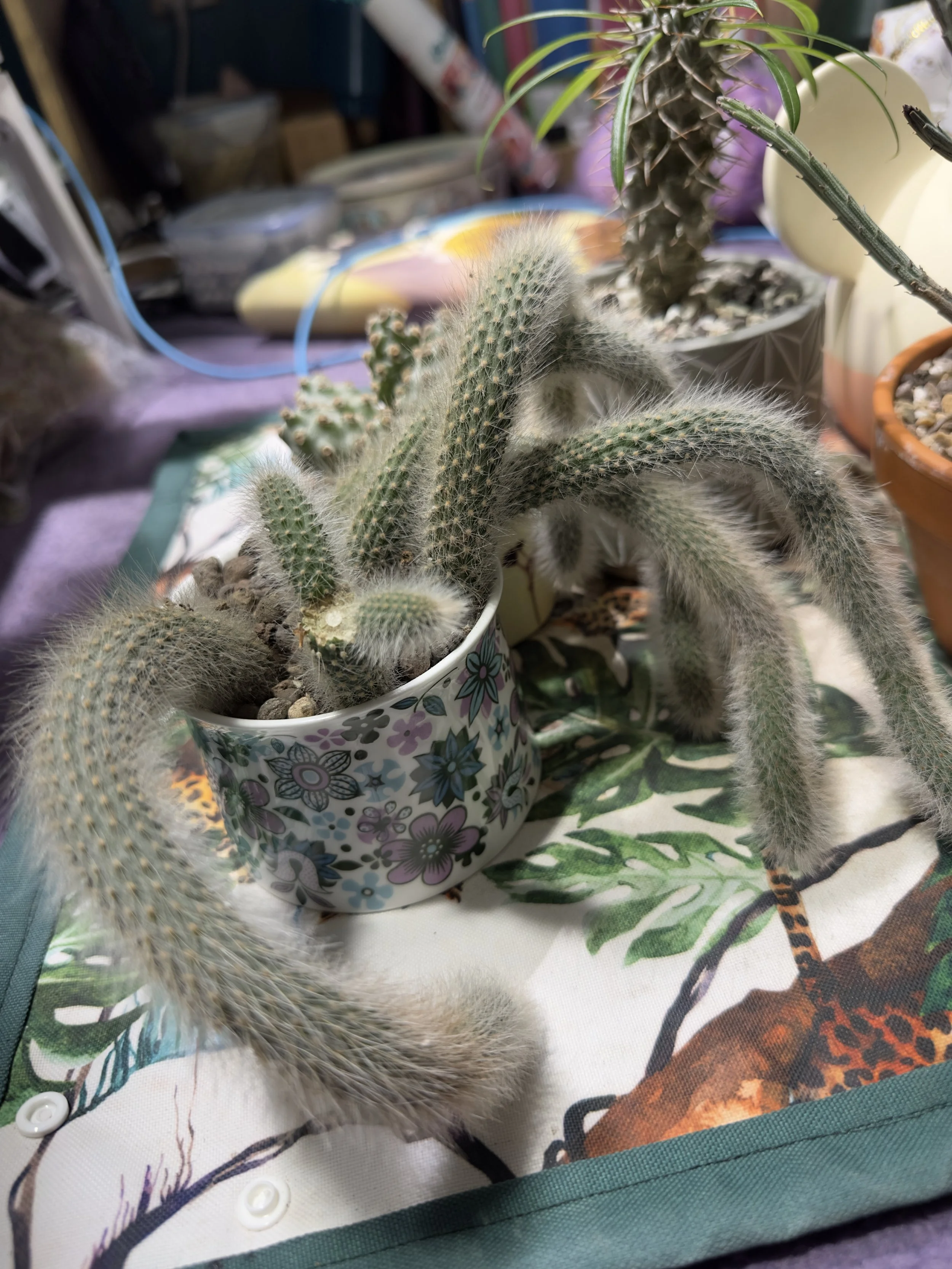
🌿 Monkey Tail Cactus Growth & Recovery.
A moment of drama — part of the plant fell off — followed by unexpected magic. Like a hydra, two new heads emerged in its place. A perfect example of resilience in plant growth and how damage doesn’t always mean decline.
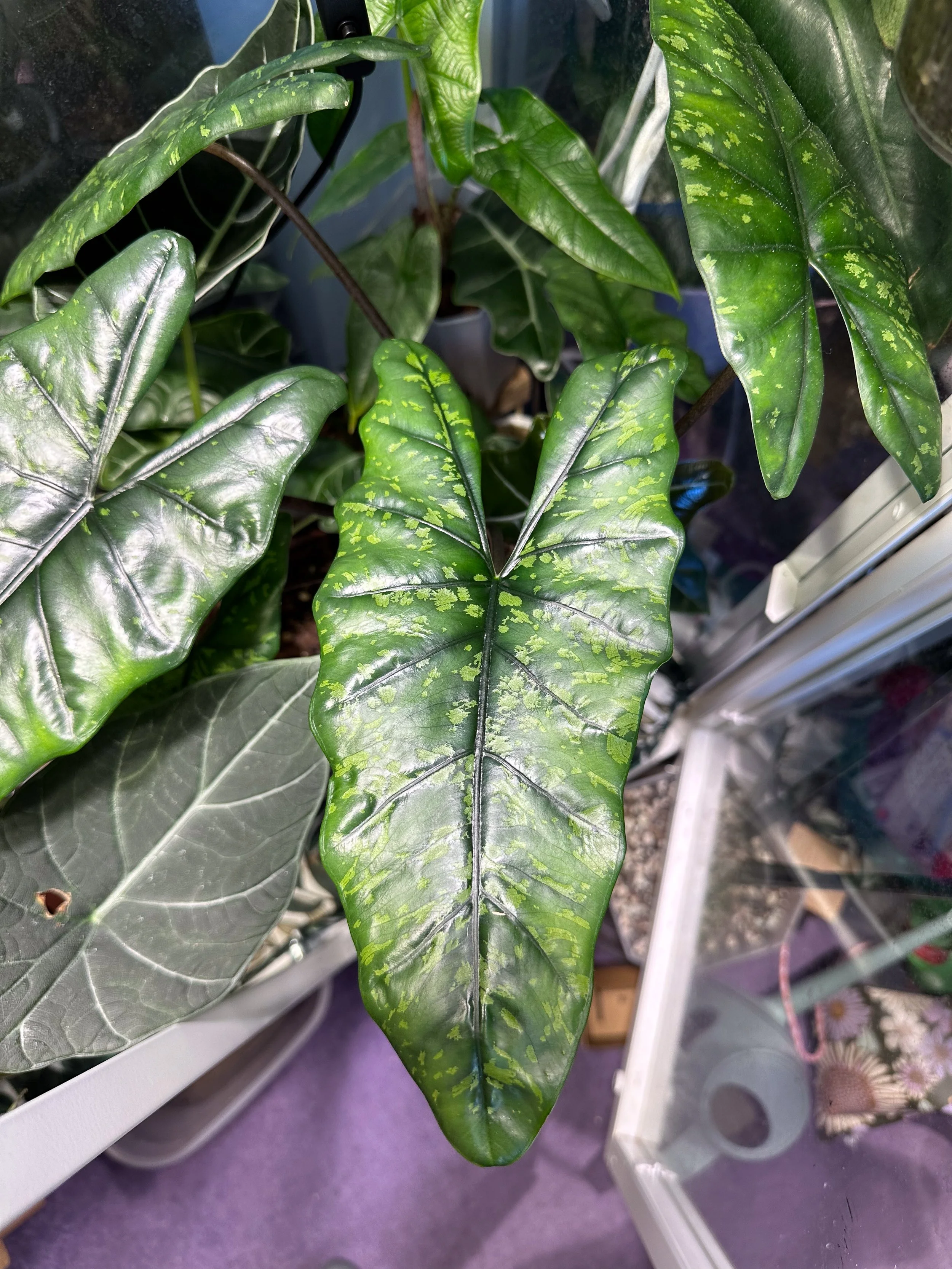
🌿 Alocasia zebrina in Semi-Hydro
One of my strongest growers this year. Transitioning into semi-hydro helped support steady growth and healthier roots. This plant reinforced how experimenting with different care methods can completely change outcomes.
👉 I shared more about this process in my post on Alocasia in Semi-Hydro.
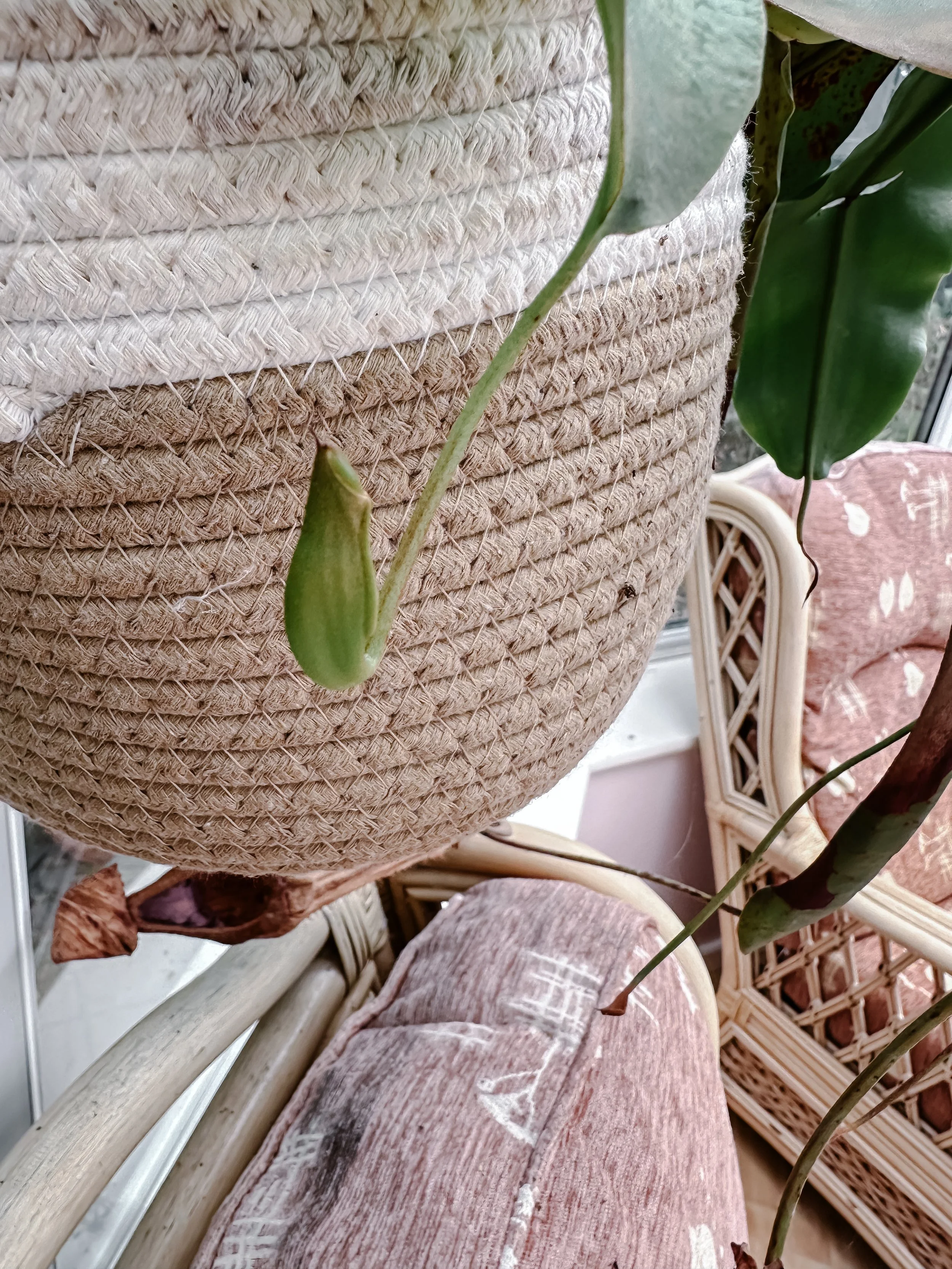
🌿 Monkey Jug (Nepenthes)
After struggling in the cold, this plant made a satisfying bounce back once temperatures improved. New growth and renewed energy made it a reminder that some plants simply need time — and warmth — to recover.
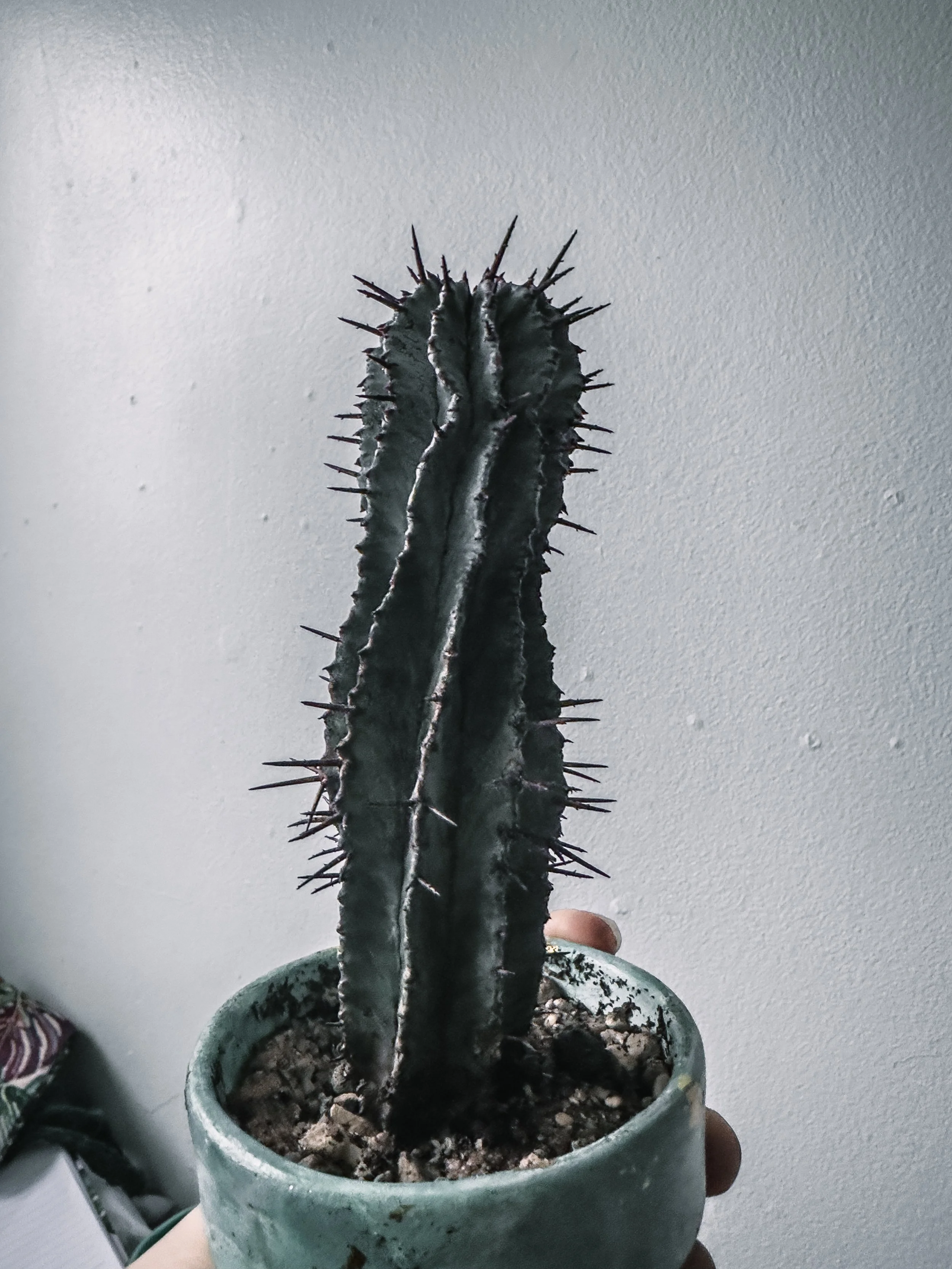
🌿 Euphorbia horrida Indoor Care
Chunky, sculptural, and thriving. This Euphorbia put out twisting new growth throughout the year, becoming a striking presence in my collection. Its slow but confident development felt grounding and steady.
4. 🌍 Exploring New Places (and Returning to Familiar Ones)
🌿 Cambridge University Botanical Gardens
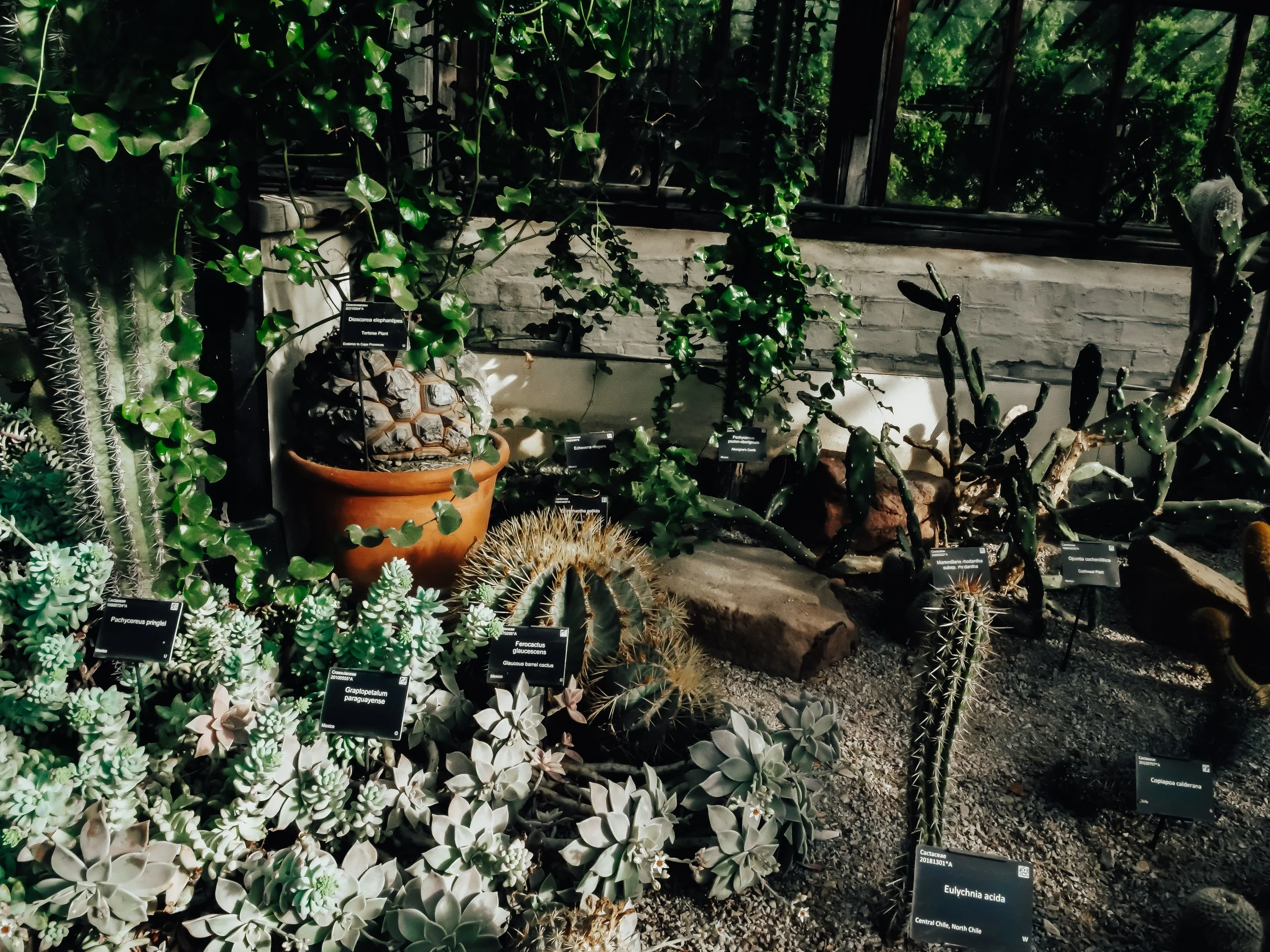
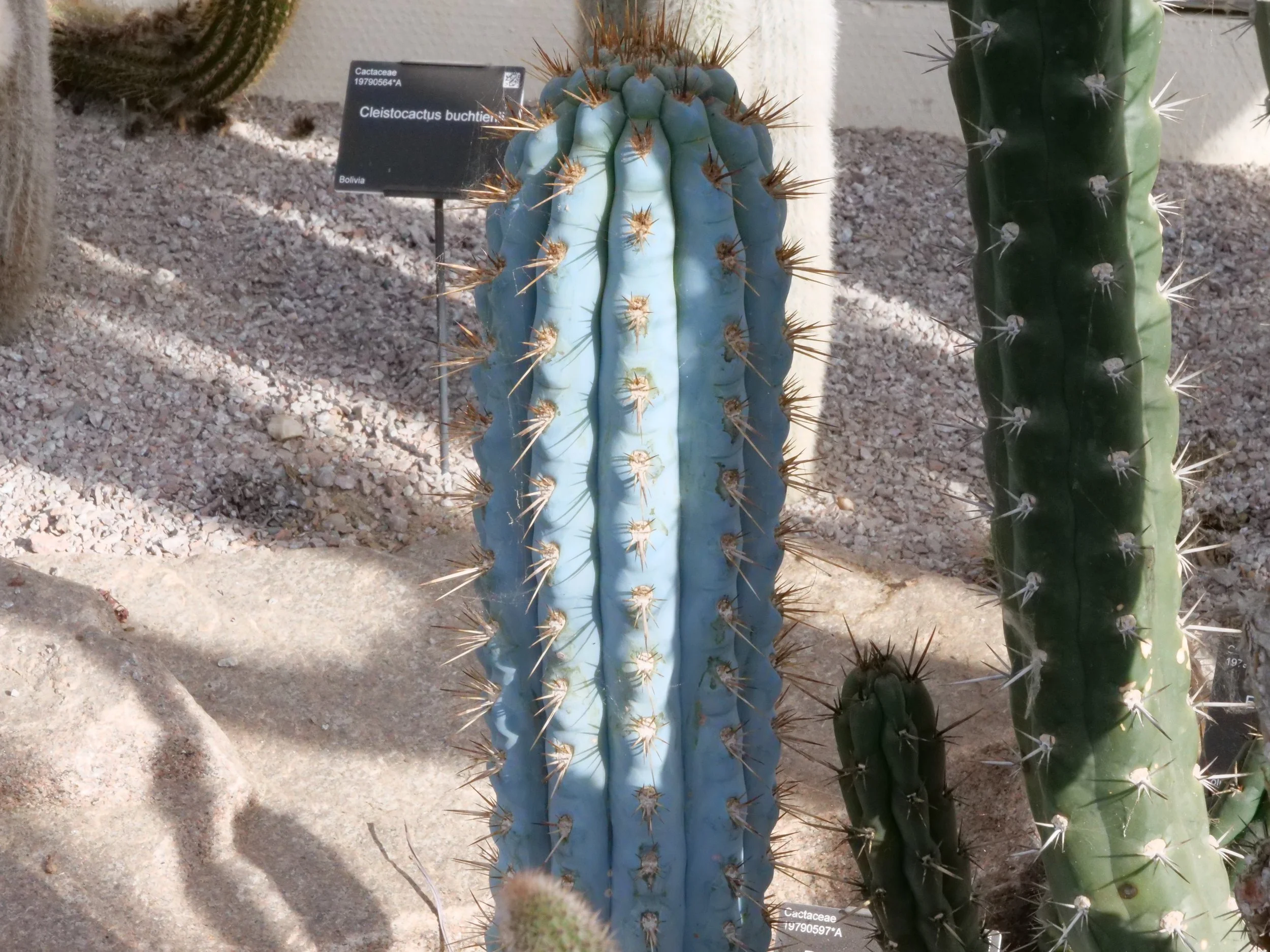
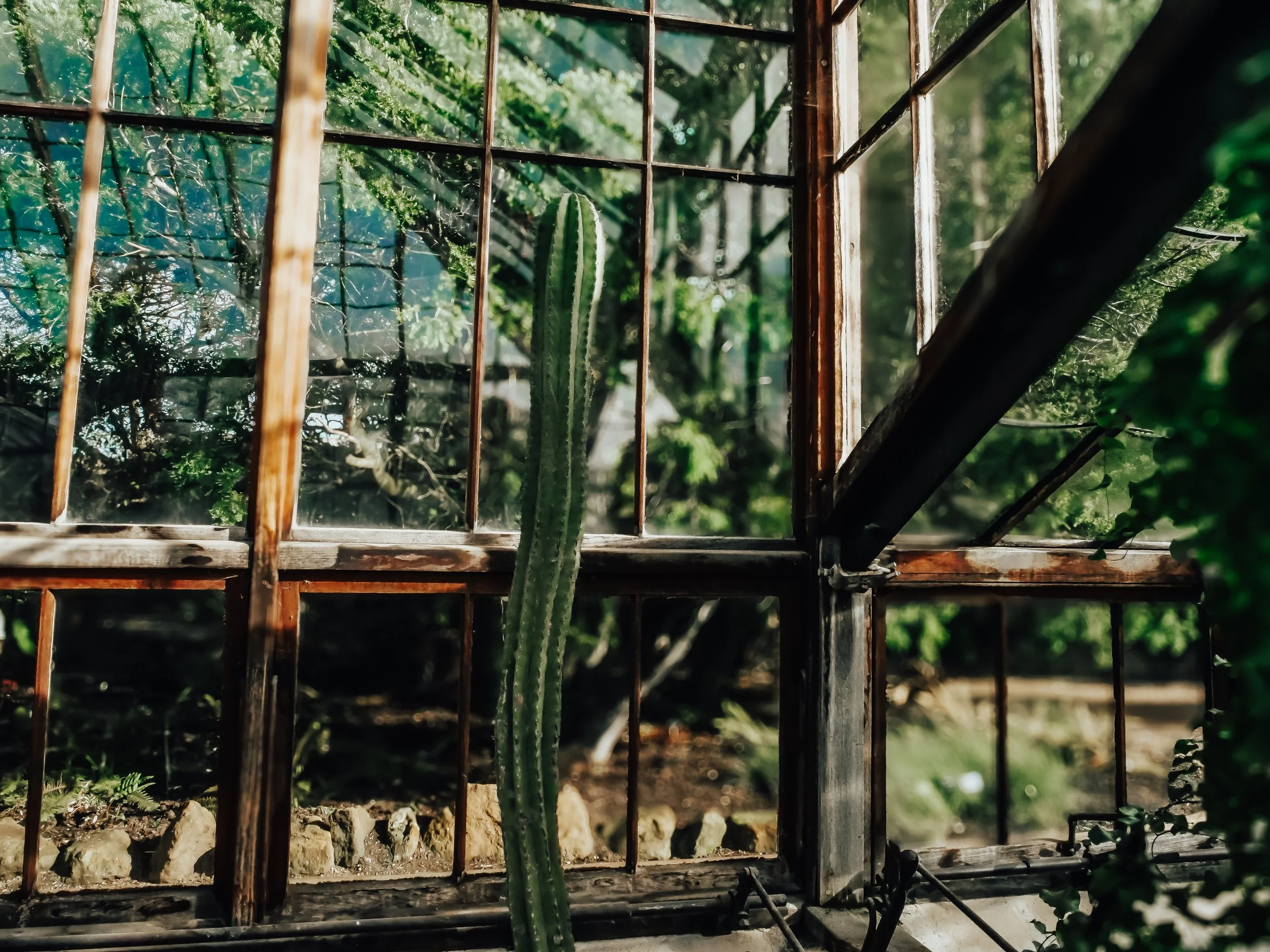
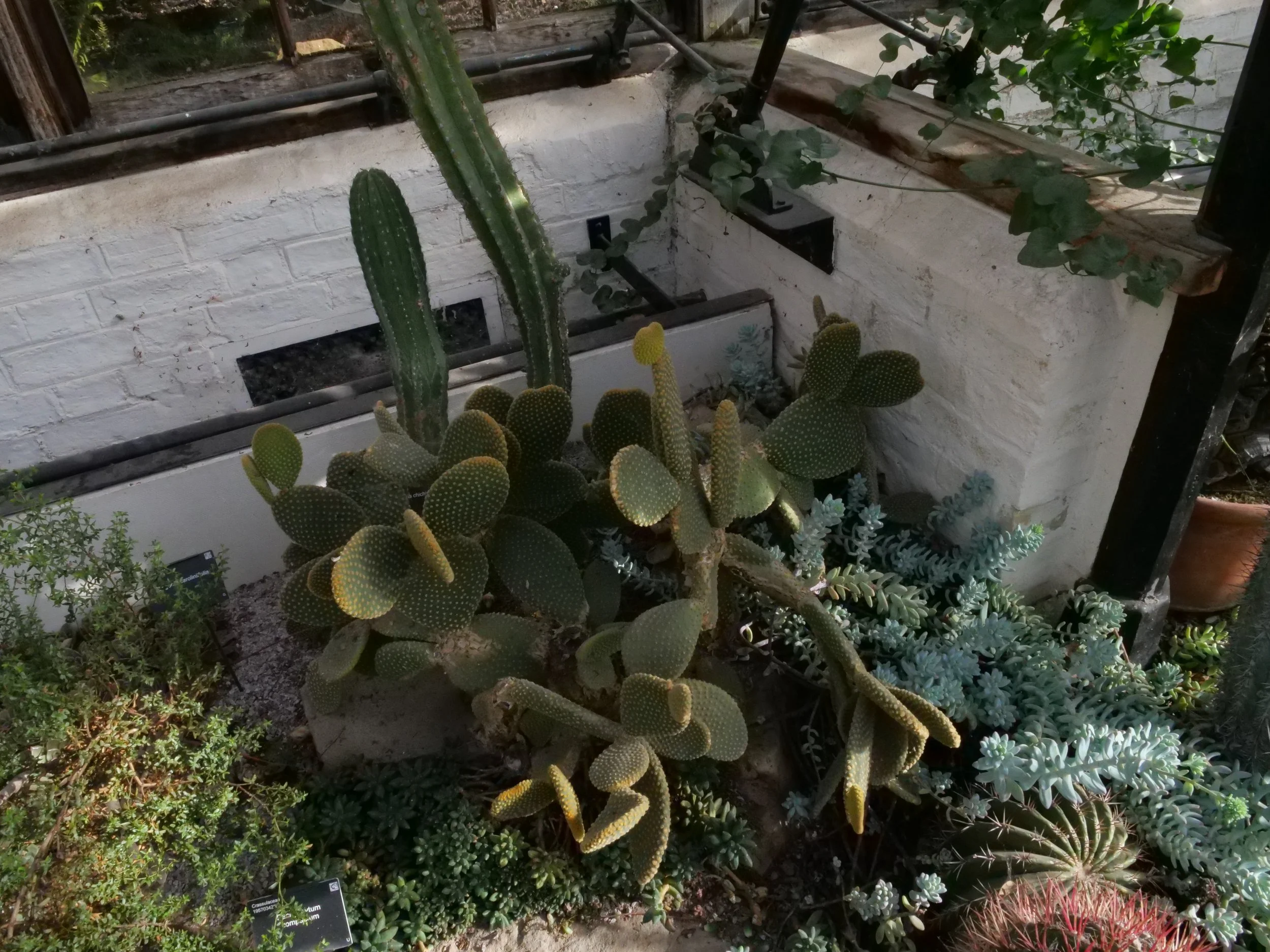
One of the most magical plant-filled days of 2025 was my visit to Cambridge University Botanic Garden, a 40-acre sanctuary of botanical diversity right in the heart of the city. This living museum of plants hosts over 8,000 species from around the world — from tropical glasshouse giants to subtle desert survivors — making it one of the UK’s most inspiring gardens for plant lovers and photographers alike.
I arrived just as the rain finally washed months of dust from the leaves, and immediately the garden felt like a green exhale — soft, vibrant, and full of life. Walking through the lush glasshouses, I was struck by how every environment seemed to tell its own story: the steamy tropical humidity turned leaves into glossy canvases for light, while the arid house’s silvery succulents and cacti stood in calm dramatic contrast to their lush counterparts.
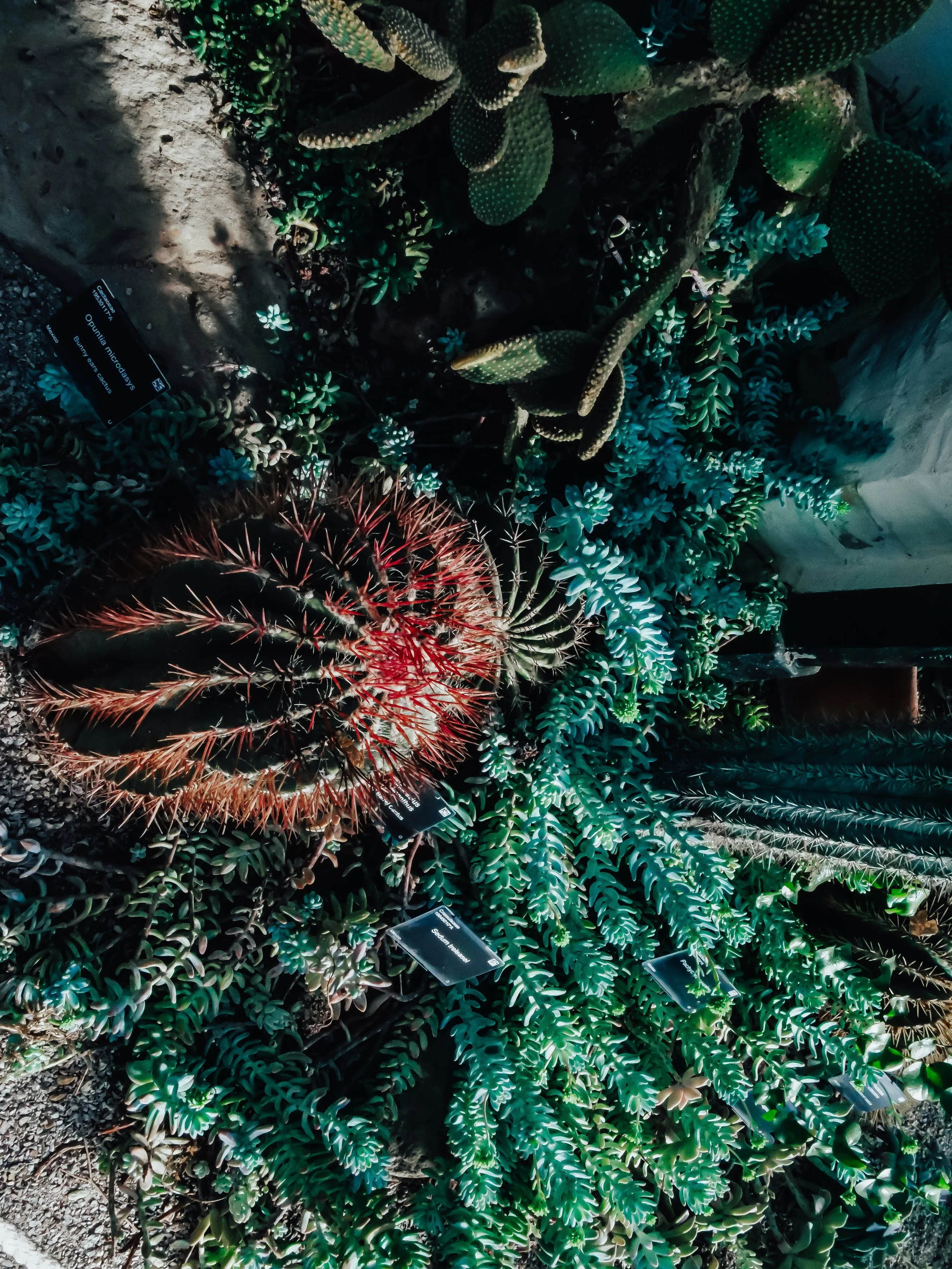
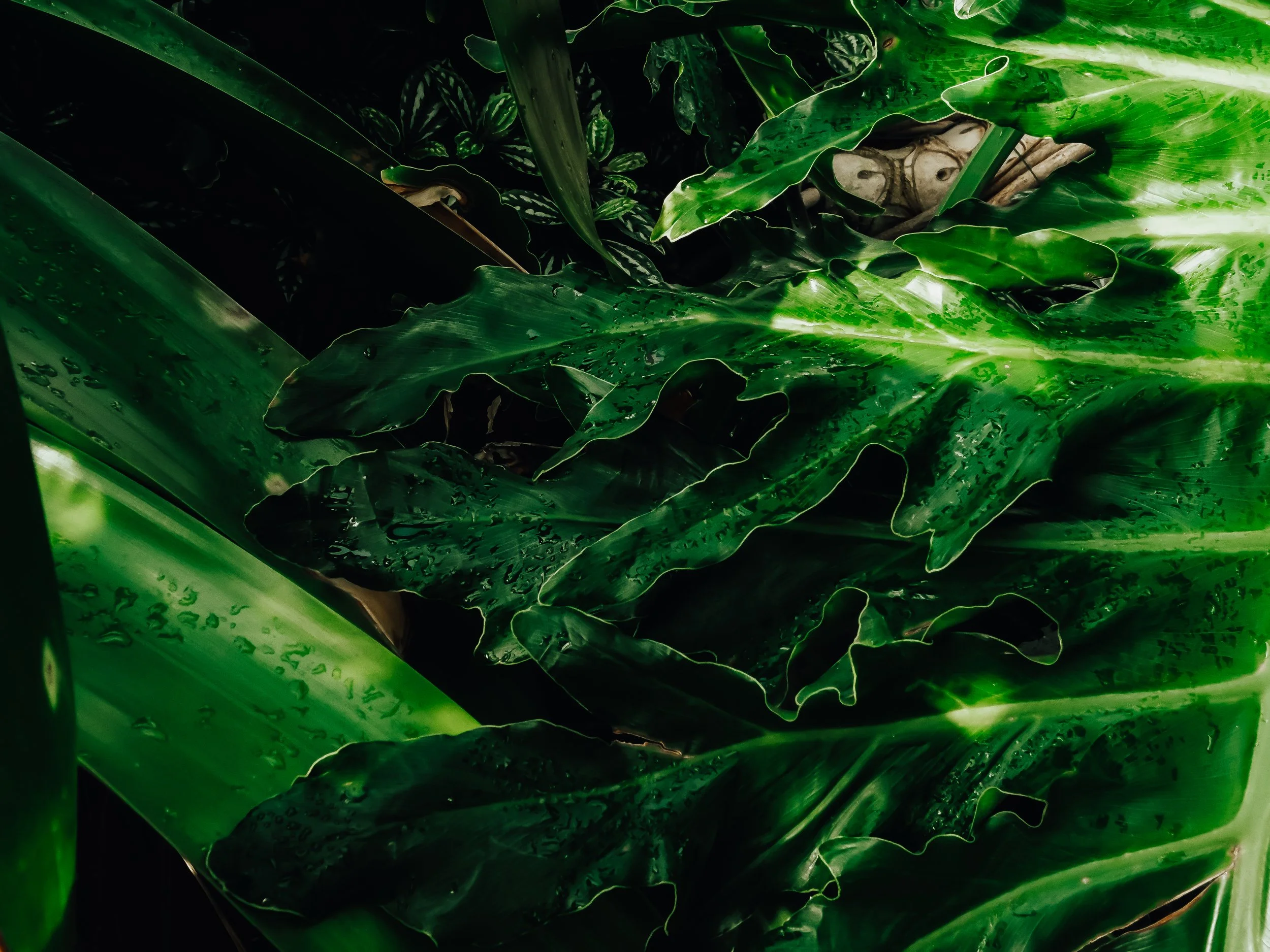
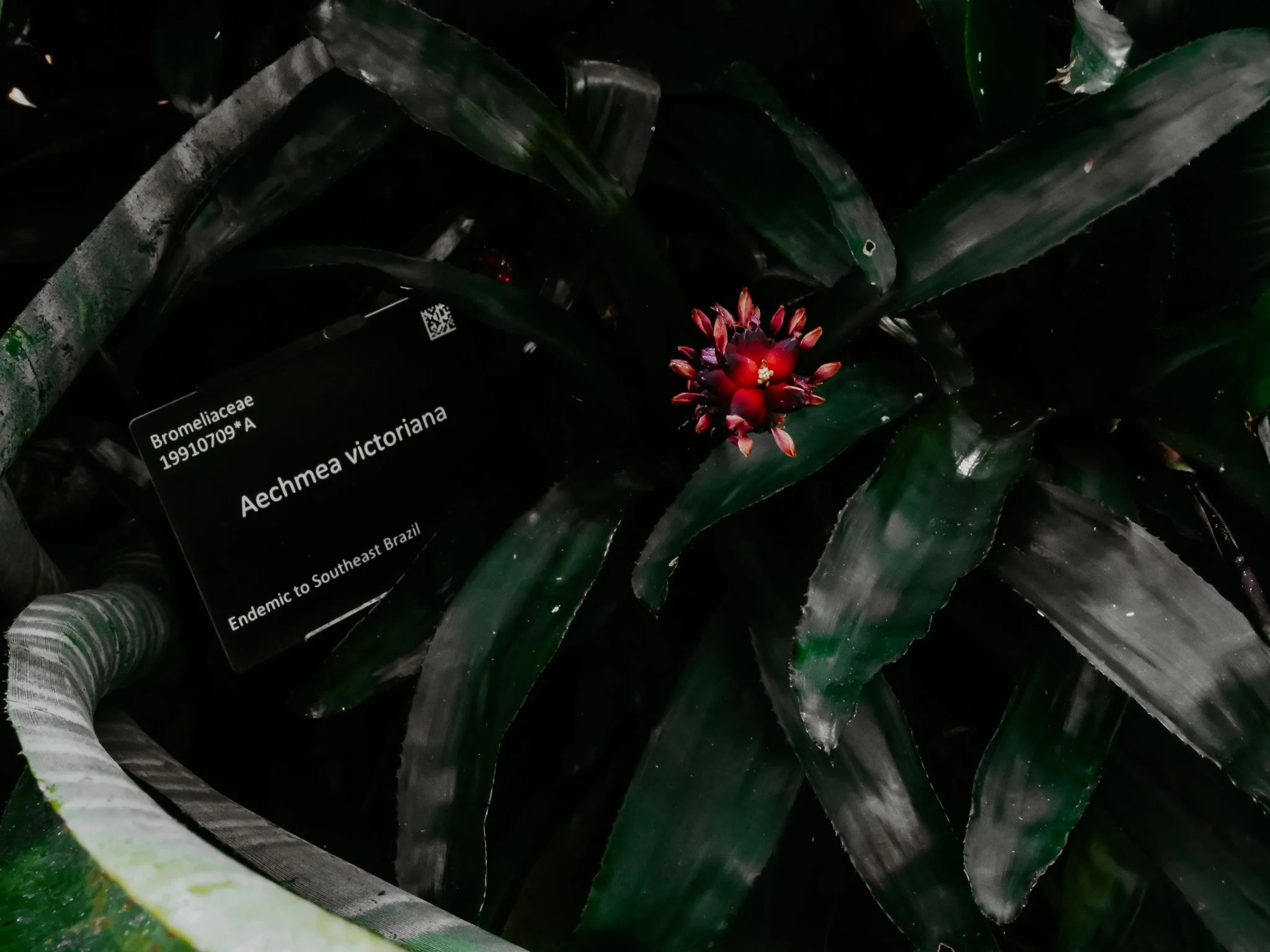
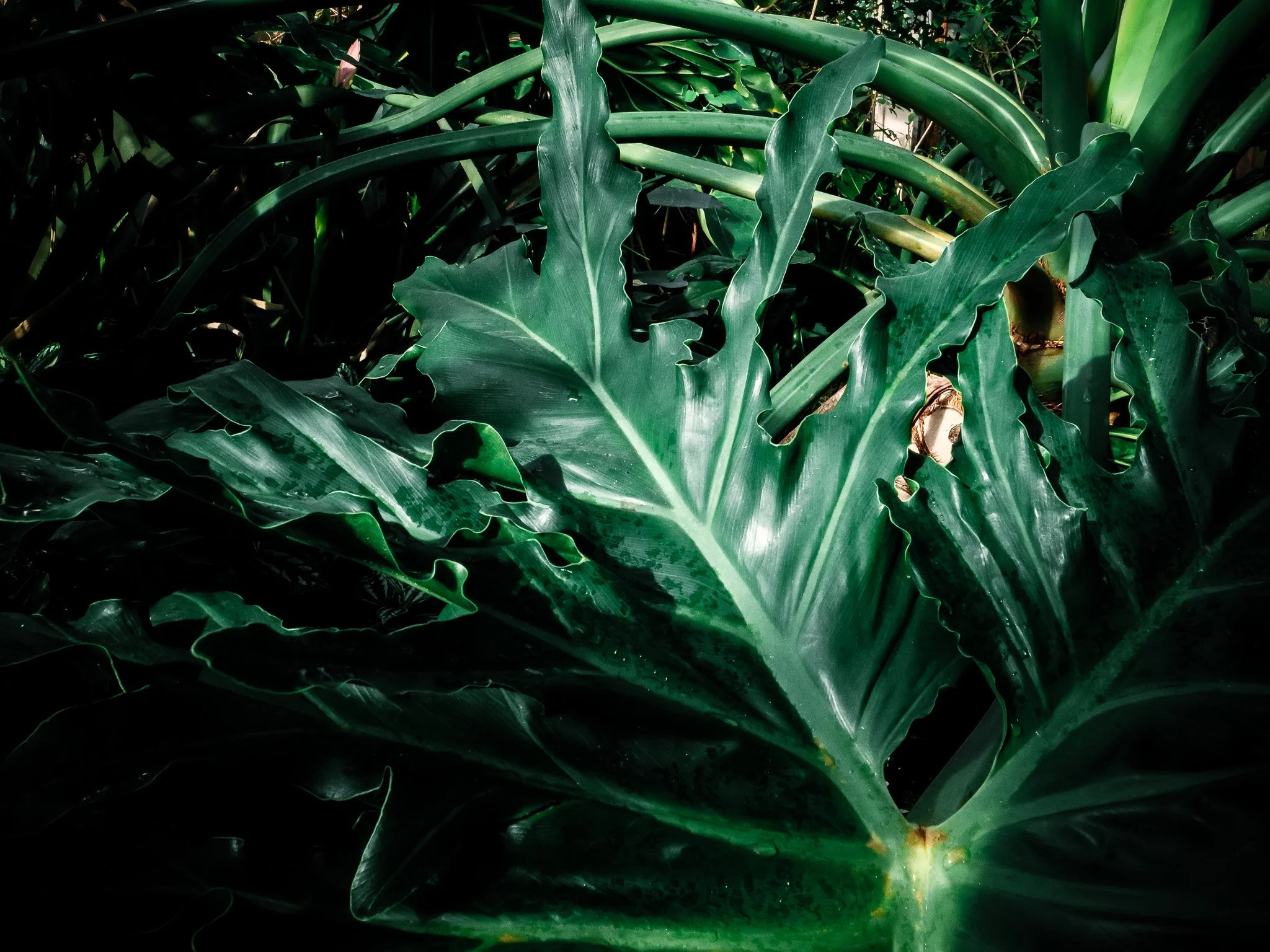
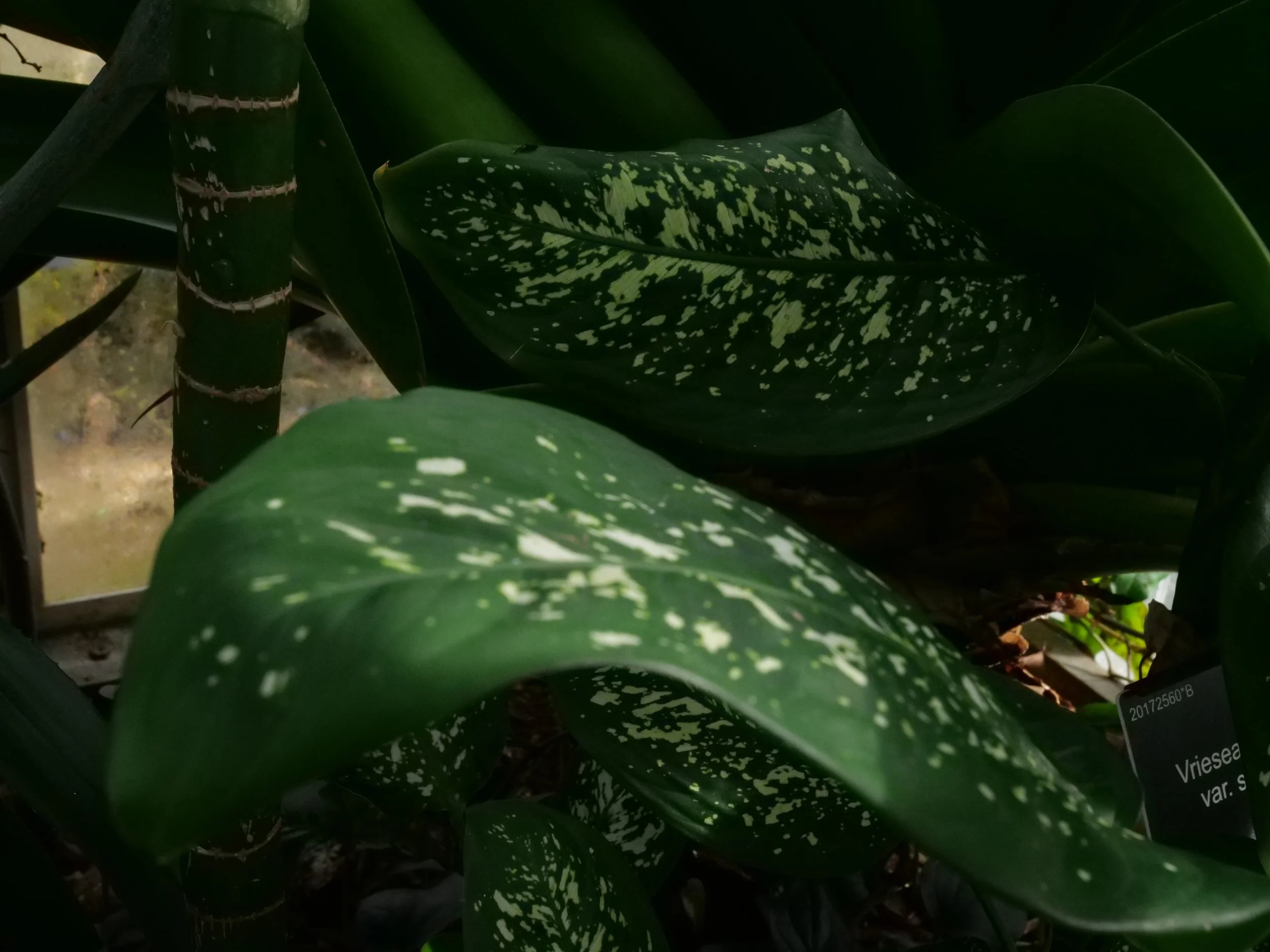
What really made the visit unforgettable were the textures, colours, and layers of planting — verdant tropical fronds, sculptural desert forms, and the subtle colour shifts across the garden’s many landscapes. It was a reminder that plants communicate through light and form, and that being present in spaces like this feeds both the eye and the creative soul.
Whether you’re wandering the glasshouses, pausing by the lake, or capturing reflections on mossy paths, Cambridge University Botanic Garden is a place where joy, wonder, and curiosity are all in bloom.
🌿 Blue Diamond Huntingdon — An Honest Reflection
In April, a new garden centre opened near me: Blue Diamond in Huntingdon. I want to share my honest experience. One thing that often doesn’t work for garden centres is placing the houseplant section right at the entrance. This spot can expose plants to cold and pests before anyone has a chance to browse properly.
The store layout felt like a maze, and as someone with ASD, navigating it became tense and anxiety-filled. Reaching the tills meant walking through the entire centre, with hardly any staff at the front to help. While the plants themselves were fine, the setup made me uncomfortable buying anything.
Even when visiting with support, the experience wasn’t enjoyable, and we left through the front entrance. I’ve not returned since — sometimes, even when a place has good stock, accessibility and atmosphere matter just as much as the plants themselves.
IKEA Milton Keynes (buying the Milsbo in May)
🌿IKEA Milton Keynes (plant cabinet shopping)
After saving for a bigger plant cabinet all year, I finally made the trip to IKEA Milton Keynes. I had been searching high and low on Facebook Marketplace, but nothing matched what I needed — so the IKEA trip was unavoidable.
I officially remembered why I don’t usually go to IKEA: it takes even longer than Blue Diamond to reach the tills, and wandering the vast store with my lovely friends meant we were moving at a slower, more leisurely pace. Walking through the maze of displays, I felt the familiar mix of determination and mild frustration.
But it was worth it. Not only did I come home with a new Milsbo cabinet, perfectly sized for my growing collection, but I also treated myself to a beautiful Philodendron ‘Ring of Fire’, which was massive and only £6.99 — a tiny price for such a striking plant. That moment of triumph — finding both the cabinet and the plant — was one of the small but magical highlights of my 2025 plant journey.
More Garden Centres
Visiting garden centres has become one of my favourite ways to reconnect with my own plant collection. Stepping outside my usual surroundings and seeing plants thrive in different conditions often helps me reflect on how my indoor jungle is evolving.
Poplars Garden Centre, Marks Tey
I’ve visited Poplars near Marks Tey a couple of times now, and it’s always a genuinely lovely experience. The staff are friendly and welcoming, making it an easy place to slow down, browse, and enjoy the process.
What I appreciate most is the variety. Alongside familiar favourites, Poplars often stocks slightly rarer plants, which makes each visit feel like a small moment of discovery. They also carry Soil Ninja mixes, decorative pots, and practical plant tools that quietly support healthier plants long-term.
This time, I was drawn to a Caladium ‘Tapestry’, its striking whites and rich reds standing out immediately — a reminder that sometimes one plant is enough to inspire a new chapter.
Perrywoods Garden Centre, Tiptree
Some garden centre visits feel calm and reflective. Others feel like stepping into a living archive of plant possibility.
My visit to Perrywoods, Tiptree fell firmly into the second category — helped along by a National Garden Centre voucher I received for my birthday, which made the whole experience feel like a small celebration.
Perrywoods has one of the largest houseplant selections I’ve ever seen. From a towering giant Euphorbia, to quirky cacti, lush Marantas, and some truly incredible Thai Monsteras, it’s a place where every corner offers something unexpected.
Where some visits invite slow contemplation, this one was about abundance, inspiration, and letting curiosity lead the way. Choosing plants here felt less about restraint and more about delight — a reminder that plant collecting can hold many moods, all equally valid.
Notcutts Garden Centre, Brampton
It was nice to revisit Notcutts in Brampton, partly because it feels familiar and comforting. The day I visited was quiet, which made it an easy place to wander and take things in at my own pace.
I no longer have a Notcutts card, simply because over the past year I didn’t find myself visiting often or connecting with what was on offer. Returning without expectations felt different this time — less about searching for something specific and more about enjoying the familiarity of the space itself.
-
After a chop that left it looking a little bare, this Pilea ‘Greyzy’ found a new rhythm in semi-hydro — and it’s been thriving ever since. Moving it into a more consistent setup has encouraged steady, healthy growth, filling out far better than I expected.
Semi-hydro has taken away much of the guesswork, keeping moisture levels even and roots happy without the peaks and dips of traditional soil. It’s been a gentle reminder that sometimes plants don’t need more effort — just a change in approach.
-
After months without rain, the first drops feel like a homecoming. The earth sighs, the air thickens, and suddenly, everything seems to drink. Greens deepen overnight — moss is plotting its next explosion of green, leaves glisten, even pavements catch the light like tiny mirrors. Dust, which has been quietly blocking sunlight from fuelling photosynthesis, is finally washed away. It’s the same dust that dulls a camera lens; once gone, suddenly the world snaps into focus.
-
PACHYPODIUM LAMEREI. Madagascar Palm.
Anthurium Pallidiflorum
Dracaena Fragrans White Jewel
Alocassia Sp. West Java
Alocasia Mandalay
-
I brought many beautiful plants for this shop this year pretty sure i spent most of my plant money there. Such great Quality plants.
I took the opportunity to film a pet-friendly houseplant reel, slowing down and noticing the smaller details, and in the end I did leave with something special: a lovely Pilea ‘Greyzy’ houseplant, chosen with pet safety in mind.
Since coming home, it’s found its place in semi-hydroponic plant care, where it’s been thriving beautifully. Moving this Pilea into semi-hydro has encouraged steady, healthy growth, making it one of my favourite plant success stories of the year and a gentle reminder that sometimes the simplest care changes make the biggest difference.
Sometimes revisiting a garden centre isn’t about what you plan to buy, but about the plant that quietly finds its way home with you.
Visiting Old Barn Garden Centre – A Houseplant Lover’s Dream
Towards the end of the year, a couple of my reels were filmed at Old Barn Garden Centre, and I was genuinely wowed by their houseplant selection. The range of indoor plants on offer was impressive, with something for every type of plant parent — from beginners to collectors.
I couldn’t resist coming home with an Alocasia melo and an Anthurium, both perfect additions to my growing houseplant collection and already settling beautifully into my indoor jungle.
Reflecting on 2025: A Year of Growth (In Plants and Business)
As 2025 comes to a close, I wanted to take a moment to reflect. This year has been incredibly rewarding — both creatively and professionally. My small business has grown more than I ever expected, especially through selling water-resistant potting mats, and I’ve loved sharing more of my life with houseplants along the way.
Inviting people into my plant-filled world through reels, blogs, and photography has been a real joy. I’m genuinely grateful to everyone who’s followed along, supported my work, and taken the time to read this year in review.
Intentions for 2026: Looking Ahead
As I step into 2026, I’m carrying a few clear intentions with me:
To continue growing my business and sell more plant potting mats
To share more of my plant and nature photography, including offering prints
To work with new photography clients, combining creativity with storytelling
Thank you for being part of this journey. I hope 2025 has been a year of growth for you too — and that 2026 brings steady roots, creative energy, and plenty of inspiration 🌱
Calling All Houseplant Lovers 🌿
If you’d like to learn more about Jungle Floor Creative and the houseplant lover behind the brand, you can explore the full collection over on the website.
From water-resistant potting mats and greenhouse mats, to plant shelf styling, soft plant cloths, soil scoops, and houseplant-inspired apparel, everything is designed with plant care, creativity, and everyday use in mind.
Whether you’re repotting, styling your plant shelves, or building your own indoor jungle, Jungle Floor Creative is made for fellow houseplant lovers who value thoughtful tools and beautiful details.
👉 Visit the website to discover the full range.
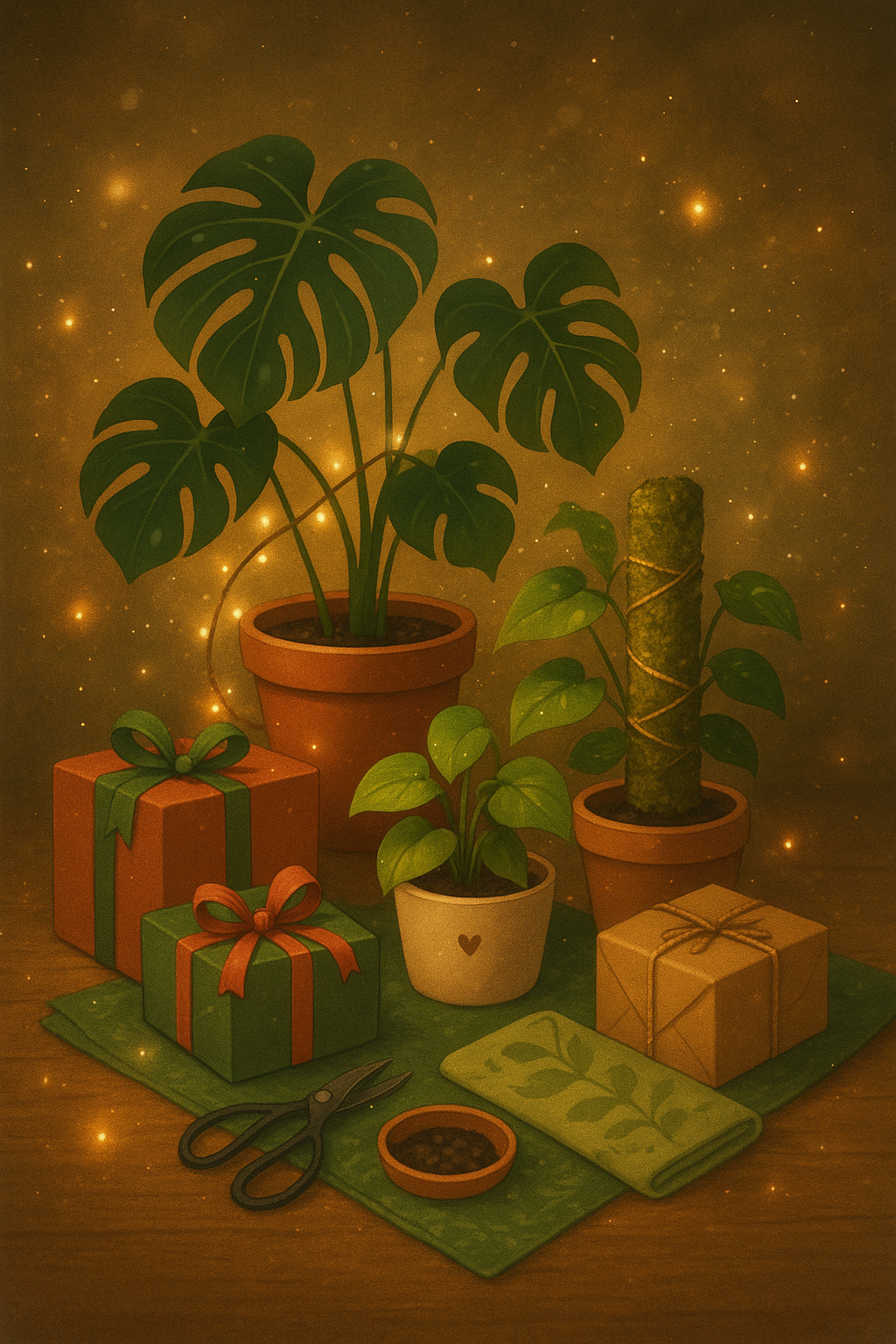
Christmas Gifts for Plant Lovers 2025: The Ultimate UK Houseplant Gift Guide
Looking for the perfect gift for a houseplant lover? This festive guide shares the best plant-themed presents, practical accessories, unique small-business finds, and expert tips to help you choose a thoughtful, plant-parent approved gift. Whether they’re new to plants or already living in a jungle, there’s something here they’ll adore.
plant lover gift ideas
Looking for the perfect gift for a houseplant lover? This festive guide shares the best plant-themed presents, practical accessories, unique small-business finds, and expert tips to help you choose a thoughtful, plant-parent approved gift. Whether they’re new to plants or already living in a jungle, there’s something here they’ll adore.
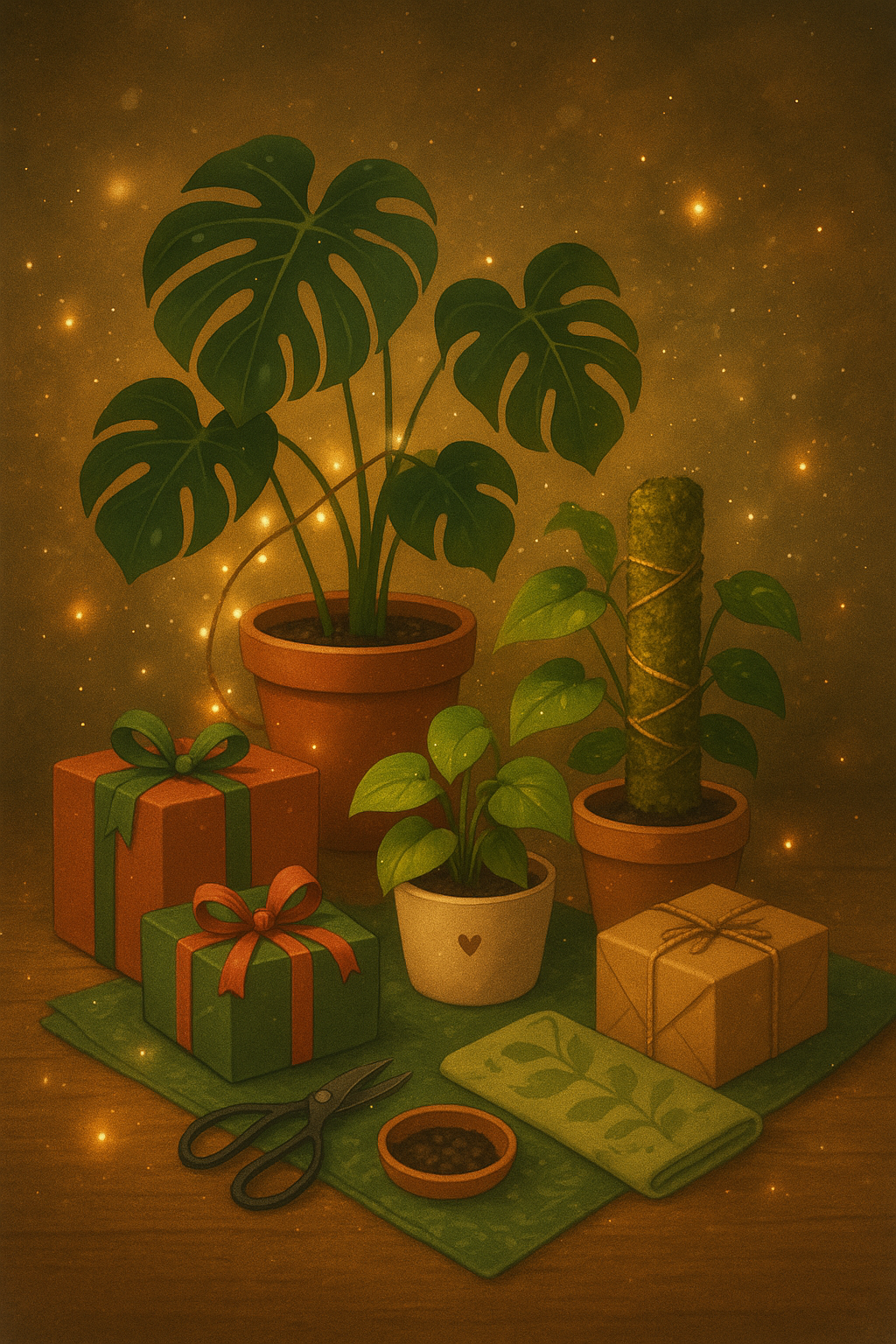
Best Gifts For Plant Parents
For plant enthusiasts, there’s nothing better than unwrapping a gift that nurtures their love for greenery. Whether they’re a seasoned plant parent with a jungle of thriving foliage or a beginner just starting their plant journey, there’s always something out there that’s just right for them.
In this blog, we’ll explore five helpful tips for choosing the perfect gift for any plant lover. I’ll also share some fantastic recommendations from small businesses, along with insights from plant enthusiasts themselves, to make your holiday shopping a breeze. Let’s dive in!
My number-one tip? When in doubt, go for a gift certificate. Whether it’s from a plant shop, a garden centre, or a small business like mine that creates plant-themed products, a voucher gives them the freedom to pick something they truly love.
Top 5 Helpful Tips for Buying Gifts for Plant Lovers
-
As lovely as it is to gift a plant for Christmas or a birthday, it’s worth checking that they don’t already own it. Pay attention to the types of plants they usually collect — this gives you great clues about what they’ll truly love. If you’re unsure what a plant is, a quick Google image search can help you identify it… just be a little sneaky about it so you don’t spoil the surprise!
-
A lot of plant lovers told me that a cute propagator is one of the best gifts you can give. Think small vases, elegant tubes, or interesting glassware — anything that lets us grow baby plants in something as beautiful as the plant itself. Propagation stations are practical and decorative, making them a lovely, affordable present that always feels thoughtful.
-
You don’t have to buy an actual plant — or even a tool — to make a plant lover happy. There are so many thoughtful plant-themed gifts out there, from stylish propagation stations to beautiful ceramics, artwork, books, vouchers, and more. Thinking beyond the obvious opens up a whole world of unique gift ideas they’ll genuinely appreciate.
-
Sometimes you just need a quick, reliable gift — and plant shop vouchers are perfect for that. You really can’t go wrong with letting a plant lover choose exactly what they want. And yes, Jungle Floor Creative offers vouchers too!
-
Many plant lovers have a dedicated social media account just for their plants — and quite often, they keep a wishlist there too. If you’re stuck for ideas, have a quick look at their page. It’s one of the easiest ways to see exactly what they’re hoping to add to their collection.
-
Steer clear of plastic plants as gifts. Most plant lovers aren’t fans and might “turn up their noses.” Plus, they’re not great for the environment. Opt for eco-friendly, thoughtful gifts instead—they’re sure to be much more appreciated!
Plant themed creative gifts
A planty Print
There a few awesome botanical artists out there to name a few, Myself as photographer.


I’ve brought a lot of Miki’s Art and she was meantioned a few times when I asked my followers on my social media. They can be adapted slightly to suit the person your buying for and she also does Bundles of prints . Modern house plant prints lovingly designed and printed in England. She also can send international if you have any questions about her prints I would send her a message on Insta.
BethanDesigns is a small artwork business selling numerous art prints, clothing, bags, gifts and more. I personally have got a lot of custom prints from her as well as buying her Lino prints. I highly recommend if your looking for something that extra special from a UK artist. Bethan is my recommendation for that extra special print. She not only great for that botanical print but she also sells some plant accessories, stickers, sweatshirts, pin badges and of course her beautiful leafy prints.


Candles
Candles are always a nice way to improve a jungle space and essentially as after using one you can reuse the glass or pot it came in when finished burning the candle as decorative a planter. They is a known tip when reusing Candle pots what you have to do is put the candle in the freezer and aparently it makes its so much easier to get the leftover wax out before using a candle pot and a planter. A great creative Leaves & Prickles makes this amazing lovely scented candles with fun planty saying and puns. She also has he trademarked Terrarium candles. I’ll let Monika share a little about her business here “Hi, I’m Monika! I create beautiful and unique terrarium candles that make delightful gifts for any occasion—guaranteed to bring a smile. Each candle is hand-poured in small batches in my home kitchen using natural soy wax and cruelty-free fragrance oils, then thoughtfully packaged in recyclable paper.” I highly recommend her candles she makes some really good Quality candles for the plant lover at reasonable prices.


Resin Art or clay is a popular amongst plant lovers one of the two artist like this I recommend is atelier.maurene she produces there unique pieces of art with resin, dried flowers and each piece comes with its unique design and use. I’ll share some of her work for the EU readers again.


🌸 Atelier MAUREne – Resin Home Décor with a Botanical Twist
At Atelier Maurene, resin art meets delicate floral design — this small business creates stunning home décor pieces using real flowers and epoxy resin, capturing natural beauty in sculptural, lasting forms check out there insta Instagram .
Their decorative trays, coasters, and art pieces often include pressed botanicals, making them a perfect gift for someone who loves natural textures and floral design — even if they’re not after a living plant.
These pieces feel like little preserved moments from the jungle floor: each object is translucent, organic, and unique.
Choosing this kind of decor is thoughtful: it’s not just plant-themed — it’s plant beauty frozen in time, ideal for plant lovers who also appreciate handmade artistry and design-led accessories.
Gift fit:
For plant parents who already have plenty of living greenery, an Atelier Maurene piece can be a beautiful complementary gift.
Great for anyone with a love of flowers, botany, or interior design with a natural twist.
Because their work is handmade, it supports a small artist-led business — perfect for thoughtful, boutique-style gifting.


One brilliant artist who paints incredible plant pots and other ceramics is FoxBerry Ceramics. She has an exceptional eye for detail, and anything she creates would make the perfect gift for any botanical lover. Her creations include painted watering cans, pots, leaf decorations, and beautiful botanical cards. I have personally purchased a few items from her, as pictured below.


Plant Pals and Novelty pots


Plant Pals are adorable little creatures made from various materials that can hang on plant pots or, if lightweight, climb the stems of plants. They make a fantastic stocking filler for any plant enthusiast—something even my plant-loving friends on social media have raved about! Personally, I’m on the fence about them. I received one in a Secret Santa once and wasn’t too thrilled, but it’s still happily perched in my big Monstera pot, so it does add a bit of charm.
Some Plant Pals are not just cute but practical too! For example, some include a moisture meter, which is a handy way for plant lovers to check if their plants need watering. It’s a gift that’s both decorative and functional—a win-win!
Do you have a plant lover thanks also obsessed with a particular animal, movie or show. Another great gift for the plant lover is those cute novelty pots.
One Business I recommended is ingadi.ie they make a couple of designs but there most popular pot being the Happy pots. The good thing about these is that they are all 3D printed.


Solvi


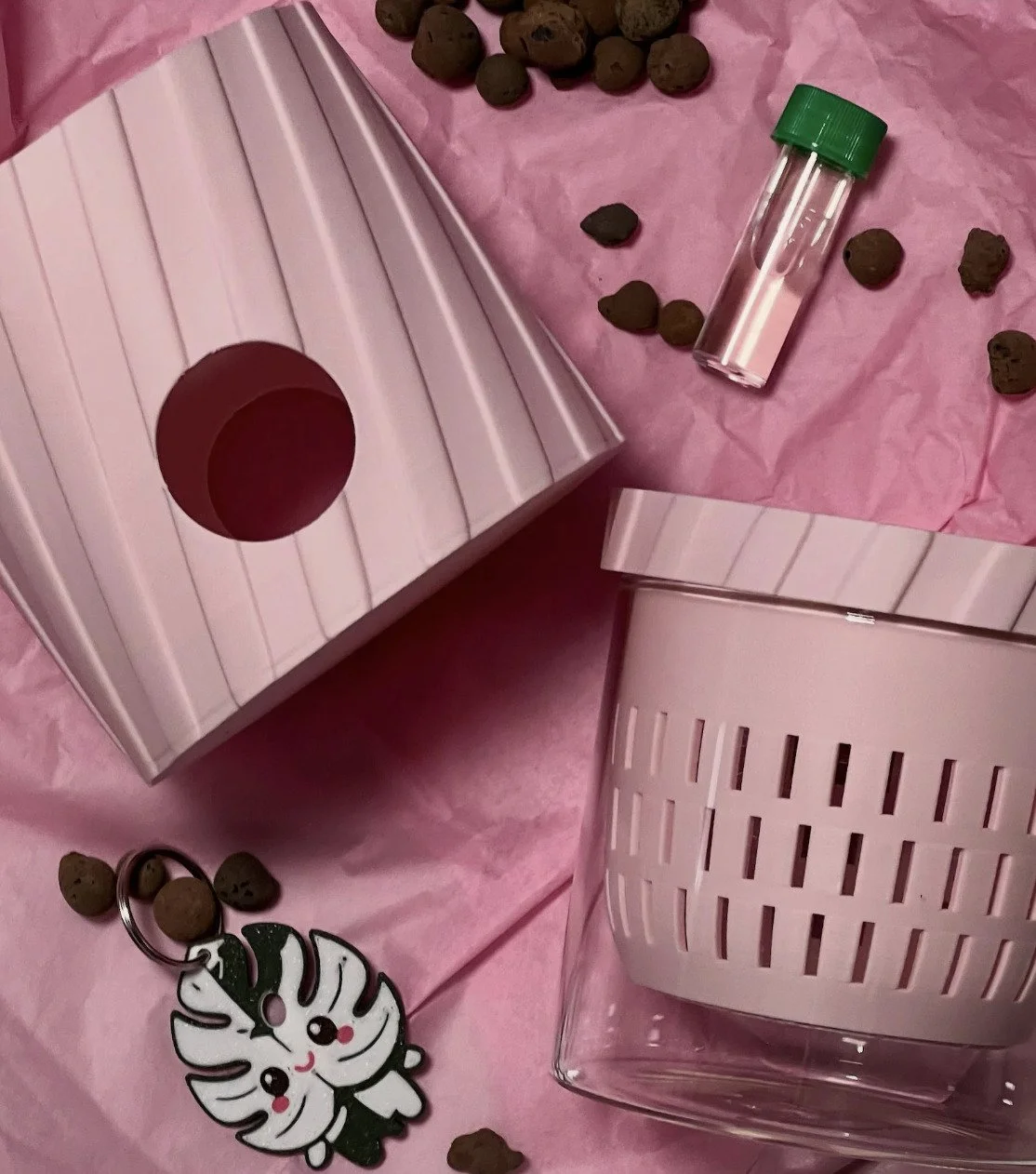
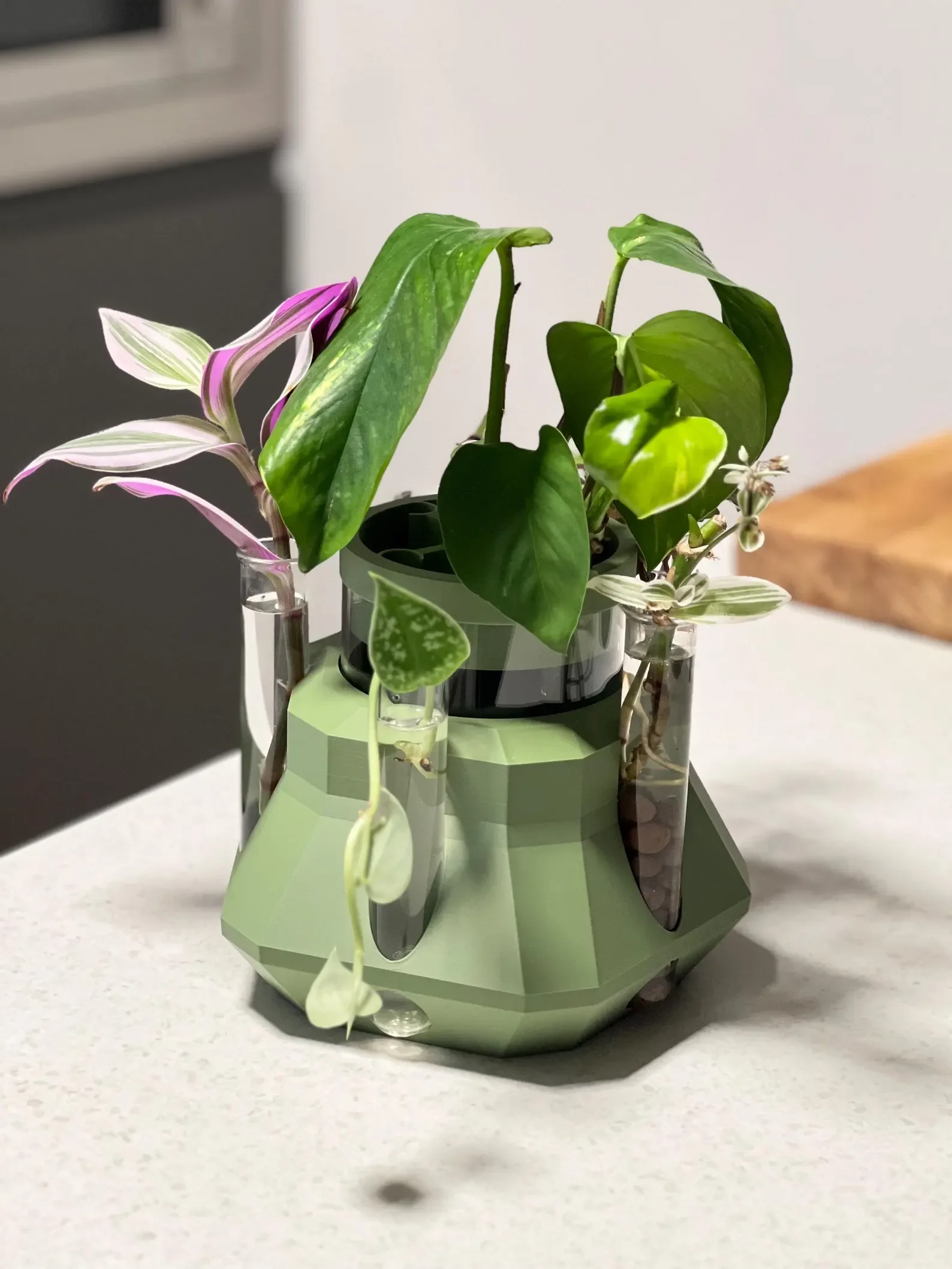
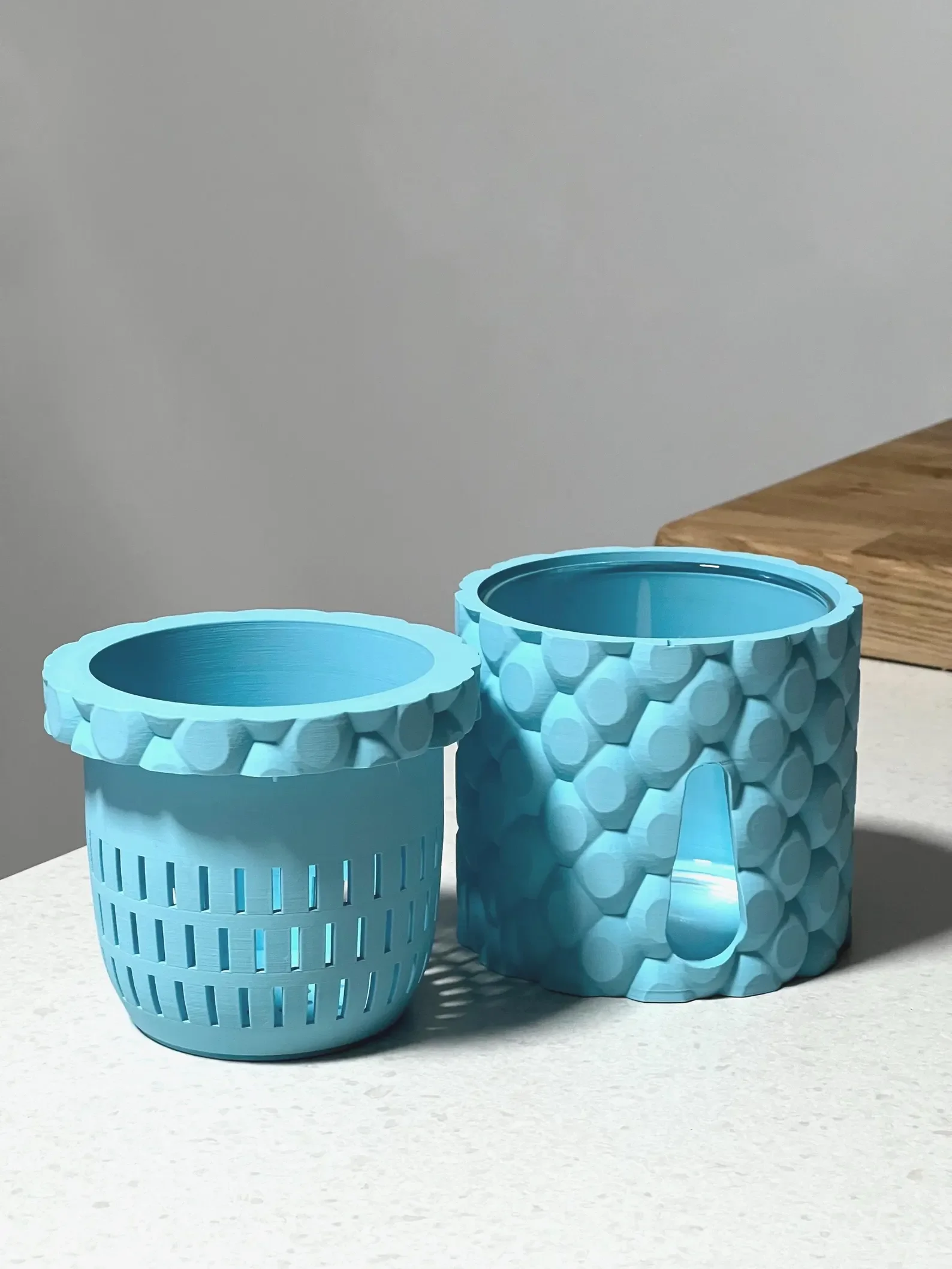
Solvi is a new small business based in Cornwall, designing and 3D-printing a range of semi-hydroponic pots and other plantware. Run by a talented husband-and-wife team, they’re always looking for plant problems to solve through clever design. From quilted-effect mini planters to unique propagation stations, every piece is created with both style and function in mind.
With over 15 filament options — including gorgeous sparkly “midnight” finishes — there truly is something to suit every taste. Not only do they make self-watering pots, but they’ve also recently introduced some fantastic new propagation stations.
Each of their beautiful products comes in a wide colour range (18 options!), so you can pick the perfect shade for the plant lover in your life.

'Serris'
Fits various cutting sizes with extra-large glass test tubes. Includes 5 rimmed tubes (plus 1 spare) in a fun curved 'S' design. Windows show water level.
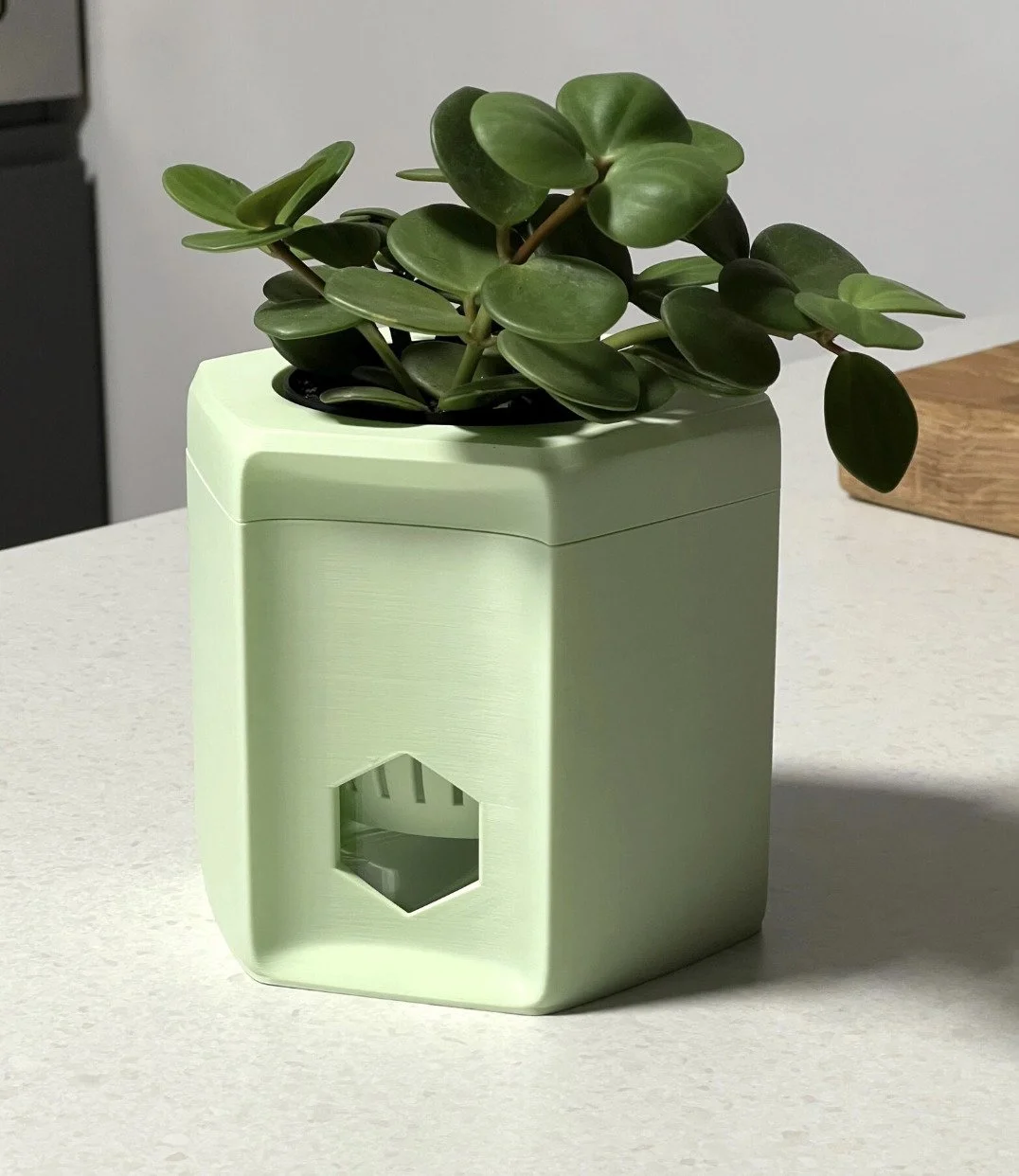
Hexa
Mini 3D printed self-watering plant pot, These mini transition pots are the ideal home for small plants. Handy window to see when water is low and to monitor root growth of your precious plant babies!
Tektra
Includes 5 extra-large test tubes for cuttings (plus 1 spare) and a central glass vase holding 5 more cuttings gently without leaf damage. Move cuttings from test tubes to the vase as they grow, keeping familiar conditions. Open design shows water level and root growth. Sturdy decorative base adds style and protects furniture.
Quilta
They’re ideal for semi-hydro growing with LECA or medium/coarse PON, and we offer starter bags of LECA in our Etsy shop for beginners. Each pot includes a handy viewing window so you can monitor water levels and keep an eye on those precious roots.
Practical Gifts For Plant lovers
propgation stations:
Here’s a example of a propagation station ⬇️

Every plant lover enjoying growing baby plants and its often requested to have some lovely ways to do this. Some plant lovers like to grow there cuttings and snips in water therefore a big request from plant lovers is some lovely glass to grow there snips and cuttings from.


There are lots of different types out there some with test tubes in wood, Mushroom shaped Glass, small pretty glass vases in various sizes, shapes and colours. Generally tend to be small in size. which is what works for a lot of plant lovers. I recommend that you don’t wrap up a large empty gin or wine bottle.
I found some of these cute from a pop up shop in Manningtree Essex or you could go to a charity shop, Vintage and Antique shop and find some pretty ones just make sure you clean them really well before wrapping up. Another place new this year to look for planty For the EU readers the resin ones were made by 𝐑𝐞𝐬𝐢𝐧 𝐚𝐫𝐭 𝐛𝐲 𝐌𝐚𝐮𝐫𝐞𝐧𝐞 you can click on the images of the two resin green ones to find out where you can get them from and the last one is a called a propagation plate which Blad.en.beton sell and so do Soil ninja. Shell on Earth Also have some propagation stations to including the mushroom vase, test tube rack and a set of small vases.
🌱 Solvi Propagators: The Perfect Gift for Plant Propagation
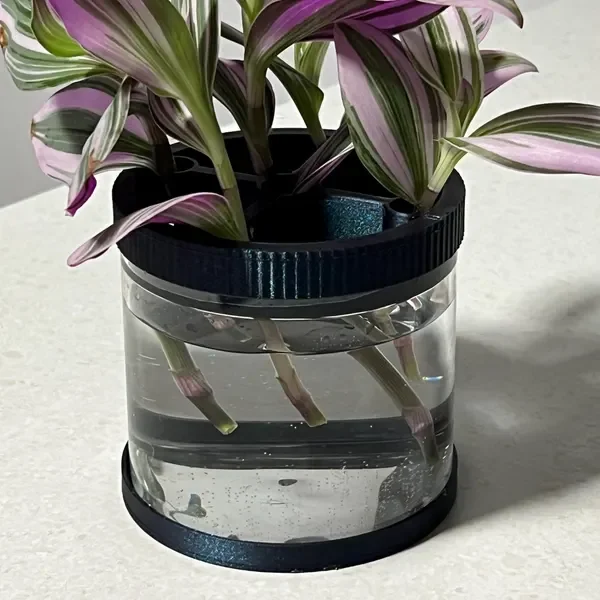

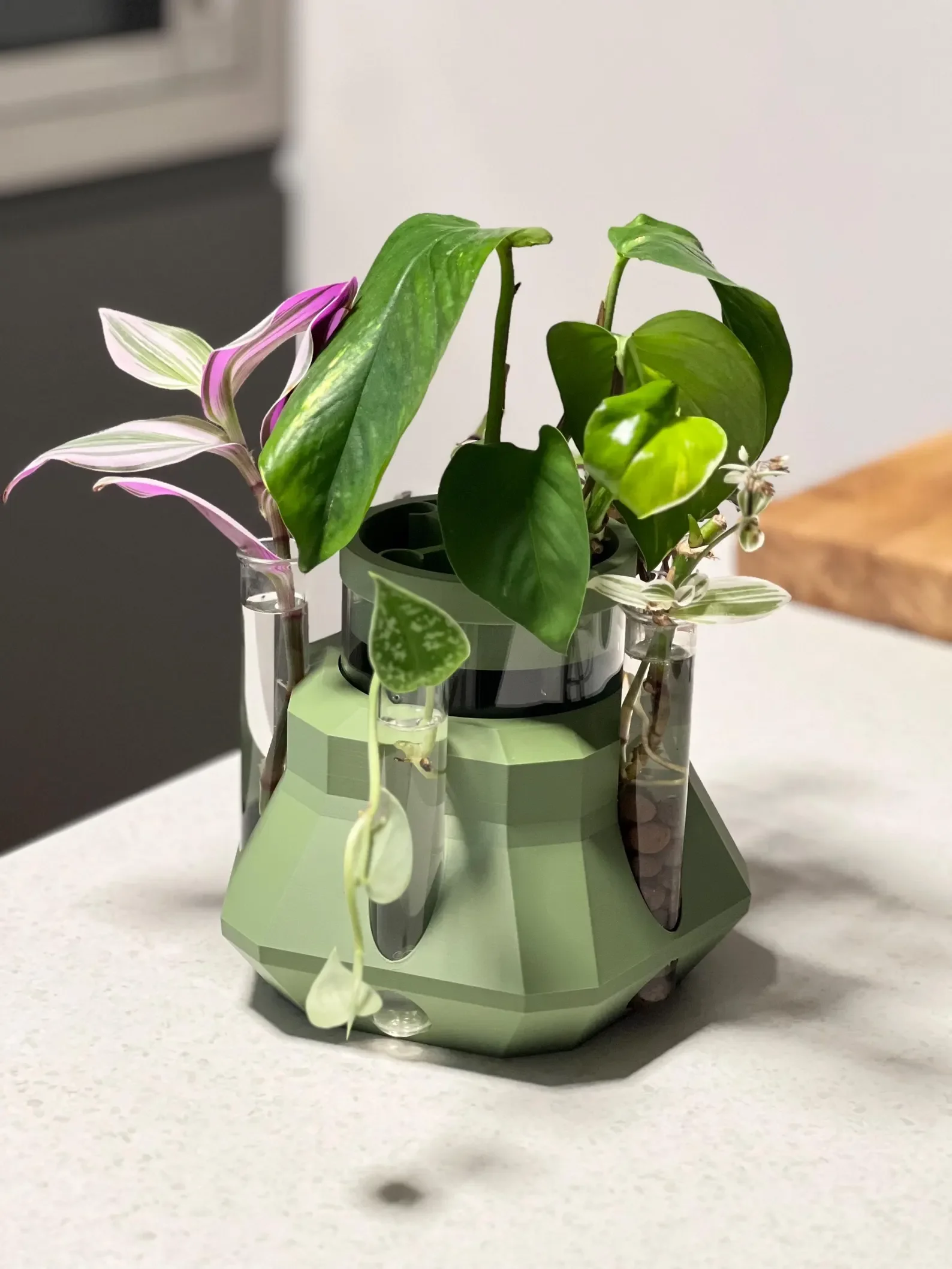
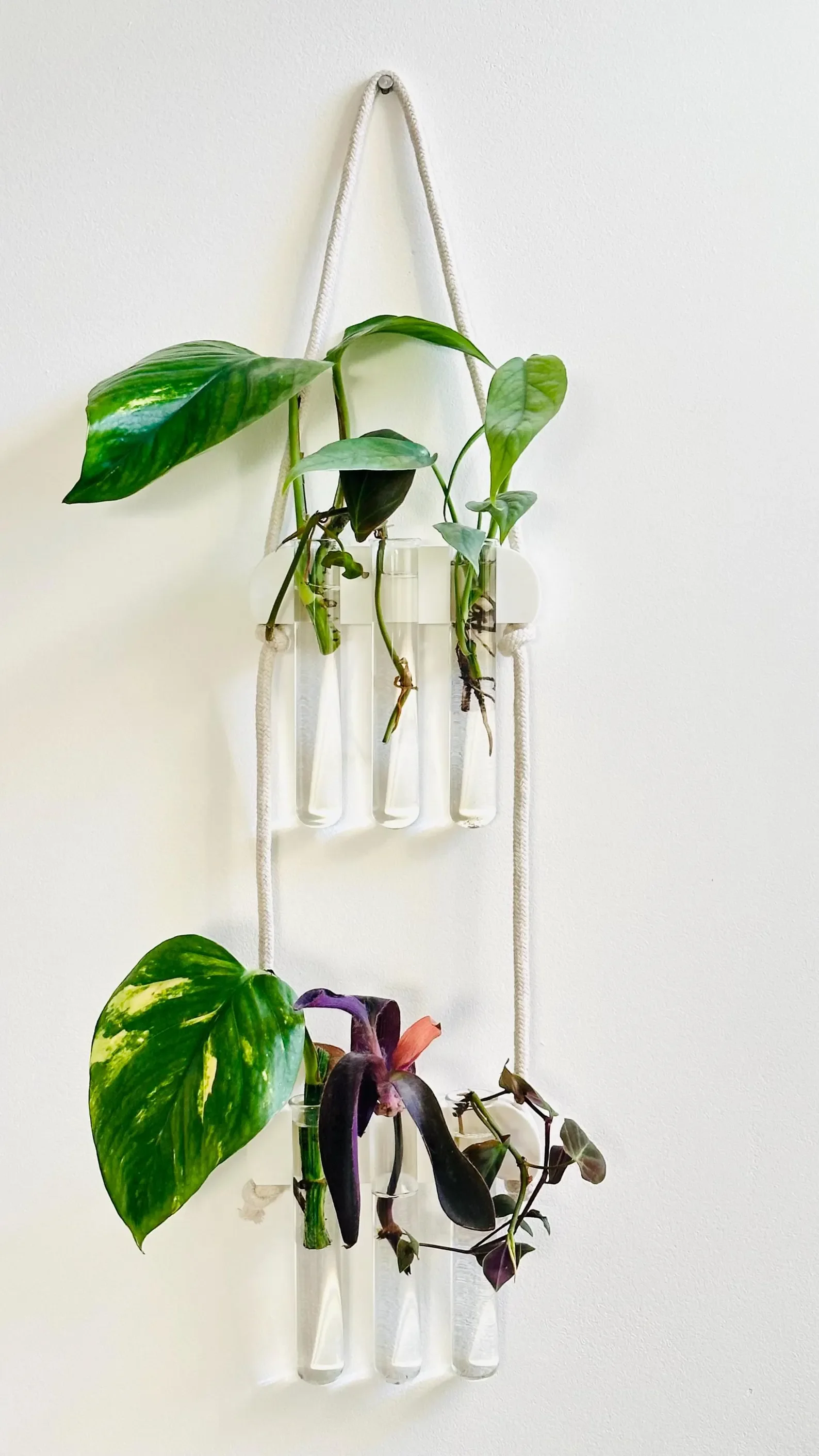

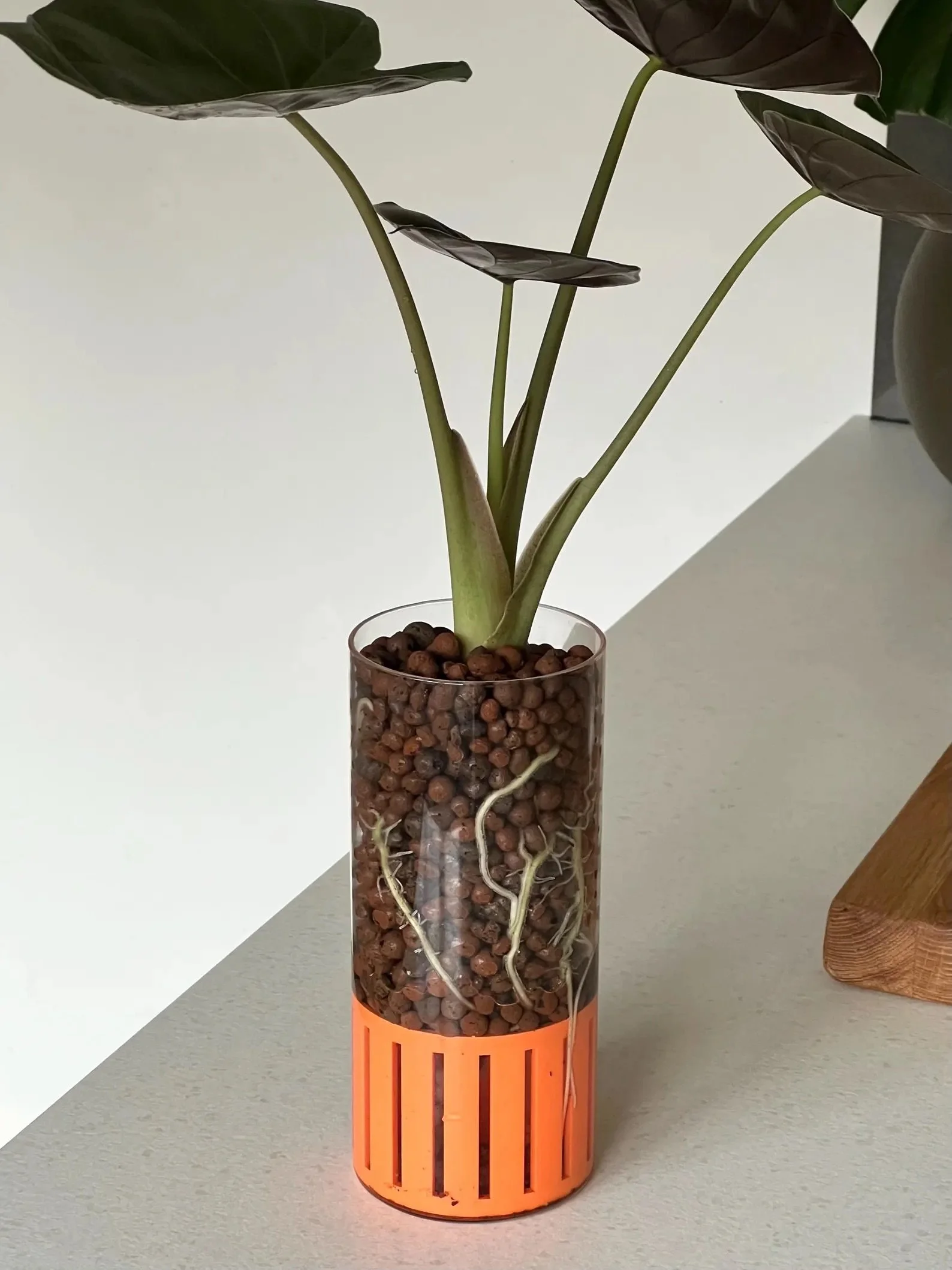
If your plant lover enjoys growing baby plants, Solvi’s propagation stations are a dream. Designed by a husband-and-wife team in Cornwall, these 3D-printed propagators are both practical and stylish, making it easy to nurture cuttings or seedlings. With a variety of shapes, sizes, and over 15 filament options — including sparkly “midnight” finishes — there’s a propagation station to suit every plant parent’s home and style.
Labels, and other nifty planty accessories
As a dedicated plant lover, I love getting to know each of my houseplants — learning their unique needs, helping them thrive, and discovering the best ways to care for them. Building a collection isn’t just about having more greenery; it’s a joyful journey of propagation, labeling, and experimenting with clever plant care tools.
Whether it’s chatting to your plants, using snips for cuttings, scooping soil with our Jungle Floor Creative soil scoops, or repotting on a Jungle Floor potting mat, plant enthusiasts are always on the lookout for practical tools that make plant care easier. Clear or transparent pots are perfect for monitoring root growth, while the right tools make every repotting session a little more fun and stress-free.
🌿 Potting Mats and Other Jungle Floor Creative Gifts
I almost forgot this one—but it’s a plant-lover essential! A potting mat is an incredibly practical gift, keeping mess contained during repotting and making cleanup a breeze. Perfect for both plant lovers and anyone they share their home with.
Choose a general mat or something extra special, like a Jungle Floor botanical-themed potting mat. Not sure which design they’d love? A gift voucher is always a safe option so they can pick their favorite print and color.
At Jungle Floor Creative, I also offer a range of thoughtful gifts for houseplant enthusiasts: leaf cushions, blankets, soft plant cloths, soil scoops, botanical-themed bags, drink bottles, and more. There’s something to suit every plant lover, and gift vouchers remain a flexible, fail-safe choice for anyone still deciding.
Soil Ninja
Soil Ninja is an excellent place to find many of these helpful accessories. Including soil checkers, aroid tower pots, watering cans, soil and substrates. Or if you don’t know what practical things the plant lover needs a soil ninja voucher will make any plant lover happy. Soil ninja would also be great place to buy a soil bundle for your plant love they have to types available.
Aroid Bundle
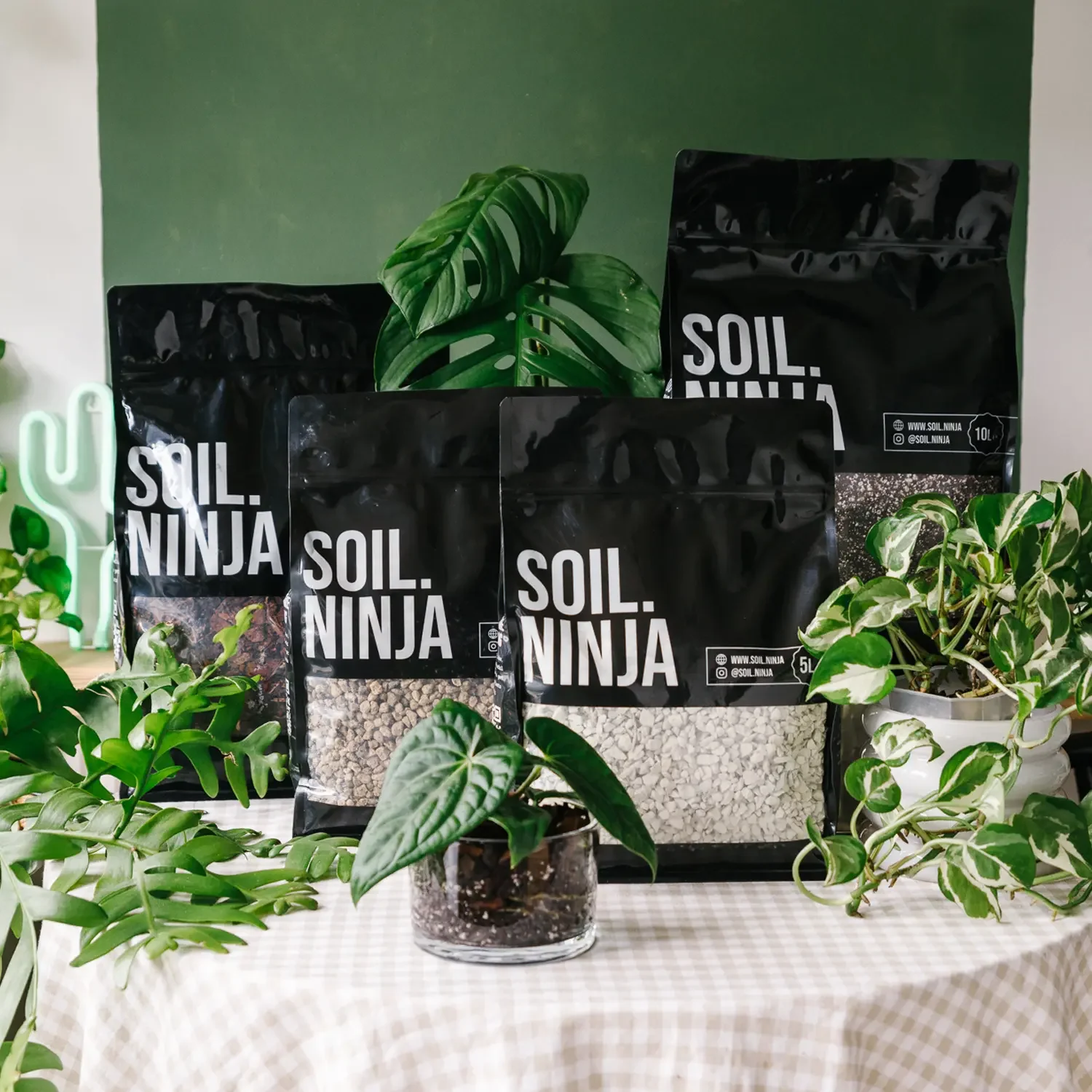
This bundle is packed with a chunky, airy mix of our Base Mix and soil components, ready for you to craft the ultimate Aroid-friendly blend. Perfect for giving your Monstera, Philodendron, Anthurium, Pothos, Epiphyllum, and other leafy friends the tropical jungle vibes they crave. Mix, match, and let your plants thrive in their very own mini rainforest!
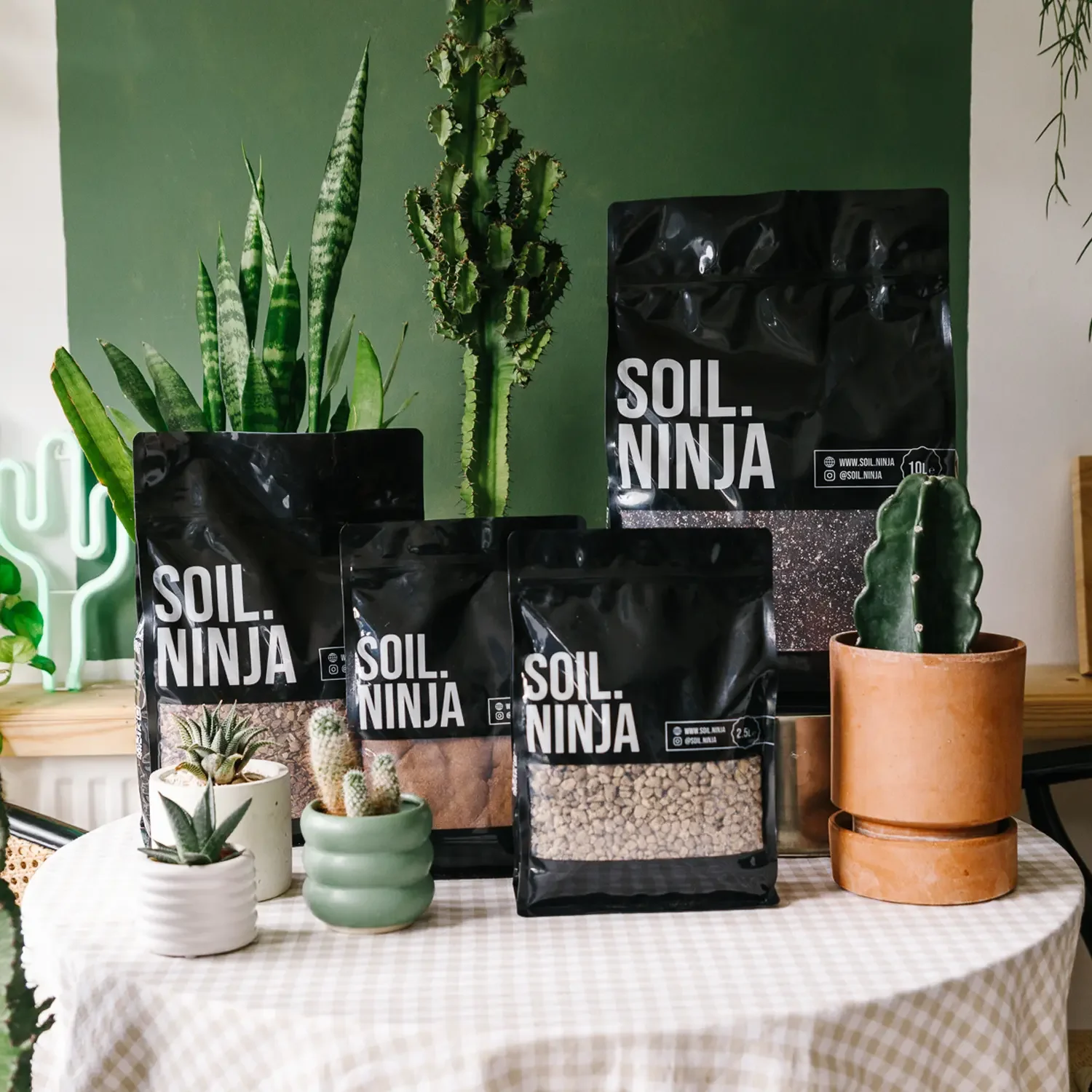
The Desert bundle.
This bundle brings together a fantastic range of our Base Mix and soil components, perfect for creating a dreamy home for your desert-dwelling plants. Packed with plenty of draining amendments, it’s ideal for Cacti, Succulents, Aloe Vera, and more — giving them the sun-soaked, airy soil they love to thrive in. Mix it up and watch your little desert oasis flourish!


Chop n Grow offers great products any plant lover will adore. 🎁
Chop n Grow is all about bringing rare, unique houseplants and cool accessories to plant lovers at truly affordable prices. With a friendly West Yorkshire touch, customers can request special plants for Jo to source, and there's always a fun lineup of raffles, mystery subscriptions, and more. Everything’s customer-focused, and the aim is to keep plant collecting both exciting and budget-friendly.
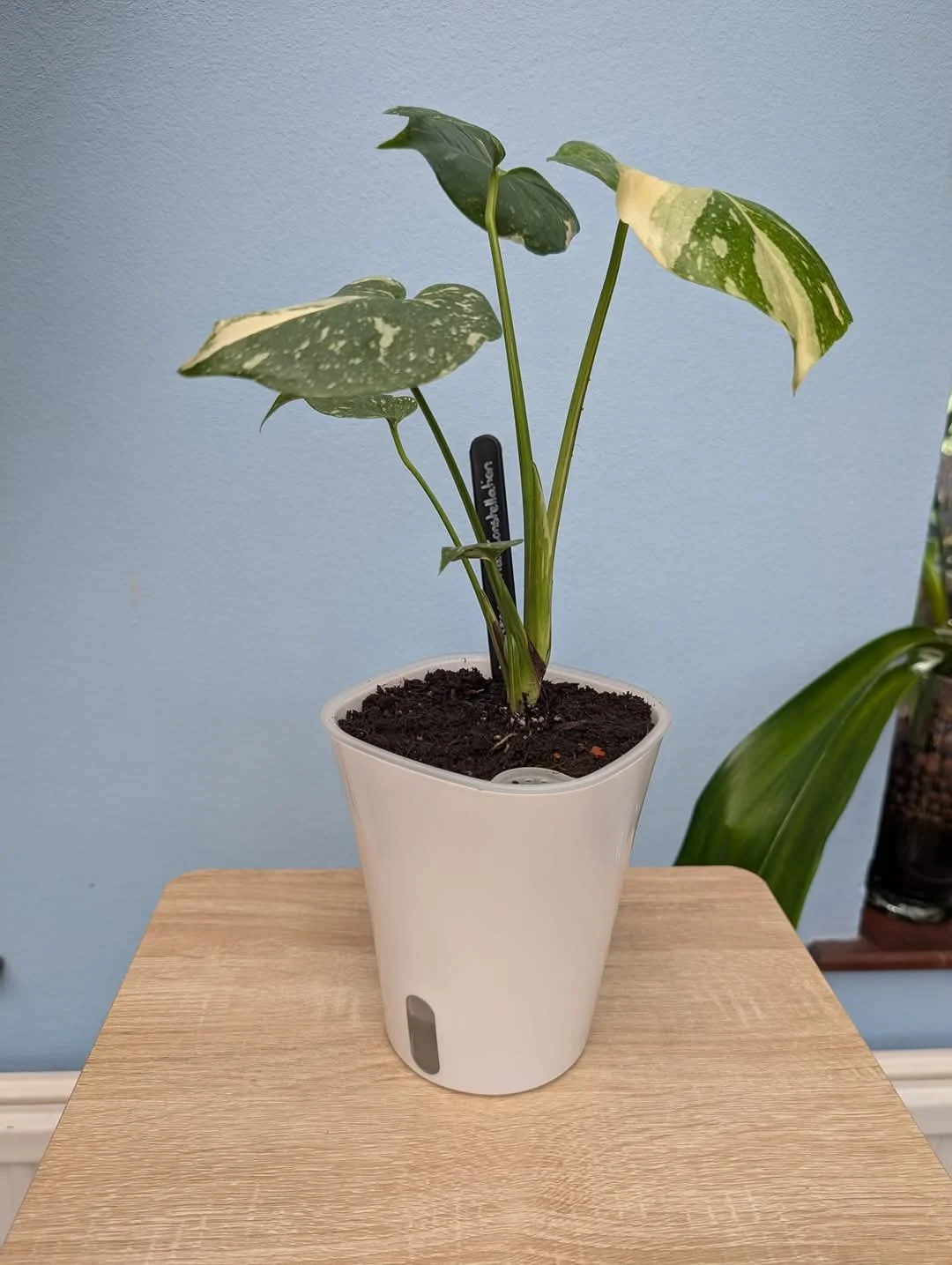


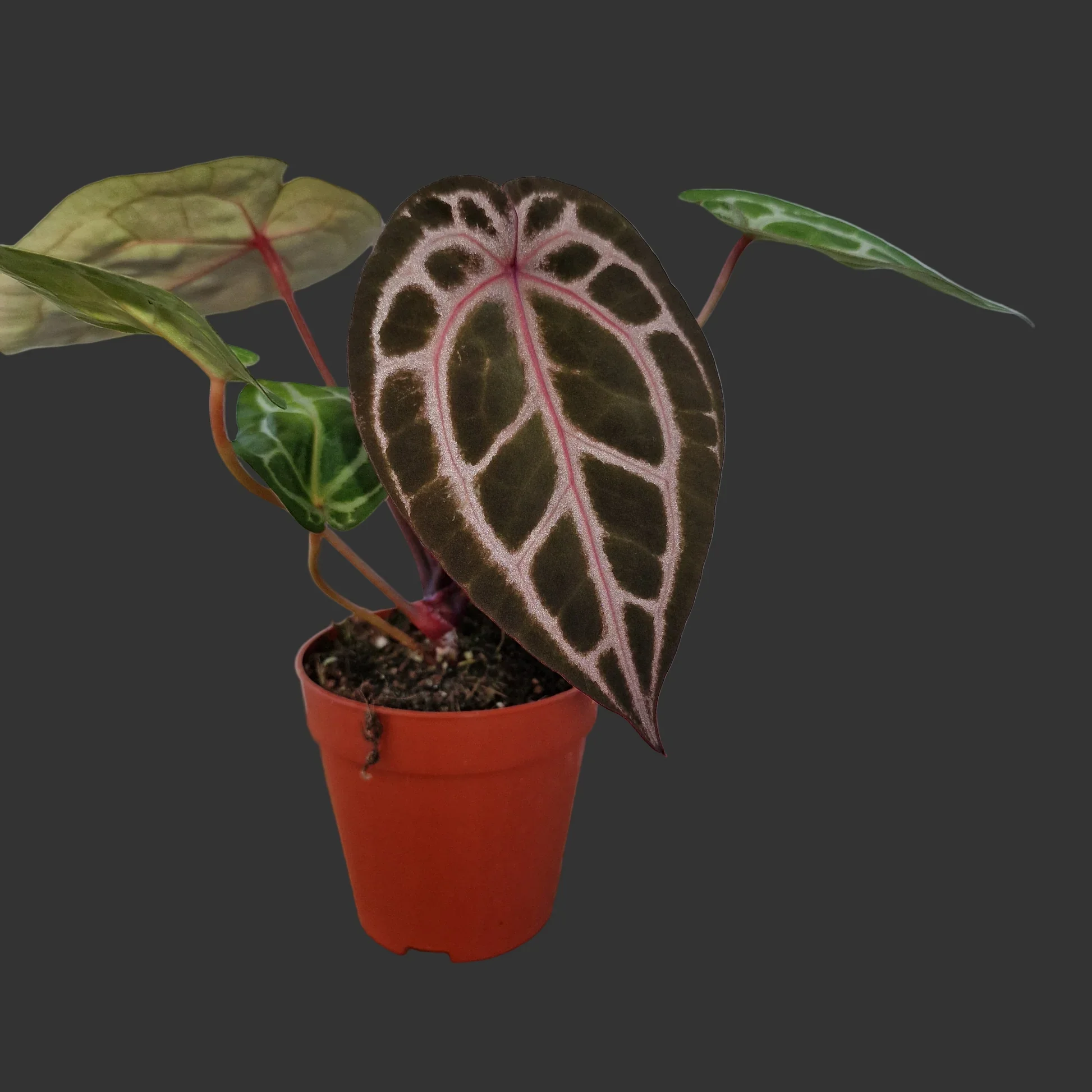
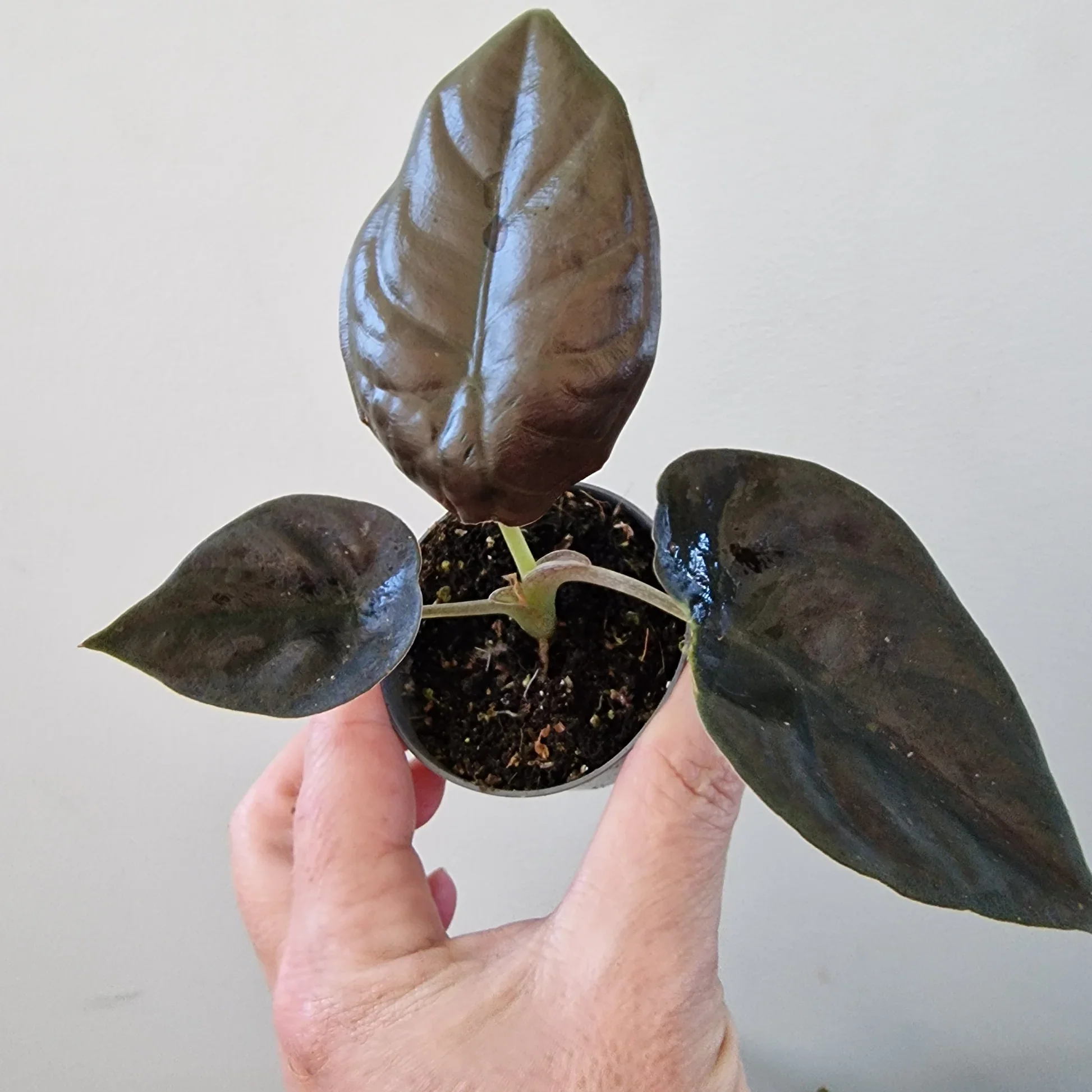
Stocking fillers from Chop N Grow!
Four Accessories Under £10:
Leca / Hydro Substrate (8-16mm) –
Perfect for semi-hydro systems or drainage layers.Peat-Free Soil (Light Airy Mix, 1kg)
A well-draining mix of coco coir, perlite, bark, and worm castings.Spray Bottle (750ml)
Ideal for misting delicate plants or boosting humidity.Wooden Trellis Plant Support
Lightweight, natural support for climbing vines.
💡 Grow Gang Grow Lights: Illuminate Their Indoor Jungle
I’ve heard countless plant lovers say a grow light is the perfect gift! Choosing the right one can be tricky, so I’ve shared suggestions and reviews on my blog to help. For those in the UK and parts of Europe, I recommend checking out UK-made grow lights like the Pianta and Claria, both featured below. These make fantastic gifts for helping houseplants thrive year-round — bringing life to dim corners, winter windowsills, or any space that needs a little extra plant power.
If you're looking for a gift that truly helps someone’s indoor jungle flourish, Grow Gang’s full-spectrum LEDs are a brilliant choice. They mimic natural sunlight, making them practical for plant growth while also stylish with warm tones and sleek finishes — a thoughtful addition to any indoor plant setup.
Grow Gang is trusted by plant parents for good reason: their lights come with a 90-day risk-free trial, and their customer service is consistently praised for being helpful and reliable. Plus, if you purchase through my affiliate link, you’ll receive a 10% discount — a little bonus for making your plant-loving friend’s day even brighter!


Also for a grow lights in a more world wide sense Sansi have a variety of different styles of lighting one I personally recommend is there pot grow light. Code: JungleFloorC32 (32% off on SANSI site) Pot light check it out.
Mythos 3D Printed Moss Pole – Perfect Moss Habitat for Indoor Climbing Plants
“If you know your plant lover has climbing plants, a moss pole or trellis is a really thoughtful gift. I love the Mythos 3D Design options — they use eco-friendly PLA, and there are so many shapes and styles (D-shaped moss poles, trellises, mini habitats).
Alternatively, for someone who loves propagation, check out Solvi: they make 3D-printed propagation stations and semi-hydro pots in gorgeous filaments, so they’re both functional and beautiful.”

Use Koto as a horizontal table top moss cradle, a stunning plant centrepiece, or wall mount it for a truly unique piece of plant art.

The plant picture frame, mini moss habitat that will let you display your favourite wall-flower (or any other wall hugging plant) just about anywhere.

3D Print Moss
There are two types of moss poles you can gift: D-shaped and round poles. For something unique, check out Mythos 3D Design for printed options in various colors. I highly recommend the Monstera Pattern Trellis: D-Shaped Moss Pole "Beautiful Barbara"—it's extra special and sure to impress any plant lover with its thoughtful design.
terrarium’s Ready made or make you own
“the plant lovers”
A "make-your-own terrarium" kit is a perfect gift for plant lovers, combining creativity, nature, and personalization. It includes everything needed to craft a unique miniature ecosystem, offering a fun and relaxing hands-on experience. Terrariums are low-maintenance, ideal for all skill levels, and add greenery to any space. This thoughtful gift grows and thrives over time, serving as a lasting reminder of the joy of creating something special.
you can get this sort of thing just about anywhere and you can by them ready made by someone like Aloe my lovely Succulents or any plant shop close buy. I know that Shell on Earth has some terrarium glass and kits.


Plant books


Gift Sets For Plant Lovers
🎁 Bladen Beton Gift Sets: Industrial Chic for Plant Lovers
Bladen Beton gift sets combine raw, modern aesthetics with practical plant care — perfect for plant parents in the EU. Each set features sleek concrete planters and matching saucers, adding a cool, architectural touch to any indoor jungle.
Minimalist Planter + Saucer Bundles: Cylindrical or cube-shaped pots in warm greys, ideal for shelves or windowsills.
Concrete Propagation Trio: Three small vessels, perfect for rooting cuttings or baby succulents.
Seasonal Gift Box: Includes a planter, decorative accent, and plant tag in a smart minimal box.
Why they’re perfect for plant lovers:
Durable and stylish — modern concrete that ages beautifully.
Thoughtful presentation — more than just a pot, it’s a curated gift experience.
Ideal for EU plant lovers who appreciate design, minimalism, and modern living, whether for a lush indoor jungle or a small urban balcony.

Mythos 3D design Gift Card
🎁 Best Places to Buy Gift Vouchers for Plant Lovers
There are so many fantastic options when it comes to plant shop vouchers, houseplant businesses, and garden centre gift cards — perfect for any plant lover! A gift voucher lets them choose exactly what they want, from rare plants to stylish accessories, and is always a thoughtful, stress-free present.
Here are five of my top recommendations:
🌱 Mythos 3D Design
Ideal for plant parents who love supporting their climbing plants or adding unique, eco-friendly accessories. Mythos 3D Design create moss poles, trellises, and mini habitats — all perfect for giving your plant setup a stylish boost.
🌿 Chop n Grow

Chop n Grow is a go-to for rare and unusual plants, fun raffles, and mystery subscriptions. Their vouchers are perfect for plant collectors who love discovering something new and exciting.
🌱 Soil Ninja
Soil Ninja is perfect for plant lovers who are serious about soil and plant care. From high-quality peat-free mixes to propagation essentials, their vouchers let plant enthusiasts choose exactly what they need to keep their plants thriving.
🌿 Jungle Floor Creative
Of course, my own shop! Jungle Floor Creative vouchers give your plant-loving friends the freedom to choose from potting mats, plant cloths, and other beautiful plant-themed accessories designed to make caring for plants practical and enjoyable.

Lastly, let’s talk about one of the most-requested gifts: vouchers! Many plant shops offer gift cards, which are ideal for plant lovers who enjoy choosing their own treasures. Whether it’s plants, specialty soil from Soil Ninja, beautifully crafted bundles from Blad.en.Beton, or accessories from their favourite small shops, vouchers give them the freedom to pick exactly what they want.
No matter which voucher you choose, it’s a gift that guarantees joy for any plant lover. It takes the guesswork out of gifting, lets them pick exactly what they want, and supports small businesses that make the plant community so special. Whether it’s a rare plant, high-quality soil, or a stylish accessory, a gift voucher is always a thoughtful, practical, and stress-free way to make their day.

Wrapping Up
I truly hope this guide has given you plenty of inspiration for the festive season—or any special occasion. A huge thank you to everyone who shared their businesses and contributed their wonderful ideas.
No matter how you arrived at this blog, I hope it’s helped you discover thoughtful, meaningful gifts for the plant lovers in your life. Wishing you a joyful holiday season, lush growth, and happy celebrations ahead! 🌿✨